As white flight continues, city schools make diversity cool
New Berlin, a village with 1,500 people separated from the outskirts of Springfield by 12 miles of pale blue skies and sunlit cornstalks, still has many hallmarks of a small town. It hosts the county fair, with chili cookoffs, livestock exhibitions and country music stars drawing crowds during the long days of June. Tractors occasionally join traffic on the main thoroughfare, and freight trains rumble and screech along tracks that travel the length of town. And, of course, the people in New Berlin, like much of rural Illinois, are almost entirely white.
Unlike a lot of rural towns, though, New Berlin is growing, and its schools in particular, with nearly 5 percent annual growth, are booming. Its elementary school attendance has more than doubled since 2003. The growth in the higher grades has been slower, but still some of the highest in the metro area.
The schools shape the town’s identity.
German immigrants founded New Berlin in 1865, so, appropriately, the schools’ mascot is the pretzel. And Pretzel Pride is everywhere, from the stands at the baseball diamond, where the high school squad played en route to its first regional championship this year, to the top of the village water tower, which proudly proclaims the town to be “Home of the Pretzels.”
Students are surging into New Berlin schools, though, not because of the town’s rural charm, but because of its proximity to the suburban sprawl of southwest Springfield. As developers turn farmland into new homes, they are increasingly leaving the boundaries of Springfield’s core school district – District 186 – to do so. Even homes that are within the city limits of Springfield often don’t fall within the school district, because those boundaries aren’t the same. The decade-old, half-million-dollar houses in Springfield’s Centennial Park Place neighborhood, for example, barely fall inside the New Berlin school district.
The same thing is happening on nearly every side of Springfield; city residents, in fact, now go to seven school districts other than District 186. In the Chatham school district, more than a third of students have Springfield addresses.
The families landing in Springfield’s suburban districts are overwhelmingly white, and that has profound implications for District 186. The district has been under a desegregation order since 1974 and is legally obligated to provide black students with similar opportunities as white students. At the same time, though, the district is losing white students to neighboring districts.
The white flight undermines the goals that the desegregation order was meant to address, by re-creating
separate but unequal education systems for black students and white
students. Because schools are so closely tied to the neighborhoods where
they are located, the rush of white families to suburban schools also
leads to widening differences for the health, economic opportunities and
quality of life between black and white residents in the Springfield
region, as well.
The
change is happening quickly. The number of white students in District
186 declined by a third in the 15 years between 2003 and 2018, but the
number of black students in the district grew by 3 percent. Meanwhile,
in the rest of the Springfield metro area, the number of white students
only decreased by 4 percent. The number of black students in those
outlying districts more than doubled, mainly because there were so few
in those districts to begin with.
The consent decree: Correcting one problem, ignoring the big picture
Springfield’s
District 186 is one of a few school districts still working under a
federal desegregation consent decree. A group of both black and white
parents sued the district in 1974 for concentrating black students in a
handful of schools. They pointed out, for example, that 78 percent of
all black students in the district at the time attended Southeast High School.
The
school district and the plaintiffs agreed to a consent decree within
months. The court found that the district violated the Fourteenth
Amendment by “contributing to the creation, intensification and
perpetuation of racial segregation in and among the public schools of
Springfield School District 186.” The district, the federal judge added,
had an “affirmative obligation to eliminate and prevent racial
segregation in the public schools of District No. 186.”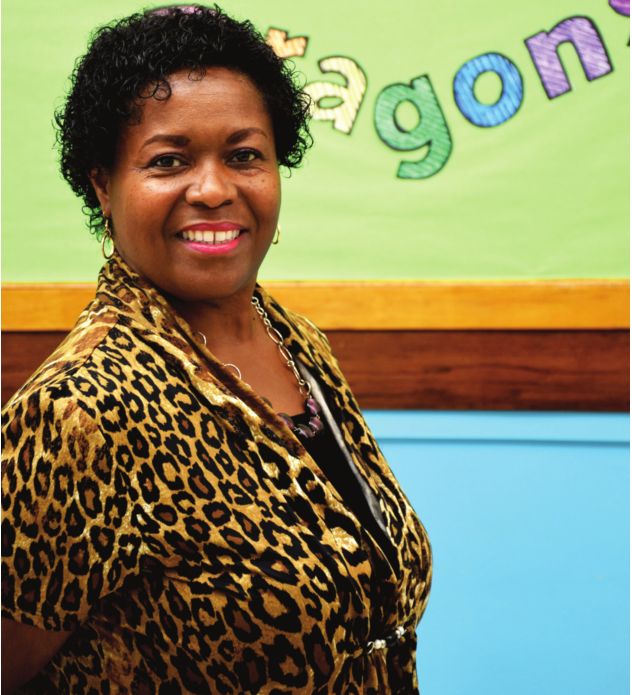
The
agreement prevents District 186 from using many of the tactics that led
to the segregation in the first place. That includes drawing attendance
zone boundaries that result in racially segregated schools, creating
school-to-school transfer policies that resulted in racially segregated
schools, assigning faculty or staff based on their race or ethnicity,
sending less-qualified staff to predominantly minority schools,
unequally distributing supplies and equipment among schools, applying
tracking systems that discriminate between pupils based on their race,
setting up systems that disproportionately subject minority students to
discipline or offering extracurricular activities in a way that
discriminates against students on the basis of race.
As
far-reaching as the consent decree was, its biggest weakness is the
fact that it only applies to a single district. During the months while
the Springfield desegregation case was pending, the U.S. Supreme Court
handed down a landmark decision in July in a Detroit-based desegregation
case called Milliken v. Bradley. It was a 5-4 decision, and four of the
five judges in the majority had been recently named by then-President
Richard Nixon. The majority ruled that, in all but the most egregious
circumstances, courts could not impose school desegregation plans that
involved transferring students from one district to another. In other
words, Detroit’s predominantly white
suburban school districts would not be forced to integrate with
Detroit’s increasingly black schools. And, of course, neither would
Springfield’s.
The
Detroit case marked a turning point in how the Supreme Court handled
school desegregation cases. Twenty years after Brown v. Board of
Education, the justices began limiting the circumstances and scopes
under which minority residents could force racial integration of
segregated schools. That culminated in a 2007 case in which the court
ruled that schools could not consider the race of students when
assigning them to schools. “The way to stop discrimination on the basis
of race,” Chief Justice John Roberts wrote, “is to stop discriminating
on the basis of race.”
Still,
District 186 has never challenged its consent decree. A federal judge
continues to monitor the process, and the district generates 1,000-page
reports every year for local civil rights leaders to review.
Huge
demographic shifts, though, have made many of the order’s objectives
harder to meet. White residents have moved farther away from the city
core, especially to Springfield’s sprawling west side or to nearby
towns, like New Berlin, that have become bedroom communities. The
population of black residents has grown, and those residents have spread
from the traditionally black east side of town to other parts of
Springfield, but rarely the suburbs.
That
means racial segregation in the Springfield metro area is no longer a
problem only within the city, but also across the entire metropolitan
region. The schools reflect that shift. Calculations from Governing magazine
earlier this year showed that, for schools in District 186 to all
reflect the same black-white distribution of the district as a whole,
about 18 percent of students would have to go to different schools. But
across the whole metro area – city and suburbs alike – 63 percent of
students would have to be reassigned to match the region’s racial
makeup.
These days,
black students (40 percent) in District 186 make up almost as big of a
share as white students (44 percent). Nearly 11 percent of the
district’s students identify as more than one race, 3 percent as
Hispanic and 2 percent as Asian.
DuBois deals with demography
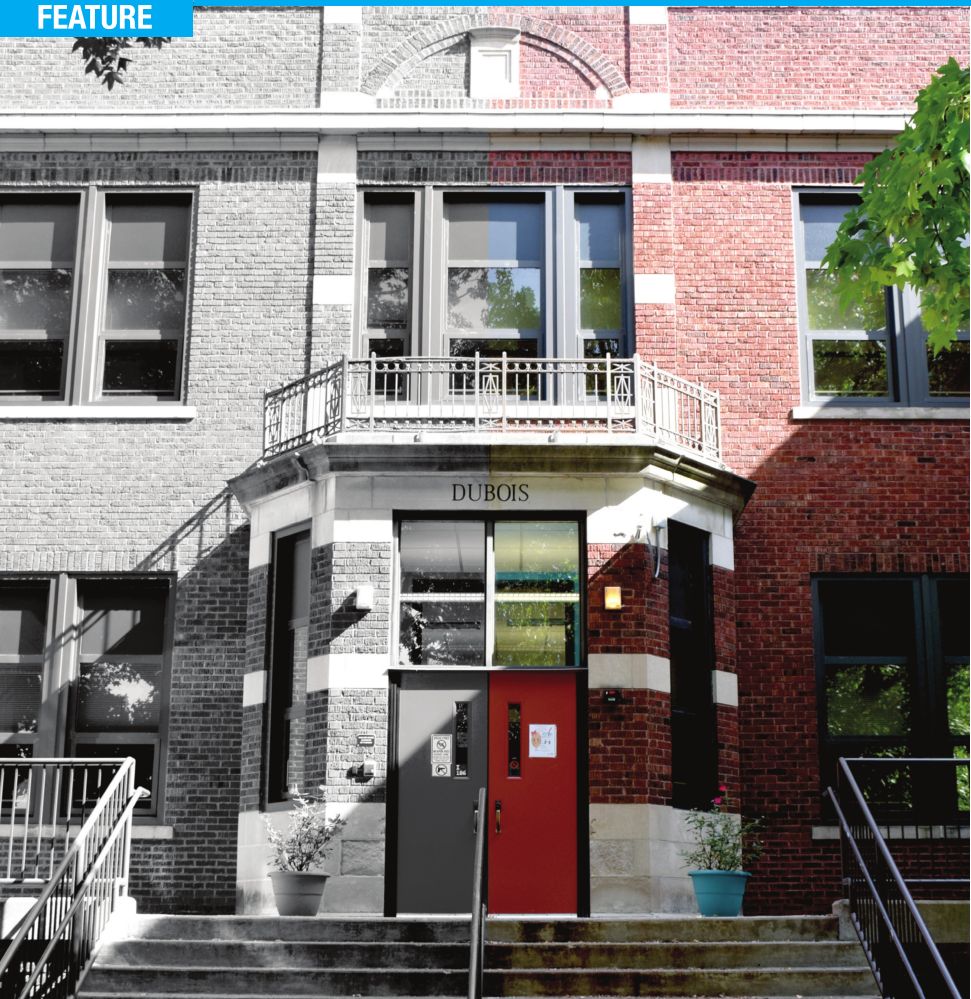
DuBois
Elementary School, a century-old brick building in Springfield’s
historic west side, has seen the same dramatic demographic shifts as the
district as a whole. In 2003, white students made up 62 percent of
DuBois’s 494 students. Now, they make up 32 percent of the students,
even though the school is smaller. Black students, which make up 51
percent of the student body, are now the biggest demographic group. Kids
who identify as two or more races make up another 13 percent.
Teachers
and administrators there go out of their way to cater to the different
learning styles and needs of the diverse student body. The school
emphasizes hands-on learning for its STEAM-based curriculum that helps
students explore science, technology, engineering, art and math
simultaneously. Earlier this year, a group of fourth- and fifthgraders
explored real-life examples of art with a tour at the newly renovated
executive mansion downtown, which ended with a meeting with Gov. JB
Pritzker. One of DuBois’ teachers, Dan Hartman, is one of 10 finalists
for Illinois’ teacher of the year this year.
“We
believe that every child learns in a different way and every child
needs a varied approach to learning,” says Donna Jefferson, the school’s
energetic principal. “We emphasize hands-on, experiential, real-world
learning.”
Jefferson
also wants the DuBois community to help students and teachers grapple
with problems outside of the classroom, too. Amber Alexander saw that
firsthand. She enrolled her two kids in DuBois, in part so they could be
closer to her ex-husband. But when her ex-husband died last May,
teachers from DuBois attended the funeral. People from the school called
her to make sure the children were doing all right. Her daughter’s
teacher had the class make condolence cards. “It was a really supportive
environment,” Alexander says. “I like the fact that they’re like a
family.”
None of those
intangibles, though, show up on standardized test results or online
school rankings. GreatSchools, a nonprofit organization that calculates
the school rankings that appear on real estate websites like Zillow or
Realtor.com, ranks DuBois a “3” on a 10-point scale.

Outside
perceptions of schools can shape nearby neighborhoods. Home buyers
nationally say that getting into a good school district is their top
priority in purchasing a house, and three-quarters of those who
responded to a survey last year said they had to give up amenities like
garages, updated kitchens or big backyards to get the school they
wanted, according to the National Realtors Association. Nearly 60
percent of respondents said good test scores were a hallmark of good
schools.
“School
districts are an area where many buyers aren’t willing to compromise,”
wrote Danielle Hale, the group’s chief economist, last year. “For many
buyers – and not just buyers with children – ‘location, location,
location,’ means ‘schools, schools, schools.’” District 186 does use
some tactics that other urban districts have tried in order to keep
white families from leaving: it opened selective schools for gifted
students after a charter school opened in 1998. The district’s two
schools for gifted students draw a disproportionately large number of
white students. At Iles Elementary, for example, more than half of the
pupils are white, 18 percent are Asian and 14 percent are black. Half of
the students at both Benjamin Franklin Middle and Lincoln Magnet School
are white. The district’s single charter school, Ball Charter School,
has a racial makeup that more closely resembles that of the district as a
whole.

Aaron
Graves, the president of the Springfield Education Association, the
local teachers’ union, worries about the effect that the selective
programs have on other district schools and their efforts to improve
their academic performance. “These schools are doing fantastic things
with their kids, but if you take 80 gifted kids from Washington and 80
gifted kids from Jefferson [both middle schools with more than 70
percent low income students], how are those schools ever going to right the ship?” he asks.
Superintendent
Jennifer Gill notes, though, that those programs have all been in place
for decades. Almost all school districts serve gifted students with
distinct programming, she adds. They
were created, she says, as “a place to serve gifted students. They were
not put in place to prevent white flight.”
“My
school district hires me to serve the students that are here,” says
Gill. “We’re comparing ourselves to school districts that are outside of
suburbia. Yeah, we look different. We don’t have a large seven-lane
swimming pool at each of our high schools. We’re operating inside our
means. I don’t try to compete with my local neighbors. I try to just
make sure that I serve our students.”
For years, the Ball-Chatham
School District has offered Springfield-area residents a suburban
alternative to District 186. But Ball-Chatham Superintendent Douglas
Wood says that doesn’t put the two districts in
conflict. “I wouldn’t necessarily say it’s a competition. I think many
of the school districts around us do a wonderful job,” he says.
But the different districts cater to different family priorities, Wood says. Some families from smaller communities
might be looking for smaller school districts. When Chatham
administrators do look around at other school districts for comparison,
they look to suburban schools in the Champaign, Peoria and Chicago
areas, not just the Springfield area, Wood says.
The
Williamsville-Sherman school district north of Springfield has seen
some of the fastest growth of its schools in the metro area over the
last 15 years, particularly in its elementary and junior high schools.
Again, the vast majority of the growth has come from an increase in
white students.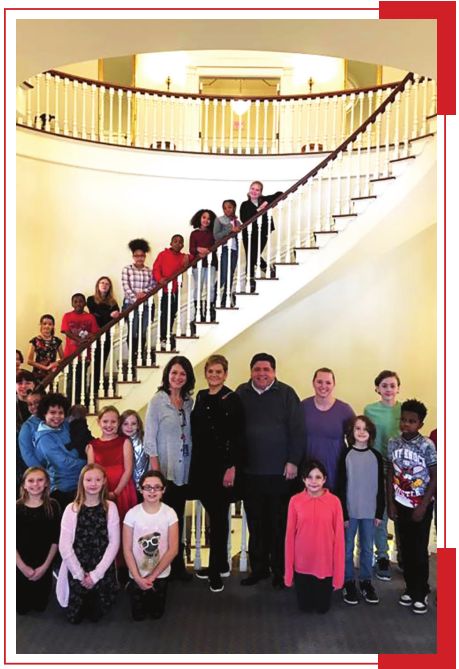
Superintendent
Tip Reedy says new residents come there because of the schools, not
racial homogeneity. The schools, he says, rank high in state ratings and
are small enough that kids don’t get lost in the system. “That’s all I
ever hear from the community: Great schools equal great communities,” he
says.
New Berlin school board president Bill Alexander
suggested that the move of predominantly white families to the district
was “more economic flight [than] white flight,” because minority student
enrollments had increased in many suburban districts, even though the
overall numbers remained small. A quarter of students in the New Berlin
school district are from low-income families.
While
economic factors certainly play a role in white flight, there is also a
growing body of research that suggests that race – not economics – is
the root cause of the phenomenon.
The
Pew Research Center found this year that 62 percent of white Americans
said it was better for students to go to school in their own
communities, even if the schools weren’t racially or ethnically mixed.
By comparison, 35 percent of white Americans favored diverse schools
over local ones. Black Americans responded almost exactly the opposite
way: 68 percent favored the diverse schools, while only 28 percent chose
local schools.
And if
economic conditions did explain white flight, whites would migrate to
the same places that middle class black, Asian or Hispanic residents
moved to, says Indiana University sociologist Samuel Kye. “Almost all of
our metro areas have diversified, but those trends have not trickled
down to neighborhoods,” he says. In fact, Kye’s research found that
whites in middle class suburbs are more likely to move when minorities
arrive than whites in poorer areas.
The demographic shifts in District 186 have not made it easier to address longstanding race-related concerns.
Take
the school board. Only two of its seven members are black, and that’s
only been true since September, when Tiffany Mathis was appointed to
fill a vacancy. There have occasionally been two black members of the
board before (although never more than two), but for most of the last 19
years, Judith Ann Johnson has been the board’s only black member.
Johnson
says she gets more constituent calls than most board members, because
black families call her for help, even if they don’t live in her
subdistrict. She knows she has a reputation for being outspoken and for
asking tough questions. “People don’t like me, because I’m vocal,” she
says. “When it comes to educating kids, I feel my kids should get the
same thing as everybody else’s kids.”
Another
major concern is the recruitment and retention of black teachers. In
1975, only 5.9 percent of Springfield’s teachers were African- American.
By 2016, it was only 9.7 percent. The numbers have remained stubbornly
low, even though the district has a full-time recruiter dedicated to
finding minority candidates.

Gill,
the superintendent, says a statewide teacher shortage is to blame.
Fewer college students overall are going into education to begin with,
and, during Illinois’ recent budget crisis, many of them went to
out-of-state colleges. Until recently, though, Illinois required
teachers to take additional coursework if they were transferring in from
other states.
Other
issues may be at play, too. Some black teachers who have worked in
District 186 say they also have felt unwelcome among their colleagues in
certain schools. The district doesn’t offer moving expenses or any
other incentives to move to Springfield. Union rules that required the
lasthired teachers to be the first to be laid off made it harder to keep
new black teachers in the aftermath of the Great Recession. Plus,
somewhat ironically, the district has focused on promoting qualified
black teachers into administrative roles, but it has had a hard time
replacing them in the classroom.
And even after nearly half a century of living under the desegregation order, there is still a widespread perception that
the racial makeup of many schools is skewed, especially when it comes to
the district’s three main high schools. White students make up the
majority at Springfield High School, where they outnumber black students
2 to 1. At Lanphier High School in the north, whites make up 48 percent
of students, compared with 39 percent for black students. And Southeast
has a bigger share of black students (50 percent) than white students
(40 percent).
But
Gill, the Springfield superintendent, says the desegregation order still
plays an important role in how the district operates. District
officials have never considered challenging it, says Gill, who attended
DuBois as a child and taught in the district before eventually leading
it.
“I’ve never been a
student, an educator or a superintendent who was not under the
desegregation order and the consent decree,” she says. “So why would I
live any differently than by the full letter of the law? It’s how I was raised, and how I was brought through the system.”
While
Springfield schools wrestle with the consent decree’s requirements,
though, the growth of the suburban schools all around them continues. In
New Berlin, in fact, local leaders are exploring options for replacing
the centuryold building that hosts the junior and senior high schools to
handle the burgeoning demand. The district already opened a new
elementary school in 2009.
Daniel C. Vock is a national public policy reporter based in Washington, D.C., and a former staff writer for Governing magazine. He led a Governing team that reported the “Segregated in the Heartland” series earlier this year. Vock lived in Springfield from 1999 to 2005.


