
The future of Republicans in Illinois
With the unpopular term of Gov. Bruce Rauner and divisive politics of President Donald Trump, coupled with a state that’s been losing population and a shifting demographic, Republican leaders are facing an uphill battle to maintain their place in Illinois politics.
The typically Republican stronghold in the collar counties around Chicago – Kane, DuPage, Lake, McHenry and Will counties – was tested in the 2018 midterm elections, where the GOP lost two congressional seats to Democrats, not to mention a party shuffle that occurred in local government in DuPage, Lake and Will counties.
In the 2018 midterm elections, Democrats picked up three senators and seven representatives among DuPage, Northeast Cook, Lake and Will counties, making way for a “blue wave” in the suburban counties outside of Chicago.
Republican incumbents’ recent loss of the 6th and the 14th Congressional Districts to Democrats should be looked at carefully. U.S. Rep. Sean Casten, D- Downers Grove, ran in the 6th Congressional District as a first-time candidate with a campaign platform that focused on climate change, immigration and education, defeating incumbent Peter Roskam.
“I certainly believe that the Illinois Republican Party has lost its way and its effectiveness,” said Jeanne Ives, former representative of Wheaton and a 2018 Republican gubernatorial primary candidate. “It’s obvious because of the election results and the way that our party has been so divided on candidacies at the highest level.”
Despite the gloom that’s presently clouding the Republican Party, Mike Lawrence, former director of the Paul Simon Policy Institute at Southern Illinois University and senior policy adviser to former Gov. Jim Edgar, said this isn’t the first time Republicans have looked ahead at rough seas. He said the national attention the Watergate scandal received gave Democrats a supermajority during the following election in 1974.
“When you have a big swing in one direction, it’s difficult to have people write off the opposition party,” Lawrence said. “Those obituaries have proven to
be premature . . . but Republicans, I think, have a steeper climb this
time than some of the political parties have had in the past.”
“I certainly believe that the Illinois Republican Party has lost its way and its effectiveness”
Kent Redfield, political science professor emeritus at the University of Illinois at Springfield, said Republicans are facing somewhat of an identity crisis because of their low visibility around the state and a changing voter demographic that’s younger, more racially diverse and more female.
Early estimates indicate the population of Illinois has dropped by more than 90,000 people since 2010, according to data released from the U.S. Bureau of Statistics in December. While that alone isn’t enough to strike fear into the hearts of Republican lawmakers around the state, where those population losses are occurring gives them room to pause.
Redfield said “downstate,” which is used loosely to describe any area outside of Chicago and its surrounding counties, used to be what made elections. He said the collar counties typically vote Republican during statewide elections while Chicago votes Democrat, causing
a canceling out effect. Downstate was previously known for its swing
votes, but that changed around the Blagojevich era when voters began to
support Republican candidates more consistently.
Despite
Republicans gaining votes in the southern part of the state, it has
done little to help the party overall, since most of the state’s
population loss is occurring in that region. The numbers game is
compounded because the areas that tend to vote for Democrats are
increasing in population.
“The
state’s becoming more Democratic nationally, in presidential elections,
and then statewide elections and now the control of the General
Assembly,” Redfield said. “You haven’t had Republicans control either
chamber since 2002. What’s happened there is that downstate has become
more Republican, but it has also lost population.”
Lawrence
and Redfield said the shifting demographics in the collar counties
began in the 1990s and can be attributed to growing populations of
Hispanics and Asians. They also agree the suburban vote is needed if
Republicans want to win elections, but the problem Republican candidates
face is running a campaign that attracts both Republican moderates and
more conservative voters.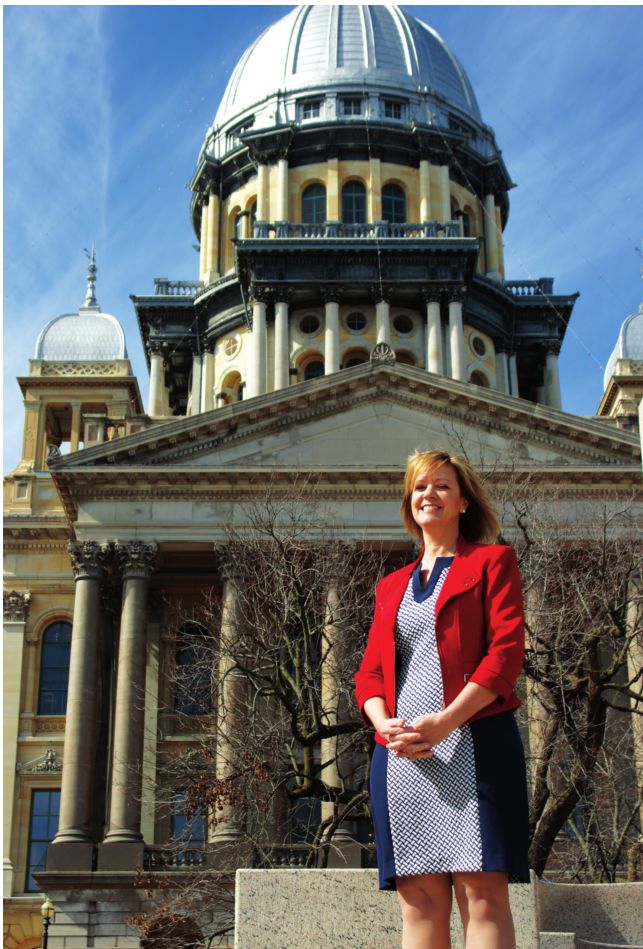
“Those
counties around Cook County, with the exception of McHenry, have become
more racially and ethnically diverse and more politically diverse,”
Redfield said.
The
shifting demographics have had a profound impact on the way people vote
in Illinois, Redfield said, which in turn has made it difficult for
Republicans to decide who should run for statewide leadership positions.
On one hand, Redfield explained, the collar counties tend be more
socially liberal but fiscally conservative, versus the southern part of
the state where Trump easily won most counties. Trump received at least
70 percent of the vote in eight counties in southern Illinois.
Redfield
said moderate candidates along the lines of Edgar and Gov. Jim Thompson
would have been more attractive to suburban voters during the 2018
midterms, but the bigger question should be if moderate candidates would
have won the Republican primary. Redfield said there’s hope for
Republicans to pick up areas they’ve been missing out on, with the right
candidate. “Madison County is getable from a Republican standpoint in a
statewide election if you have a moderate candidate.”
Right-wing passion
The
Republican Party has generated a great deal of criticism around the
country since Trump announced his bid for the presidency. Some of the
inflammatory statements he made about minorities then, and since his
inauguration, have prompted accusations that the GOP is now synonymous
with racism.
Ives
received backlash during her 2018 Republican gubernatorial primary for
an ad she ran against Rauner, which most likely didn’t help win over the
voters in areas Redfield and Lawrence say are needed to win races in
Illinois. The ad took aim at some of the legislation Rauner had signed,
including bills to expand abortion coverage and supporting the rights of
transgender people to use restrooms of their choice. Editorials from
newspapers around the state were critical of Ives’ message, with a Feb. 6
editorial from the Chicago Tribune accusing the candidate of “punching down” instead of striking out against her competition.
Despite fallout from the ad, Redfield and Lawrence pointed to leadership on the national level that’s
making it difficult for Illinois Republicans. The most visible
representative of their party is Trump, and he lost most of the
districts needed to win elections in Illinois. The only collar county
Trump won in 2016 was McHenry. “He is unpopular with voters who are
crucial for a Republican comeback in the state,” Lawrence said.
Additionally,
Lawrence said, Republicans aren’t doing a very good job of picking
which candidates should run in particular districts.
Redfield
said he doesn’t doubt that Rauner’s failures were a factor that
influenced Republican losses in the collar counties during the 2018
midterms, but he also thinks it had to do with Rauner being
uncomfortable with issues regarding gender, cannabis legalization and
gay marriage. “Part of the Republicans’ problem is, if they’re going to
run strong in suburban areas, a Jeanne Ives or Donald Trump kind of
perspective on social and cultural issues is a real handicap,” Redfield
said.
However, it
would be a mistake to assume there isn’t a right-wing base in the state,
which is why Lawrence said he wasn’t surprised Ives came so close to
Rauner during the primary. He said although most of the Republican
lawmakers around the state tend to be more moderate, they need to
deliver messages that resonate with both moderates and those more
right-leaning.
Lawrence
added that those who identify as more conservative are “dedicated
voters” who turn out more than moderates and independents during primary
elections. “What I think needs to happen is moderate Republicans and
independents need to become more engaged in the primary process,
particularly in the Republican primary,” Lawrence said. “Moderates, by
their nature, don’t have the passion that right-wing conservatives have.
They need to get more engaged candidates and their organizations need
to work harder at getting more voters engaged.”
Piecing the parts together
Rauner
would still have lost the election if it had been between just him and
Gov. J.B. Pritzker. Even if the votes from Conservative Party candidate
Sam McCann and Libertarian candidate Grayson "Kash" Jackson had gone to
Rauner (totaling 6.8 percent), Rauner still would have been shy of
winning the election by almost nine points. It can be argued that
Republicans in the state lost big because of Rauner, but Redfield and
Lawrence said it’s not that simple.
Rauner’s
failures aren’t the only thing that hurt Illinois Republicans in the
last election. Rauner may now be one less obstacle preventing
Republicans from winning districts in the state, but Republican leaders
need to find a collective voice and rebuild their platform if they want to
survive. If they can’t make change before it’s too late, the current
state of Illinois government – Democrats hold supermajorities and serve
as all five constitutional officers, including the governor – will
remain the future.
“I
think what binds us, or what can bind us in the future, is if we look to
our party platform, which was overwhelmingly approved by a majority of
active Republicans,” Ives said. “If we use that as our guideline on
policy issues, I think then, only then, we can come together as a
party.”
Republicans
around the state have been critical of Rauner, but they also don’t deny
there needs to be a more unified platform among their leaders. Ives said
a fragmented party is what cost Republicans the General Assembly seats
they lost in 2018. She also said many voters cast their ballot based on
emotion, not on policy issues. While it can’t be proven that emotions
are what gave Democrats the wins over their colleagues across the aisle,
it is a fact Democrats won in areas they hadn’t won in decades.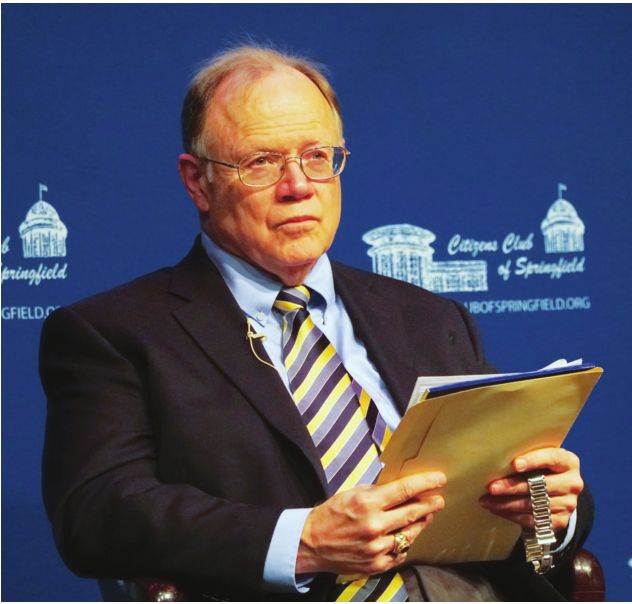
Redfield
said the rift between suburban and southern voters and their ideal
Republican candidate can also be seen in political action committees
like Liberty Principles PAC and Illinois Opportunity Society that
contributed millions of dollars in campaign financing against minority
leaders like state Rep. Jim Durkin and candidates he endorsed during the
2018 elections.
“You
want to have statewide leaders and a statewide presence,” Redfield said.
“You want united, effective caucuses in terms of the House and Senate
Republicans, and you’ve got these real identity issues and real
factions.”
One final
problem facing Republicans in future elections is the new trend of
selffinancing campaigns. It’s yet to be determined how Republicans are
going to proceed with financing the state party now that Rauner is out
of office.
“The fact
of the matter is, Republicans need to look at rebuilding their
organization that became far too dependent on Gov. Rauner’s money,”
Lawrence said. “It’s not going to be easy.”
Lawrence
said Republican leaders need to get back to the basics and engage
constituents all around the state to reconnect with voters. He thinks
it’s important that Republicans carefully consider who should run for
office, and he also agrees with Redfield that Republicans need to pay
attention to female voters if they want to win in the suburbs.
“Republicans need to capture the vote of suburban women, and it was clear in this last election that women
had a reaction to President Trump’s policies and his demeanor,” Lawrence
said. “It’s going to be difficult for Republicans to campaign in 2020
and distinguish themselves from policies and attitudes that turned off
key voters like suburban women.” To his point, the 21st, 24th and 27th
legislative districts, which have been Republican for decades, were won
by female Democrats.
Republicans
still have a place in Illinois politics, and many are intent on fixing
their image. Lawrence said Illinois voters are pragmatic, that they vote
more on policy issues, despite Ives’ claim to the contrary. While there
is disagreement on the underlying cause of the problem, both are aware
Republicans have work to do if they want to succeed.
Lawrence
believes it’s important for Illinois Republican leaders to try and be
viewed as a positive force in the state by voting and proposing
legislation that aligns with their principles; however, he said leaders
need to let voters see their willingness to reach across the aisle and
work with Democrats on policies when possible. He also said it’s
important for Republican candidates to revisit their relationship with
minority communities and demonstrate a sincere attempt to reach out by
showing up in their neighborhoods.
“People
of all races and ethnicities can identify whether people are sincerely
interested in them and reaching out to them in a sincere way, and
Republican candidates need to be doing that outreach,” Lawrence said.
Republicans
who are on a comeback mission still have time to regain their standing
in the state. Redfield said Republicans can take advantage of the next
few years when Democrats are in control of the Statehouse because the
party in power is walking a tightrope in terms of being close to a
fiscal disaster.
In
addition, Democrats are now facing the same problems Republicans had
over four years ago when Rauner self-funded his campaign. Redfield said
Democrats are also losing followers in southern Illinois who don’t agree
with some of the party’s progressive views.
He
added that Republicans may be able to win back some voters if Democrats
continue to propose and pass legislation that some independents and
moderate Republicans view as too progressive, like a $15 an hour minimum
wage.
“The success of Republicans is going to be relational to what Democrats do,” Redfield said.
Lindsey Salvatelli is an editorial intern with Illinois Times as part of the Public Affairs Reporting master’s degree program at University of Illinois Springfield. Contact her at intern@illinoistimes.com.


