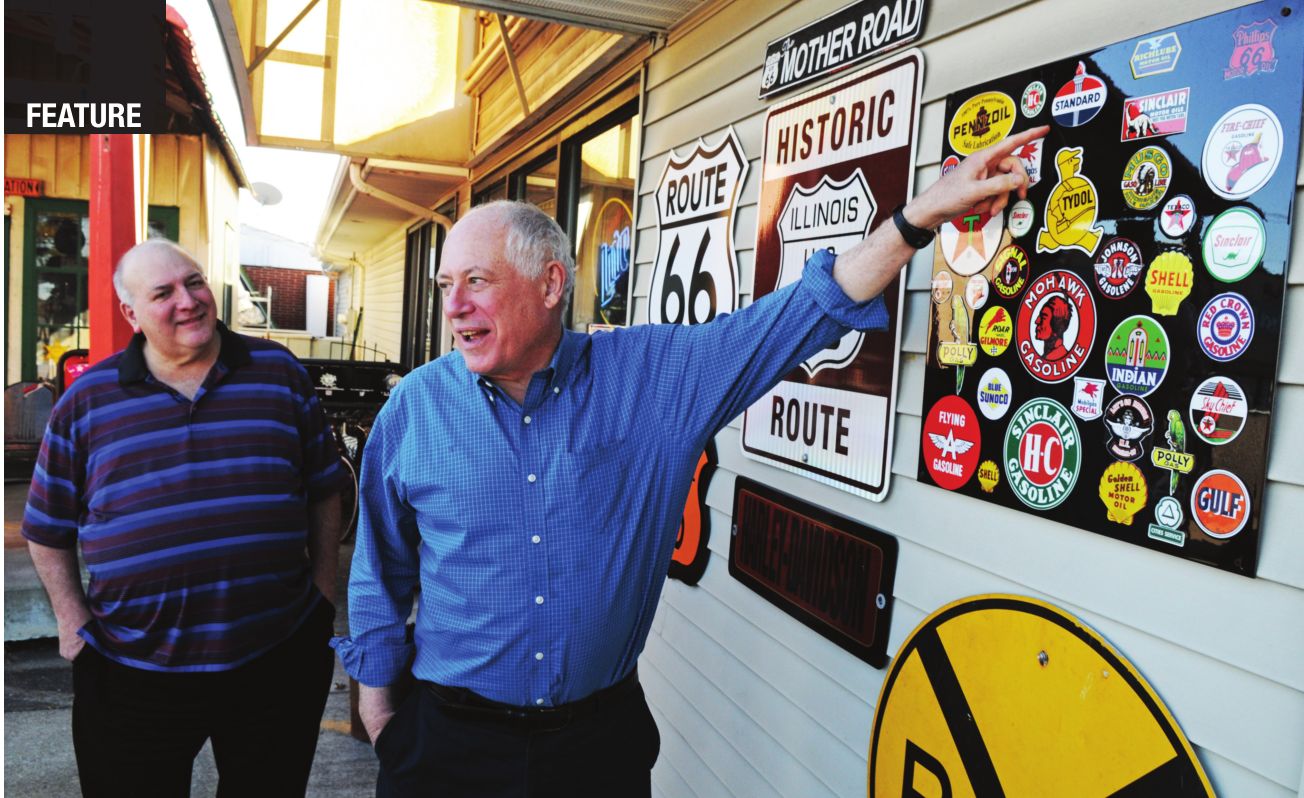
Former governor, aging reformer, Pat Quinn wants to be attorney general
I first met Pat Quinn when I was a radio news reporter nearly 38 years ago, and interviewed him in person regarding his drive to reduce the size of the Illinois House of Representatives by one-third. At that time I thought the intense, 30-something Quinn was well-informed but a bit crazy. I never had the remotest notion that I would ever work for the man.
Later in life, when I served as Gov. Quinn’s Springfield spokesman, we both recounted our first meeting those many years ago and my initial impression of him.
“Well, has your opinion of me changed?” Quinn asked.
“Yes. I think you’re older now,” I said. That elicited the huge, Irish grin seen by many of Pat Quinn’s close friends and associates.
In the three years since Pat Quinn became a private citizen again, he has spent most of his time volunteering, playing basketball and conducting a new petition drive.
“On my birthday, Dec. 16, we did the Homeless Veterans Sleep-Out in Chicago. For the past five years a group of veterans and their friends get together to sleep out for 24 hours. You can come at any time during that 24-hour stretch,” Quinn said. “My time was late on Dec. 15 and it went into early Dec. 16. We brought a birthday cake, we had about 40 people there, and the cake was very popular.”
“It’s the kind of thing that we’ve gotta do as a society, because only about one percent of the population volunteers for military service but they do a lot of heavy lifting,” said Quinn, who has supported veterans’ causes for years in both his public and private life, although he did not serve in the military himself.
Being Citizen Quinn also means he can shoot hoops more often.
“I have much more time after being governor, so I can play basketball a lot more, especially at night,” the 69-year-old Quinn said. “In the old days I used to play against people half my age. Then it was a third of my age. Now it’s a quarter of my age. I was with a guy the other day, we won the game, and he said he was 17.”
Quinn is currently working on Take Charge Chicago, a petition drive for referendums to limit the mayor of Chicago to two four-year terms and to create an elected consumer advocate in the city. It’s a return to the grassroots politics he loves, the days when he would barnstorm the state, clipboard in hand, trying to convince voters to become more directly involved in the democratic process.
Quinn is also one of eight people vying for the Democratic nomination to run for attorney general of Illinois.
Patrick Joseph Quinn Jr. was born in Chicago on Dec. 16, 1948. He attended a Catholic elementary school, St. Isaac Jogues in Hinsdale, with 53 students in a combined first and second grade class.
“We were all taught by one nun who was about five feet tall, Sister Paschal,” Quinn said. “She somehow managed teaching this group of young boys and girls.”
“Sister Paschal later went to Mississippi to fight for civil rights in the 1960s. She was a fearless person,” Quinn said. “The nuns that I had were heroic. They believed in service. They were women who were very independent, well-educated and didn’t believe in any stereotypes about what somebody couldn’t do.”
One of Quinn’s grade school classmates, Lester Weber, became a U.S. Marine and was killed in Vietnam. Weber was presented the Congressional Medal of Honor for actions that saved the lives of his platoon. Later in life Quinn, as lieutenant governor, helped dedicate a plaque in Weber’s honor at the school.
In January 1966 while Quinn attended Fenwick High School, Dr. Martin Luther King Jr. moved to Chicago and lived for a time not too far from the school.
“So during my high school years the importance of civil rights really struck me,” Quinn said.
Quinn was a card-carrying union member during factory and grocery store jobs he held in college. He graduated from Georgetown University and Northwestern University School of Law and began his career as a tax attorney before joining the administration of Illinois Governor Dan Walker.
In the 1970s Quinn led a petition drive to amend the 1970 Illinois Constitution to increase the power of public referendums and to establish recalls for public officials. The petition
drive was successful, but the question was never placed on the ballot
because it was ruled unconstitutional by the Illinois Supreme Court.
In
1980 Quinn started the push for the Cutback Amendment to the Illinois
Constitution. The petition drive was successful, the question was placed
on the ballot and voters agreed to reduce the size of the Illinois
House of Representatives from 177 to 118 members.
“I
kind of like petition passing because it’s sort of like autograph
collection – not of celebrities, but of everyday people who are really
the heart and soul of democracy,” Quinn said. “I really believe in
grassroots democracy. We need far more of that in Illinois.”
Quinn
was elected to one term as a commissioner on the Cook County Board of
Tax Appeals, from 1982 to 1986, and was revenue director for Chicago
Mayor Harold Washington. He served as state treasurer from 1991 to 1995.
In 2002 he won the Democratic nomination for lieutenant governor in the
primary and was paired with then-U.S. Rep. Rod Blagojevich in the
general election.

Quinn
served as lieutenant governor for six years, then became the 41 st
governor of Illinois on Jan. 29, 2009, after Blagojevich was impeached
and removed from office. He was elected to a full term as governor in
2010, but lost the governor’s seat in the 2014 election to Republican
Bruce Rauner.
It was shortly before noon on Jan. 12, 2015.
I
was the only person left in Governor Quinn’s Springfield press offi ce.
As thousands headed toward Governor-elect Rauner’s inauguration, I was
feverishly working with my Chicago counterparts to put out a fl urry of
last-minute Quinn statements and news releases, including the
announcement of a number of clemencies he granted as the clock ticked
the last seconds of his administration.
Although
the offi ce was empty, I had to fight the distracting noise of workers
who were busy changing the locks on all of the offi ce doors. Once I
left that day there would be no coming back.
David
Vaught and Quinn met on the Dan Walker for Governor campaign in 1972.
Vaught, Walker’s son-in-law, was in charge of 28 southern Illinois
counties and Quinn had the metro-east area of the state. They became
close friends during their weekly commutes in Vaught’s airplane from
downstate to the 7:30 a.m. weekly campaign meetings in Chicago.
“I
asked the other campaign organizers from downstate if they wanted me to
come and pick them up, and they all thought I was crazy and they didn’t
want to get in an airplane with me,” Vaught said. “But Pat said ‘sure!’
“So I would fly over every week and pick him up at a little metro-east
airport at 5 a.m., land in the dark, fly up there in the dark and land
at Meigs Fields in Chicago,” Vaught said. “And that’s how I got to know
Pat, because he was brave enough to fly with me.”
Quinn
joined the Walker administration but left to pursue his first statewide
petition drive. Vaught returned to volunteer for Walker’s 1976
campaign, and even though Quinn was no longer involved, his name was
brought up by Walker’s organizers.
“At
one of our meetings the campaign director said, ‘Don’t you dare bring
any of those Pat Quinn petitions,’ so of course we called Pat and said,
‘Pat, we need a lot of petitions so we can pass them out at
fundraisers,” Vaught said. “I worked on all of those petition drives
with him. He would come down, he knows all my kids, and he would stay at
our house when he was working on stuff.”
Quinn
maintains contact with Vaught’s four children, and during a recent
lunch gettogether they compared stories about being chased by dogs while
going door-to-door on campaigns, Vaught said.
“He’s
very talkative, he likes to talk. But he’s a great listener,” Vaught
said. “Some people who are in politics, they have a lot to say, and
sometimes they don’t leave you a lot of time to say something back.
Pat’s not that way at all.”
One
of the things Quinn likes to talk about most is sports, especially
baseball. And when White Sox fan Quinn and Cardinals fan Vaught get
together, there is always goodnatured ribbing.
“One
time (Chicago Cubs team owner) Laura Ricketts wanted us to come down
and sit with her at Wrigley Field, and of course the first thing that
Pat said was, ‘He’s a Cardinal fan, you know,’” Vaught said. “He loves
to poke me back and forth on the Cardinals, and of course I remind him
that the Cardinals have been in more World Series than the White Sox, so
I give it right back to him.”
Quinn
has a well-deserved reputation for being frugal, Vaught said, and when
on the road “he prefers Hardee’s, he will often eat at McDonald’s and
sometimes he likes to go to Steak ’n Shake,” Vaught said. “And I’ve
stayed at a lot of Motel 6s with him.”
“He likes my pickup truck,” Vaught said.
“When
he was treasurer, governor and even the last couple of years when he
wasn’t holding any office, sometimes when he wants to go downstate he’ll
call and say, ‘You know, I got to meet some folks, I want you to go
there with me in your pickup truck.’” Vaught would eventually serve in
the Quinn administration as the director of the Office of Management and
Budget and later as the director of the Department of Commerce and
Economic Opportunity. In the 46 years they’ve known each other, Vaught
said one thing is certain about his friend and colleague.
“It’s
hard to separate the politics from the Pat Quinn,” Vaught said. “I told
him, ‘Pat, when you get to be older, you’re going to be 80 years old
somewhere passing a petition for somebody. It’s in your blood, it’s not
going away, it’s part of you.’” Quinn agreed that he lives and breathes
politics, but doesn’t necessarily consider the term to be negative.
“Politics is basically what democracy looks like,” Quinn said. “But you can’t have democracy without people getting involved in politics.”
Quinn
considers himself one of the biggest sports fans in Illinois. He has
broadcast playby-play in the announcer’s booth at Chicago Cubs, White
Sox and St. Louis Cardinals games, and uses the opportunity to promote
programs for veterans. He’s a sports trivia fanatic, close friends may
say savant, and isn’t shy about his love for hometown teams.
“The
Blackhawks finally won the Stanley Cup in 2010. Why? Because I was
governor, that’s why!” Quinn said. “I went to the final game in
Philadelphia and got to go on the ice after the game and touch the
Stanley Cup.
“I think
sports are a common denominator,” Quinn said. “When I worked in a
factory in high school and college, I could relate to people of all
ethnic groups who worked there by talking about sports.”
During
frequent evening governor’s offi ce staff meetings at the Executive
Mansion, Quinn would position himself so he could either see or hear the
latest Cubs, White Sox, Bulls, Bears or Black Hawks games on the
big-screen television in the next room. The meeting would be interrupted
temporarily if there was some great game action that Quinn wanted to
watch on the replay.
Gay Eisenhauer of Pinckneyville first met Quinn in 2005 at the funeral of her son, Wyatt, who was killed while serving in Iraq.
“The
funeral director came and told us the lieutenant governor was out
there, and then the funeral director tried to get Pat Quinn to go to the
front of the line,” Eisenhauer said. “And he wouldn’t do it, he said he
would stand in line with the rest of the family and friends. And to my
husband, Fred, and I, that spoke volumes.
“He
took to heart the deaths of these servicemen. You walk up to him and he
remembers your name, he remembers things about your family, and he
remembers your fallen soldier by name,” Eisenhauer said. “I know there
is a lot of prompting with politicians, but he never needed that.”
Eisenhauer
spent a lot of time with Quinn over the years working on issues for
Gold Star Families, those who have lost a son or daughter in military
service. She remembered his habit of having his eyeglasses perched on
his head while he’d be looking around trying to find them. Eisenhauer
was also among those to ride in Quinn’s preferred mode of
transportation, his Ford Taurus.
“When
we got down to the car, he told us, ‘Just a minute, I’ve got a few
things in the back seat of the car that I’ll have to move around.’ And
this is the truth, you couldn’t even see his back seat,” Eisenhauer
said. “He opened the trunk of his car and just started throwing all
these stacks of papers and things in there to make room for me to have a
place to sit.”
The Quinn-driven Taurus would also frequently arrive behind schedule.
“He
kind of has this reputation for running late for things,” Eisenhauer
said. “But if you get to know him, he’s late because he stands and
listens to what somebody is telling him.”
Eisenhauer
volunteered to help the Quinn campaign in southern Illinois during the
2010 gubernatorial election, and remembered a televised debate during
which Quinn came across as a typical politician.
“It
wasn’t good, everybody’s like, ‘Oh my gosh, he blew it,’” Eisenhauer
said. “So I told him before he went back out for the question and answer
session, ‘Stop being a politician and be Pat Quinn again. That’s why
people are looking at you, because you haven’t played up the
politician.’ “I told his campaign people more than a month before the
last governor’s election (in 2014) that he had lost southern Illinois,”
Eisenhauer said. “Part of it was just who he had running the campaign
down here, but he had lost it, and he was strong in southern Illinois.
He lost his base. I told them he’s going to have to get down here, get
face-toface with people, and I still feel that way.
“One
of his little quotes is, ‘Our service here on earth is our rent for our
place on earth.’ That sums up the man he is,” Eisenhauer said.
Quinn
still gathers with Gold Star Families every year to attend baseball
games. He often cites his father’s World War II U.S. Navy service as an
inspiration, and notes that the G.I. Bill and veterans’ programs helped
his mother and father immensely. It was something his father always
appreciated.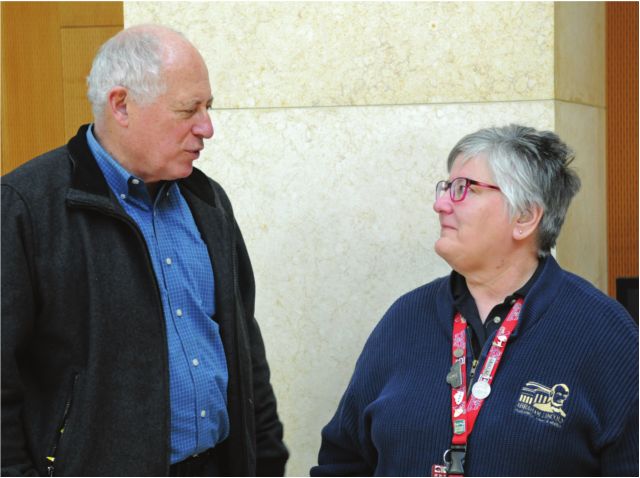
“My
father and mother were very dedicated to veteran causes,” Quinn said.
“So my brothers and I, we just saw it as natural. That was an ethic in
our family.
“My dad
worked for the Catholic cemeteries, so his biggest day of the year was
Memorial Day,” Quinn said. “We had flags at our house that were part of
the Memorial Day commemoration, especially in the 1950s and 1960s.
Families really did come out to the cemetery to remember their loved
ones.”
Ryan Croke of
Springfield was Gov. Quinn’s last chief of staff and is now the
executive director of the Illinois Network of Centers for Independent
Living. Croke went to work for then-Lt. Gov. Quinn in the fall of 2006
on a one-year fellowship straight out of graduate school.
During the eight years he worked for Quinn, Croke never heard him curse.
“There
were a couple of times where I heard him say, ‘I rue the day that I
ever did’ such-and-such, somebody might have let him down or made an
error that was giving him a headache,” Croke said. “That’s about the
worst thing I ever heard him say.”
Croke
remembered the famous “white slips,” small pieces of paper upon which
Quinn would write an assignment or idea, rubber-band the slips together,
and hand them out later to staff members.
“I
asked him once when he started divvying out slips of paper with ideas
and assignments and he said, ‘Ryan, have you ever heard of a person
named Benjamin Franklin?’” Croke said.
“He
would carry the slips of paper in a not-so-fancy duffel bag,” Croke
said. “He also had ‘Betsy,’ an old, tattered leather valise, and he
would also usually have a couple of other bags with files and notes as
well.”
Croke said these types of habits and a way of relating to everyday people have caused many to underestimate Quinn over the years.
“He
works harder than others who are operating in the same arena,” Croke
said. “He’s attentive to detail, a prolific producer of ideas, very
fast-paced, interested in policy, unpredictable in a good way.
“He’s
not an arm-twister, a glad-hander or back-slapper. He believes in the
power of honesty and a clear message,” Croke said “He would be the first
person to say that he’s not perfect and has made mistakes, and I think
he has learned a lot over the years.”
Quinn still carries a stack of white slips of paper and several pencils wherever he goes.
“A
short pencil is better than a long memory,” Quinn said. “I can’t
remember everything so I write it down. I used to cut up paper but a
friend of mine said ‘you could always use these white slips.’” Billy
Morgan went to work for Gov. Quinn straight out of college and now, five
years later, Morgan is Quinn’s press secretary.
“He
works all day, he never stops. I would probably describe him as a night
owl, he works throughout the night,” Morgan said. “I am 27 years old
and I don’t know that I’d be able to keep up the schedule he keeps. I’ve
never had a job before where I felt completely comfortable calling my
boss at midnight and working on stuff.”
Quinn
reads four or more newspapers every day and carefully reviews news
clipping summaries that Morgan sends him periodically throughout the
day, habits that he had as governor.
“He
is constantly on the phone. The Blackberry is still ever-present,”
Morgan said. “He is using the iPhone more and more, but still prefers
his old trusty Blackberry. He’ll get a phone call, talk for a little
bit, end the call, and look down to make sure he didn’t get any emails
while he was on the call.”
Quinn and Morgan are based in Chicago.
Morgan said it’s amazing how often Quinn is recognized in the city of 2.7 million.
“You
walk down the street in Chicago and people see him and they’ll go, ‘Pat
Quinn! Pat Quinn!” Morgan said. “I don’t know how many cellphone
pictures I’ve had to take. Most of the time, when he’s done taking a
picture with them, he’ll pull out the clipboard and say, ‘Hey, you want
to sign our petition?’ “I’ve walked with him in the Bud Billiken
Parade,” Morgan said. “The parade kind of passes him up because there
are so many people that want to hug him, shake his hand, say hello, say
how much they miss him, and then we have to run and try to catch up to
where we were.”
Several
people recognized Quinn at the Springfield restaurant we chose for this
interview, and out came the mobile phones for the type of photographs
that were ubiquitous when he was in office. He seldom turned down a
photo request, then or now. “Dave, one photo equals one vote. Do the
math,” Quinn would say.
“I
don’t go around saying ‘Hey, guess who I am.’ But often I’m in a
restaurant and I may get people coming up and saying, ‘Thanks for
signing the Marriage Equality bill. We are married because of that,’”
Quinn said. “I also occasionally get someone coming up to thank me for
granting them clemency when I was governor. They were able to go to
school, get a job, buy a house, it changed their whole life.”
Morgan
said Quinn’s dry, wry sense of humor is something the public often does
not get to see, and he wishes people could see that side of the former
governor. One expression of that humor is Quinn’s use of changing
nicknames for those around him.
“I’ve
been Billy Morgan. I’ve been Bill E. Morgan. Most recently I’ve been
William Jefferson Morgan,” Morgan said. “My full name is William Robert
Morgan, but I guess in honor of Bill Clinton, I’m now William Jefferson
Morgan.”
“He is
probably one of the few people in public life who you could have a
feeling about, then you meet them, and have them be everything you
thought they would be,” Morgan said.
Deputy
Chief of Staff Justin Cajindos and I worked on a lot of common issues
in Gov. Quinn’s Office, including hydraulic fracturing, or fracking, and
would often travel with the governor to events. When Justin and I would
board the airplane to get to the next event, Quinn would occasionally
say, “Oh good, Frick and Fracking have joined us.”
Requests
for comments about Quinn and what he was like to work with behind the
scenes were made of the four people who were the legislative leaders
during his tenure as governor, but all declined.
Quinn
is one of eight candidates for attorney general on the March 20
Illinois Democratic primary ballot. The other candidates include State
Senator Kwame Raoul, State Representative Scott Drury, former federal
prosecutor Sharon Fairley, attorney Aaron Goldstein, Chicago Park
District Board Chair Jesse Ruiz, Highland Park Mayor Nancy Rotering, and
former federal prosecutor Renato Mariotti.
“I want to be the lawyer for the people of Illinois,” Quinn said. “That’s really the definition of the office.”
Pat
Quinn, a longtime bachelor with two grown sons, is doing what he’s done
most of his life. He’s passing petitions. He’s running for office. And
he’s shooting hoops.
“On
my ideal day, I would want to play basketball and volunteer for
something,” Quinn said. “I do believe in eating, but I think eating
dinner or lunch is community and I don’t like to eat by myself. So I try
to find someone to share meals with.
“These
days, I’ll be on the old or the new phone a lot,” Quinn said. “And I
check every sports score, because you’ve gotta know the facts.”
David
Blanchette is a freelance writer from Jacksonville and is also the
co-owner of Studio 131 Photography in Springfield. He worked for the
Illinois Historic Preservation Agency and the Abraham Lincoln
Presidential Library and Museum from 1989 to 2012, and was Gov. Quinn’s
Springfield spokesman from 2013 through the end of his term in January
2015.


