Ann Ridgeway was on her porch when the crash came.
No one had told neighbors that a massive metal building was going to fall that day in October 2014. Towering more than 10 stories, the so-called dryer building – locals say artificial sweetener was once made there – produced plenty of dust and debris in its death throe.
“It looked like something was on fire,” Ridgeway recalls. Brian Dearco was repairing his roof a couple blocks away from Ridgeway’s home, directly across the street from the mill.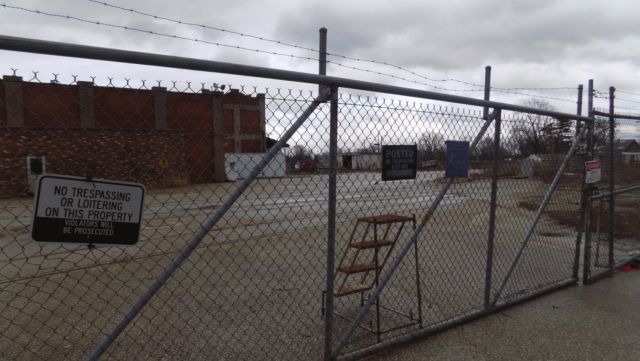
“As soon as the building came down, millions of mosquitoes and gnats came out,” Dearco says. “I broke out in a rash. My wife did, too. … You could smell it in the air after that building came down. It smelled like gas, so the fire department came.”
Responding to reports of a collapsed building, fire engines swarmed. But there was nothing to worry about, an owner of the site assured firefighters – he had a permit to demolish the building, according to fire marshal Chris Richmond. And so the fire engines left, and work resumed, with crews sorting through rubble to recover scrap.
There was, in fact, plenty to worry about. Permit applications filed with the city stated that asbestos inside the building would be cleaned up prior to demolition, but that didn’t happen. No regulator would have allowed the dryer building to be torn down absent pre-demolition cleanup of asbestos, which was used as a building material throughout the plant.
Once common as a building material, asbestos is a carcinogen that can cause chronic and irreversible lung damage. The more exposure, the greater the risk, and it can take years for symptoms to develop. The mill contained a lot of asbestos.
“You just never know,” says Kevin Turner, site cleanup coordinator with the U.S. Environmental Protection Agency. “One asbestos fiber from 20 years ago could cause some sort of lung issue. Or you could be exposed to it for 10 years and not have any issues.”
A consultant who conducted an environmental assessment of the site in 1991, the same year that Pillsbury sold the mill to Cargill, found pipes and tanks tagged with caution labels warning that asbestos was present. Pillsbury had an ongoing asbestos abatement program based in part on a 1987 survey that included taking as many as 500 samples of material throughout the plant and testing for asbestos. Pillsbury during the late 1980s identified priorities and started cleaning up sections of the plant, according to the 1991 report by the Minnsesota-based consultant.
“The facility has implemented an asbestos awareness training program for its personnel,” the consultant wrote more than a quarter-century ago. “Asbestos removal and disposal is performed by licensed asbestos removal contractors on an as-needed basis.”
Subsequent surveys found plenty of risk.
A 1996 report commissioned by Cargill, one of the planet’s largest food companies that acquired the mill in 1991, identified more than a mile of pipe insulated with potentially deadly asbestos. In 2008, a scrapper in search of electrical equipment hired a consultant who found asbestos in subterranean electrical vaults.
Soon after the dryer building came down in 2014, the city demanded that the mill owners obtain proper permits while also registering buildings on the site as vacant. “That’s kind of where things really kind of started rolling,” says Springfield fire marshal Chris Richmond.
But real heat didn’t arrive until the late summer of 2015, when state regulators got a call from a man who’d been getting paid in cash to cut asbestos insulation from pipes with a linoleum knife, then stuff the carcinogenic waste into plastic garbage bags.
It’s not clear what might
have prompted the apparent falling out between Don Dufer, the man with
the utility knife who blew the whistle, and Joey Chernis IV, the man who
hired him – Duter contacted the state shortly after he was fired,
according to court documents. Regulators say a whole lot of damage was
done before a court injunction stopped work in the fall of 2015.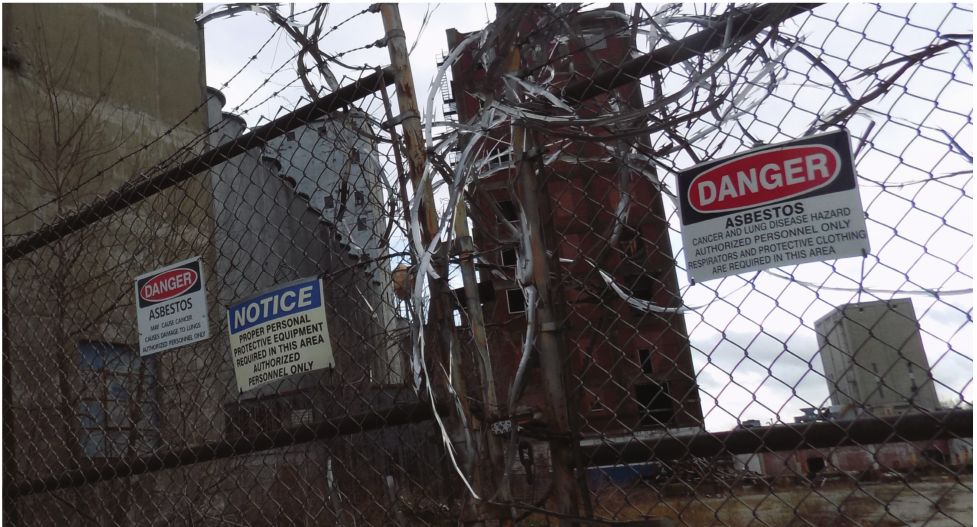
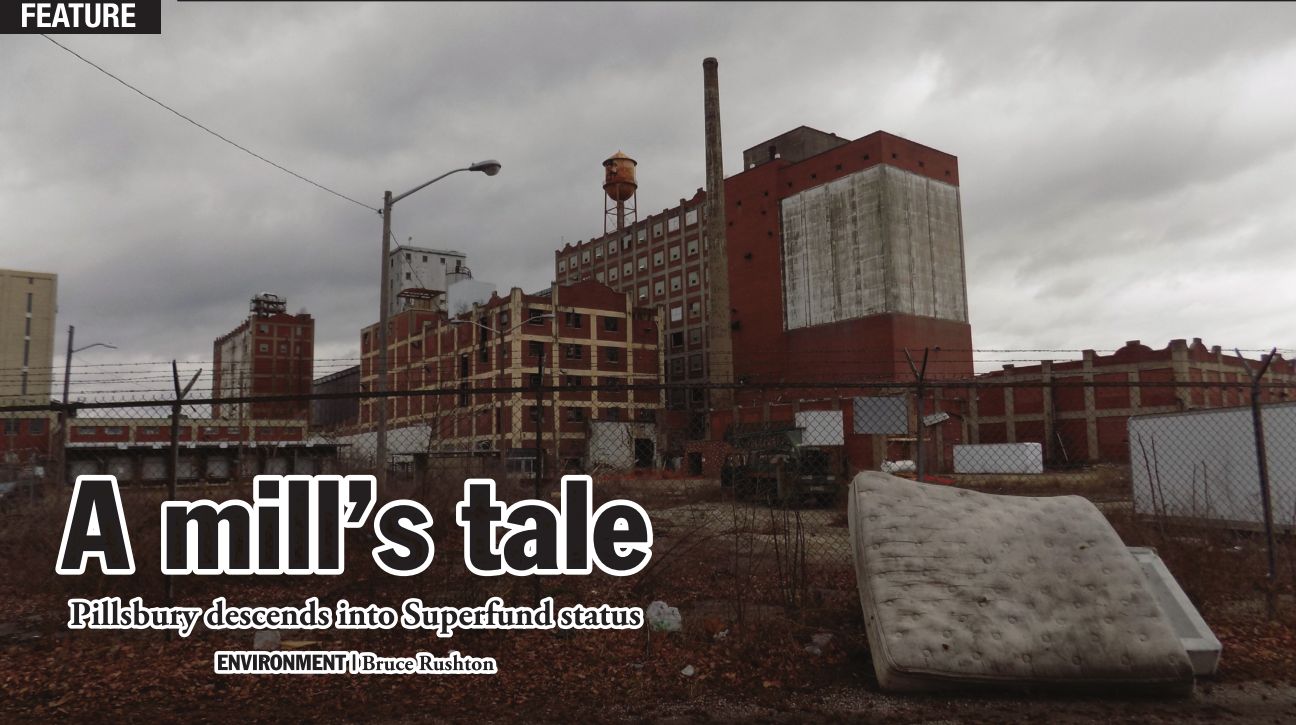
Spreading contamination If Springfield was Gotham and The Joker needed a hideout, he could do a lot worse than Pillsbury Mill.
Although
the dryer building, a boiler room and parts of warehouses have been
demolished, an estimated 850,000 square feet of space remain. Neighbors
say the cops have told them that officers won’t go inside the cyclone
fence that surrounds the property. Springfield police did not respond to
an inquiry, but it isn’t hard to imagine why police officers wouldn’t
venture inside the mill.
For
one thing, it’s dark, with plenty of places for bad guys to hide. For
another, large sections of floor and other structural parts of the
building are missing. There is also pollution.
Left
alone, asbestos isn’t necessarily dangerous stuff. Indeed, the silver
coating on massive grain elevators on the mill’s east side contains
asbestos. Regulators say that the coating is nothing to worry about, at
least not yet. But tearing away insulation and other materials that
contain asbestos can set free carcinogenic fibers that can float in the
air and cause substantial health risks. And that, regulators say, is
exactly what has happened inside Pillsbury Mill.
“(T)he
results of the scrapping and demolition activities have left a large
amount of loose and friable asbestos all through the buildings and
asbestos containing rubble and debris outside of the buildings which is
exposed to the elements,” Turner wrote a year ago in a memo assessing
the situation.
Some of
that loose asbestos was in the dryer building, according to federal
prosecutors. Richmond, the fire marshal, downplays any threat to the
neighborhood, although he acknowledges that witnesses saw a large cloud
of dust rise
when the building fell. “Some of that dust cloud presumably went
throughout the neighborhood,” Richmond says. “All the testing done with
the Illinois EPA and the U.S. EPA – asbestos particulate tests and air
monitoring – has shown very little if any asbestos made it outside the
fenced industrial property. Presumably, the lion’s share, even all of
it, settled within the property.”
Court
documents, however, paint a darker picture. “By improperly handling and
depositing (asbestos), defendants and/or their agents have caused or
allowed uncontrolled discharges of asbestos fibers into the environment,
creating a substantial danger to the environment and the public health
and welfare, endangering the health and well-being of defendant’s
workers, nearby residents of the facility and the general public,”
lawyers with the state attorney general’s office wrote in a 2015 request
for an injunction to halt work. The injunction was granted.
Asbestos from the dryer building and other parts of the Pillsbury Mill likely has spread far and wide.
“All
of that debris that was asbestos contaminated was taken by demolition
recyclers throughout the Midwest in its contaminated form,” Richmond
says.
The plant itself
remains a hazard. Proper asbestos removal requires copious amounts of
water, sprayed just-so while workers remove asbestos-contaminated
material to prevent poisonous fibers from becoming airborne. But no
water was on hand when Dufer used stripped asbestos from more than a
mile of pipe.
Without
water to keep it out of the air, asbestos fibers attached themselves to
dust particles throughout the plant, including particles from the
illegal demolition of the dryer building. “When you’ve got contaminated
dust settling, it contaminates what it settles on,” Richmond explains.
“It settles on horizontal surfaces, and that’s where it remains until it
gets stirred up.”
So
long as the mill is empty, with no dust getting kicked up, there is, at
least in theory, no problem. But the plant hasn’t been empty, despite
no-trespassing signs and a fence topped by razor and barbed wire in
various states of repair.
“Listen,”
Dearco says as he stands outside his house. Sure enough, from a
football field away, the sound of metal-on-metal clanging floats up from
the direction of the mill. Someone, it sounds like, is in there doing
something.
Ridgeway can see the route from her porch. All they have to do, she says, is get a boost up to a concrete ledge that traverses a small building and
leads to the upper portion of the cyclone fence that’s supposed to keep
trespassers out. That the fence is somewhat a joke is driven home by the
presence of a piece of portable scaffolding, apparently scrounged from
within the mill, just inside the main gate. The scaffolding is
positioned such that materials could easily be lifted over the gate and
onto a vehicle parked outside, and mushed-down barbed wire atop the gate
suggests that’s exactly what has happened.
Junkies
and homeless adults ignoring “Danger: Asbestos” signs to steal scrap is
one thing. The nightmare scenario is kids being kids.
“Everybody
wants to do a little Tom Sawyering,” offers John Keller, president of
the Pillsbury Mill Neighborhood Association, the only neighborhood
association with a Superfund namesake.
Regulators
say they’re well aware. “Kids are kids,” Turner says. “I look at it
from when I was a kid. If there was an abandoned building, boom, we were
in it. That is a population that we’d be concerned with.”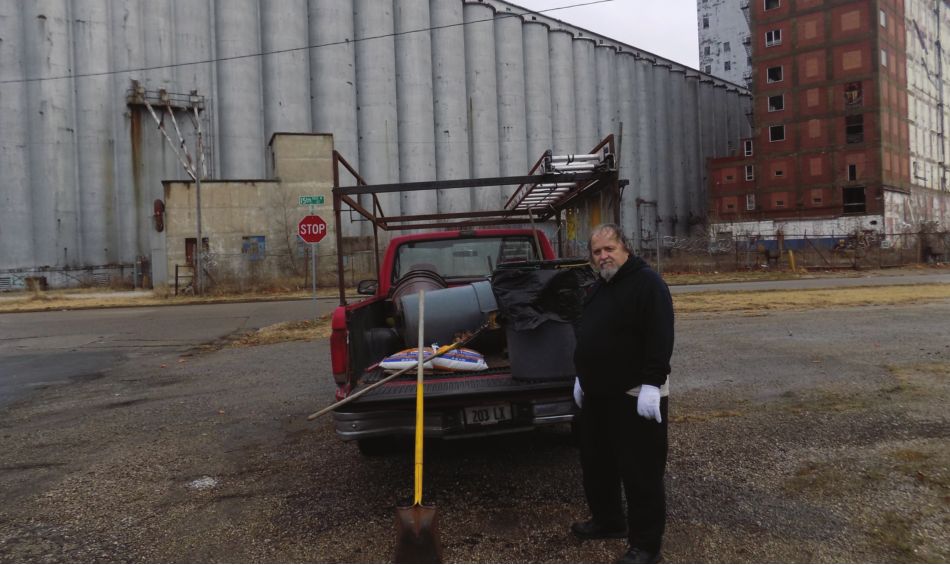
“We live in a good town” The mill wasn’t always like this.
When Keller helped launch the neighborhood association in the 1990s, the mill was still open. But just barely.
By
the time Cargill purchased the mill from Pillsbury in 1991, the plant
had trimmed operations, reducing employment to fewer than 350 workers.
At its peak, the plant had employed 1,500 people. It was built on the
eve of the Great Depression, and Pillsbury had to be persuaded of both
an adequate water supply and paved streets, plus railroad access, to the
site before committing to a $1.5 million investment in 1929.
“We live in a good town,” the Illinois State Journal gushed
shortly before the mill opened, noting that 120 building permits had
been issued in September 1929, just one month before the stock market
crashed and sent the entire nation into economic catastrophe. “We know
it, and large industries are realizing the fact more and more.”
Through
the years, the mill manufactured flour as well as a variety of cake and
baking mixes. The neighborhood smelled like Grandma’s kitchen and
boasted grocery stores and butcher shops and taverns and restaurants.
The mill was a beacon.
“At
nighttime, it used to be lit up,” recalls Keller, who no longer lives
in the neighborhood but still spends time there, picking up trash. “You
come in from Riverton, you go over the overpass, the first thing you saw
was the mill sticking up.”
By
the late 1980s, Pillsbury had cut back operations and was looking to
get out. It sold the mill to Cargill in 1991 for $19.2 million, roughly,
in inflation-adjusted dollars, what the plant had cost to build when
Hoover was in the White House. Cargill, the nation’s largest privately
held corporation, closed the mill in 2001. Seven years later, it sold
the mill to Ley Metals Recycling for $257,000, less than a quarter of
what the plant was worth, according to Sangamon County taxing
authorities.
After
filing required paperwork with the Illinois EPA and receiving permits,
Ley removed asbestos from some of the premises to allow salvage
operations, then flipped the plant in 2013 to an Indiana-based salvage
company. Sangamon County property records show no sales price; rather,
the mill changed hands on a contract-for-deed basis, records show.
Neither Jim Ley, owner of Ley Metals, nor owners of the Indiana company
could be reached for comment.
The
Indiana company owned the mill for less than a year before selling it
to PM LLC, an ownership group that includes Chernis, According to court
documents, Joseph Chernis, Chernis’ father, helped oversee salvage
operations at the mill. “Joey Chernis was generally in charge of the
facility and its demolition,” lawyers for the state wrote in a 2015
motion asking that work be stopped. Paperwork in the county recorder’s
office shows that no money changed hands when the Chernises acquired the
property. Once again, the deal was on a contract-for-deed basis,
according to county records, that presumably involved a cut of whatever
monies were realized from scrap operations.
Chernis
and his father have a history with Springfield code enforcers. After
acquiring a long-vacant icehouse near Lincoln’s home on Edwards Street
via foreclosure, the Chernises in 2013 leveled the building, then let
the debris sit for more than a year, prompting court intervention to
force a proper cleanup even as the Chernises prepared to acquire the
Pillsbury plant.
That the mill was approaching a brink wasn’t a secret. In 2006, after public brainstorming sessions
cosponsored by the Illinois EPA, an arm of the Greater Springfield
Chamber of Commerce published a report suggesting what might be done
with the vacant site, which was still owned by Cargill. Among the
suggestions was a tax-increment financing district.
“We’re
committed to pursuing this until we have exhausted all our resources,
or we have some alternatives,” Bradley Warren, director of the chamber
group, told the State Journal-Register in 2006. Two years later, Cargill sold the mill for scrap, with no other plans for the future in sight.
Pillsbury
Mill isn’t alone, and perfect answers are rare. In western New York
state, the U.S. Environmental Protection Agency last spring ordered the
Beech-Nut Baby Food Co. to pay cleanup costs at a vacant factory the
company sold in 2013, after determining that asbestos cleanup costs
would total $1.7 million for half of the 27-acre site. The sales price
plummeted from $1 million to $200,000 after cleanup costs became known,
according to media reports. Beechnut refused to obey the EPA cleanup
order, saying that asbestos problems were caused by improper demolition
after the company sold the property to a salvage company that didn’t pay
property taxes. Late last year, Montgomery County, where the factory is
located, agreed to pay to remove asbestos from the site at a cost that
could reach $10 million. The county is hoping that state and federal
grants will kick in.
Cargill
did not respond to an emailed inquiry asking why the company didn’t
remove asbestos before selling the Springfield mill or otherwise ensure
that the plant wouldn’t end up a Superfund site. The cleanup overseen by
the federal EPA in Springfield has cost $1.8 million. Nearly 2,200 tons
of contaminated debris has been removed.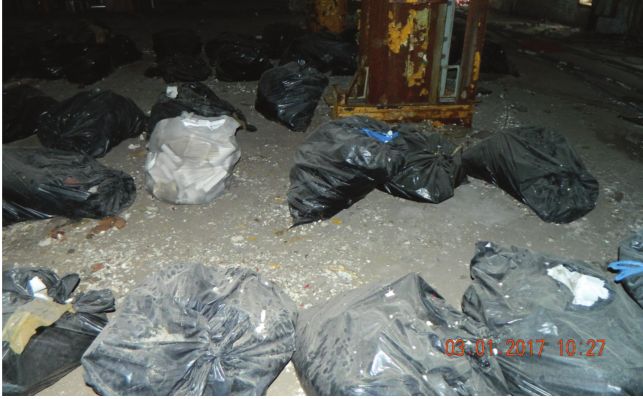
“These
types of facilities that have asbestos are all over the country,” says
Turner, who says he’s overseen at least a dozen government-funded
cleanups of such sites in Illinois since he began work in the Superfund
program in 1989. “There was nothing in Pillsbury that scared me. There
was nothing in Pillsbury that made me nervous or that I had not dealt
with before. The only thing with Pillsbury was its size. It was the
largest cleanup of this nature that I have ever done.”
And
the job isn’t finished. Turner believes demolition is the next logical
step, although he acknowledges that he doesn’t know who would pay or
what it might cost. For now, an injunction barring any scrapping
operations remains in place as part of a lawsuit filed by the state
against Chernis and other mill owners for improper disposal of asbestos.
In addition, Chernis is awaiting sentencing in federal court after
pleading guilty to charges relating to improper cleanup of asbestos and
making false statements in the state court case. Jail time is mandatory
under federal sentencing protocols. Mark Wykoff, Chernis’ attorney,
declined comment.
An
obsolete mill. A massive amount of asbestos. A series of deals conveying
title from one scrap company to the next. And now, a post-apocalyptic
scene ringed by cyclone fence and razor wire in the midst of residential
neighborhood. Was this something that anyone should have seen coming?
Yes, Richmond acknowledges.
“Like a freight train,” he says.


