The premature death of my
wife due to complications of obesity was a loud wake-up call for me. At
the time of her death I, too, was obese, weighing 236 pounds and having
to buy my clothes at a “Big and Tall” store.
We didn’t eat “junk food” or drink soda.
My
wife was an educated and accomplished cook and made everything from
scratch. She sourced out organic, free-range, hormone and pesticide-free
ingredients from local farmers. Though we tried every diet and lost a
lot of weight, we eventually regained it all back plus a little more.
Since all the diets seemed to fail, we concluded that the key was
exercise. The problem was that we didn’t really want to join a gym or
get up at dawn to ride bikes or power walk so we existed in a chronic
state of guilt and resigned ourselves to being fat.
Though
we cooked our own meals using only “healthy” ingredients, my wife’s
focus was always on a dish’s esthetic merits more than its nutritional
benefits. She loved good bread and pasta and potatoes. She used cream
and butter. She
made delicious desserts. When checking my cooking for seasoning, she
would often tell me to add sugar. Even on a week night, most meals were
quite elaborate and very late getting on the table, often after 9 or 10
p.m. To quiet my hunger until dinnertime, I would snack on appetizers
and sip wine. Then after eating a big meal, I’d go straight to bed. Over
a 40- year period I slowly gained 70 pounds.
Determined
to turn my life around after losing my wife I took the big leap and
began a fitness program at CrossFit Instinct gym. It’s taken me 18
focused months of exercise and dieting to return to my college weight.
The benefits of regular exercise for an aging body are many, but
accelerated weight loss was not one of them. It was my commitment to the
dietary guidelines set forth by CrossFit trainer Mike Suhadolnik that
finally made the fat go away.
THE GUIDELINES:
• No processed foods – including nut butters
• No sugar
• No dairy
• No grains
• Little starch
• Select fruit-no bananas
• Drink 1 gallon of water each day
• Cook ONLY with unprocessed coconut oil or olive oil
• 30 percent protein, 30 percent fat, 40 percent low-starch carbohydrate
• No snacking between meals • ALL food consumption within an 8-hour period; then 16 hours of fasting
• Stop eating 2 hours before sleeping
Adherence
to these guidelines requires that you cook your own food using only
unprocessed ingredients and time your meals strategically so that you
have enough time to use up your circulating blood sugar and start
drawing from your fat reserves. An obvious challenge is finding enough
time after work to prepare your evening meal and consume it within 8
hours of your previous meal and at least 2 hours before retiring for the
night.
As a
practicing dentist it is obvious to me that the root causes of obesity
are the same culprits that cause tooth decay and enamel erosion. Both
are consequences of industrialization of our food sources. I once
suggested to a dental
colleague that we should initiate a class action lawsuit against
Mountain Dew for ruining the teeth of our young people. His response:
“You’re crazy! That’s how we make our money! We should buy stock in the
company!” I disagree and believe it to be my social responsibility as a
food writer and health care professional to present meal strategies that
promote wellness.
I
always try to find balance between food as fuel and food as pleasure.
The dietary guidelines I’m following limit the ingredients I have to
work with; my creative challenge is to create as much mealtime
deliciousness and diversity as possible with a restricted pantry and
within a limited time frame. In this and future columns I will be
sharing strategies and recipes that work for me. One of my favorites I
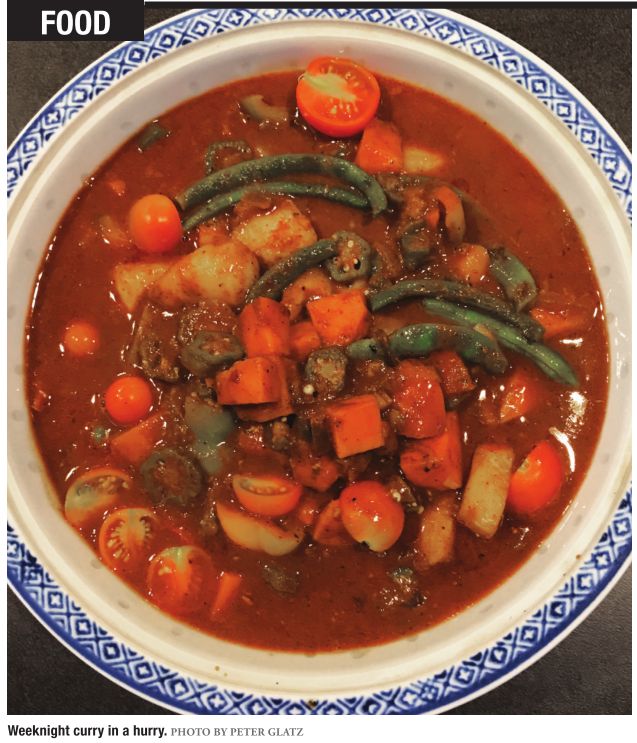
call Weeknight Curry in a Hurry.
The
term curry is derived from a word meaning “sauce.” Thai curry dishes
are generally made with meat or seafood, vegetables, coconut milk, herbs
and curry paste. Thai curry paste is traditionally made with a mortar
and pestle and may include shallots, garlic, lemongrass, galangal,
cilantro roots and chilies. Many of the ingredients in curry paste have
strong medicinal properties and were used to prevent food spoilage in
addition to imparting tremendous flavor.
Making your own Thai curry
paste can be fun but a bit time consuming. An excellent prepared curry
brand is Mae Ploy’s premium “Hand Brand Number One,” available in
several varieties. This curry paste is from a high quality spice company
in Thailand and is made in “small batches using the finest
ingredients.”
Weeknight curry in a hurry Serves 4
Ingredients
• Coconut oil
• 1 large onion, chopped
• 1 pound skinless boneless chicken thighs, cut into bite-sized pieces
• 2 large garlic cloves, minced
• 1 large or 2 small sweet potatoes, peeled and cut into bite-sized pieces
• 1 can coconut milk mixed with 3 tablespoons Massaman curry paste
• 2 tablespoons Asian fish sauce
• 1 cup chicken stock or water
• 2 bell peppers cut into bite-sized pieces
• Asian long beans or green beans (optional), cut into bite-sized pieces
• Salt and pepper to taste
• chopped peanuts to garnish
• cilantro sprigs to garnish
• Lime wedges
Preparation
1. Sautee the onion for a few minutes in a little coconut oil in a heavy-bottomed pan with a lid.
2. Add the chicken and stir until starting to cook. Add the garlic and stir-fry for a minute, then add the sweet potato.
3. Add the coconut milk and curry paste, fish sauce and enough chicken stock or water to cover.
4. Stir in the bell peppers (and beans if using) and push everything down so that it’s covered by the liquid.
5. Bring to a boil with the lid on, then reduce to medium heat and simmer for about 30 minutes or vegetables are cooked through.
6.
Grind in salt and pepper to taste, then garnish with cilantro and
peanuts and serve with lime wedges. Thai curries are traditionally
served with jasmine rice.
Notes:
• Good brands of additive-free coconut milk are Aroy-D and Chaokoh.
• The 30 minutes cooking time is approximate. Keep checking the sweet potatoes and cook until soft.
• Feel free to use different vegetables such as zucchini, okra or eggplant.
Contact Peter Glatz at [email protected].


