Creativity and nutrition in packing school lunches
My mother, amazing cook
though she was, did not pack a very good school lunch, at least from a
kid perspective. She really didn’t do breakfast at all, and lunch was
usually leftovers from dinner the night before. This was in the 80s,
before the wonder of celebrity chefs and Food Network-obsessed gourmet
kids. I remember being tormented for bringing red pepper strips and
(gasp!) a tuna salad sandwich. What I wanted more than anything in the
world was to open my lunch box to discover a turkey and Miracle Whip
sandwich on soft white bread with the crusts cut off, carrot sticks and
maybe, just maybe, a pudding snack pack.
My
mother didn’t roll like that. She showed her love with leftover
eggplant moussaka, and maybe a slice of semolina olive oil cake with
rosemary. Looking back on it, I certainly turned away some fabulous
lunches that I would now happily devour. But at the time, my thirdgrade
credibility was way more important than being culinarily open-minded.
Once middle school hit and we were allowed free choice in the lunch
line, I stopped bringing lunch from home and opted instead for a “meal”
of curly fries, soft-serve ice cream and a package of Famous Amos
cookies from the cafeteria.
Now
as a parent myself, I’m totally on board with Mom’s sensible and frugal
strategy of sending leftovers for lunch. Usually leftovers from a
home-cooked meal are far more nutritious than a bread and deli meat
sandwich.
However,
if they don’t get eaten, nothing is gained. Often I repurpose leftovers
into a different, more lunch-type meal. Leftover chicken cutlets can be
cut into strips and served with a small amount of ketchup or yogurt
ranch dip, alongside some fresh veggies and fruit. Steak from dinner the
night before reappears in a steak and cheese quesadilla. Whenever I
make soup, chili or stew I always package 8-ounce portions in Mason jars
and freeze them to send for lunch (make sure there’s a microwave
available to rewarm food). It’s so much easier than making sandwiches
every morning, and more nutritious to boot.
Breakfast
is my biggest mealtime struggle during the school year. Usually, we are
halfway to school before I realize that, after getting everyone else
fed, I forgot to feed myself. This usually leads to another cup of
coffee (if I was lucky enough to actually finish my first cup), followed
by a hastily downed English muffin or a sugar-laden pastry to answer
the cry of low blood sugar. Ideally, I would start the day with eggs and
veggies, but, honestly, getting out a cutting board and skillet is
utterly unappealing at 7a.m.
Enter
the Breakfast Egg Bake. Essentially a crustless quiche baked in a loaf
pan, this make-ahead breakfast keeps well for a week in the fridge. It
is baked in a loaf pan, and can be sliced and turned into quick egg
sandwiches or simply warmed and topped with salsa for a lowcalorie, low-carbohydrate breakfast.
I’ve
also been making these delicious wholewheat banana muffins lately and
storing them in the freezer. They thaw best when left out on the counter
overnight, and are a cost-effective and nutritious alternative to a
drive-thru breakfast pastry.
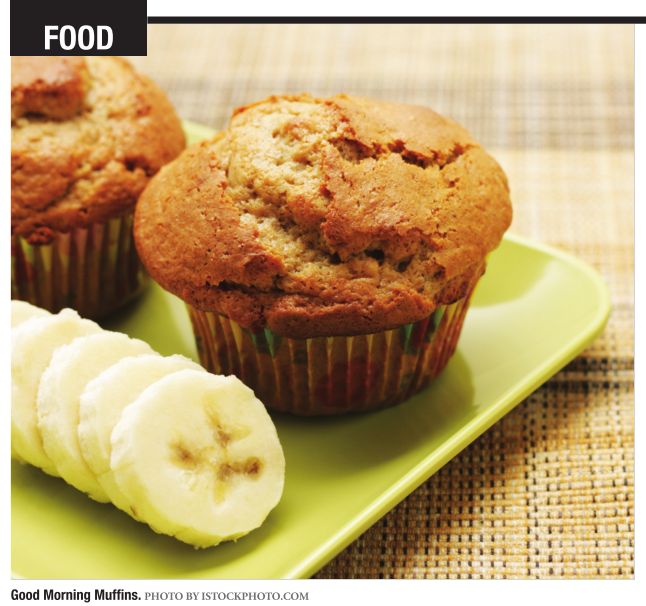
Good Morning Muffins
These
muffins are simple to make and contain no added sugar, making them
perfect for school-day breakfasts. Serve with a smear of Neufchâtel
cheese for added protein and some fresh whole fruit for a nutritionally
balanced meal that will keep little Jimmy full and focused until
lunchtime.
• 4 very ripe bananas
• 1 egg
• 1/3 cup neutral oil (such as canola, olive or grapeseed)
• juice from one orange (about ¼ cup)
• 1 teaspoon orange zest
• 1 ½ cup whole-wheat flour
• 1 teaspoon cinnamon
• 1 teaspoon baking soda
• 1 teaspoon baking powder
• ½ teaspoon salt
•
½ cup toasted walnuts or chocolate chips (optional) Preheat oven to 425
degrees. Mash the bananas in a medium mixing bowl. Add the egg, oil,
orange juice and zest, and mix well to combine. In a separate bowl,
whisk together the flour, cinnamon, baking soda, baking powder and salt,
then add to the banana mixture. Mix gently to combine, then add nuts or
chocolate (if using).
Spoon
into muffin tins that have been greased or lined. Insert the muffins
into the hot oven, then immediately turn the heat down to 325 degrees.
This will help to give the muffins a high, rounded top. Bake for about
18 minutes, until muffins are golden and a toothpick inserted into the
center comes out clean.
Baked muffins freeze well and are best when allowed to thaw at room temperature overnight.
Breakfast Egg Bake
This
keeps beautifully in the fridge for up to five days – perfect for
making on Sunday and enjoying through the week. Tailor the fillings to
suit your preferences.
• 10 eggs
• 2/3 cup plain full fat yogurt
• ½ cup shredded or crumbled cheese of choice
•
up to 2 cups cooked vegetables or meats (A perfect way to use
leftovers. It’s important that filling ingredients be precooked to
prevent a soggy egg bake.)
• Chopped parsley, basil, chives (optional)
• Salt and pepper to taste
•
A dash of nutmeg (optional) Preheat the oven to 325 degrees. Line a
loaf pan with a piece of greased parchment large enough to completely
cover the pan. Arrange your cooked and cooled fillings and cheese
(greens, bacon, mushroom and Gruyere is my favorite) in the
parchment-lined pan.
Beat
the eggs well with the yogurt until fully incorporated. Add the herbs,
then season to taste with salt, pepper and nutmeg (if using). Pour the
egg mixture over the vegetables and cheese in the pan, then bake in the
325-degree oven for 45-50 minutes, or until the top is golden and the
center is set. Check for doneness by depressing a spoon gently into the
top of the egg bake. If no liquid egg pools around the spoon, it’s done.
Let cool completely before cutting.
Contact Ashley Meyer at [email protected].


