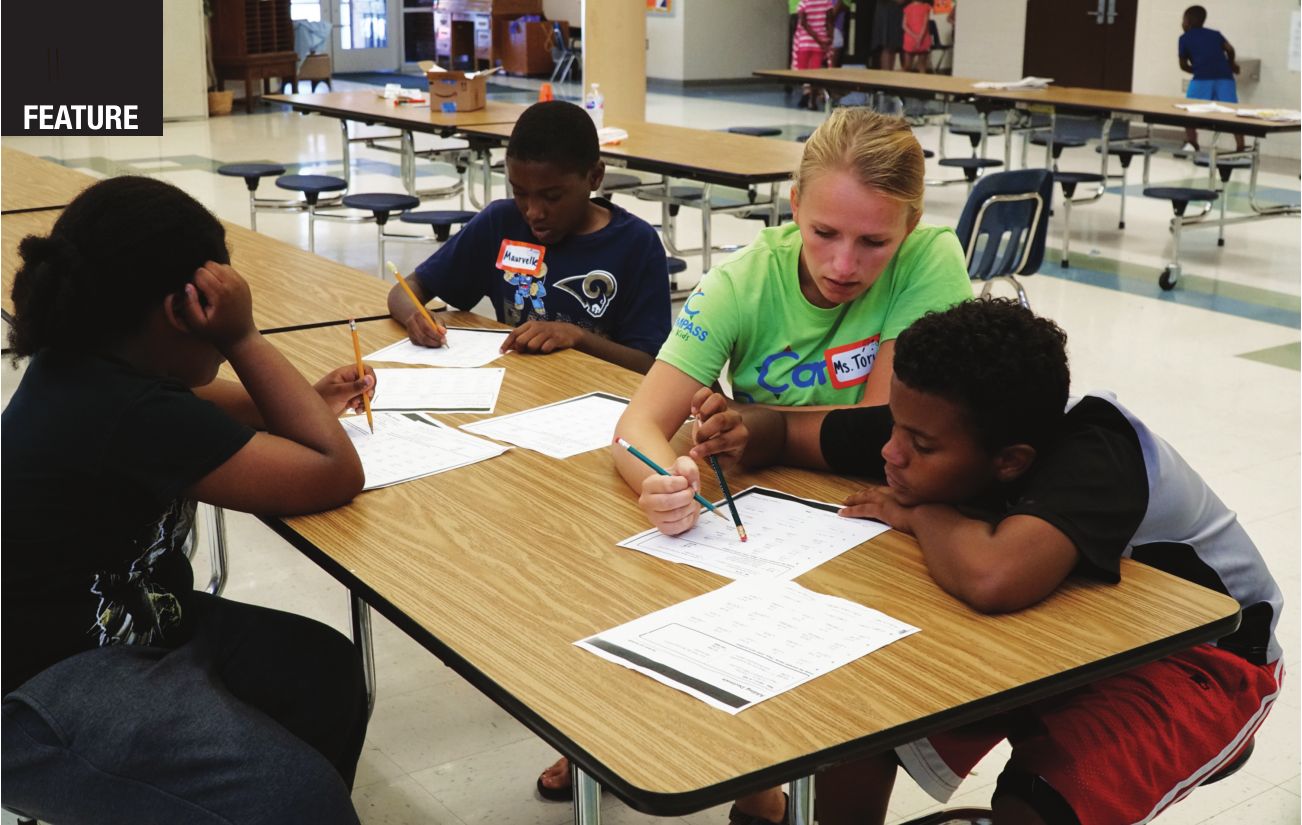
Camp Compass makes learning fun
“If
you don’t want to come to Camp Compass, that’s too bad for you because
we have a lot of fun here,” said Donovan, a fifth-grader attending the
free six-week summer program serving low-income students from
kindergarten to fifth grade Monday through Friday, administered by the
nonprofit Compass for Kids at Ridgley Elementary School on North Eighth
street.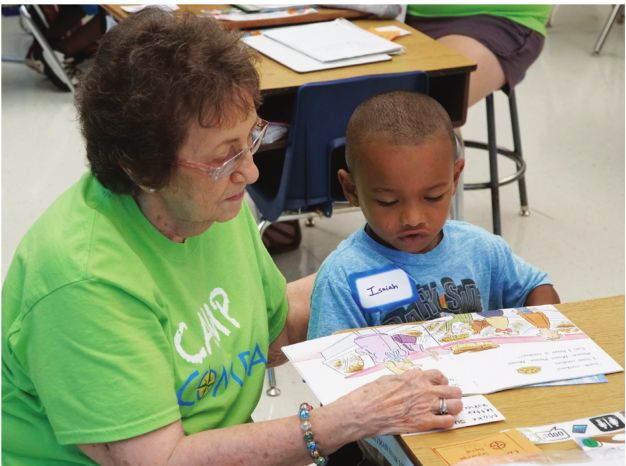
A
small team of licensed teachers provides instruction for the kids from 9
a.m. to 12 p.m. every day, with a focus on math and reading. According
to the National Summer Learning Association, most students lose two
months of math skills over the summer, while low-income students
specifically lose between two and three months of reading skills as
well. Summer learning loss during elementary school years accounts for
two-thirds of the achievement gap by the time students reach ninth
grade.
“That’s the
reason we’re here, to help them with the academic support,” said Compass
for Kids executive director Molly Berendt, “but if we just did the academics it would seem like summer school, so we make it a really fun camp.”
To
this end, on most afternoons from 1 to 3 p.m. different organizations
from the community arrive to lead the students in enrichment activities,
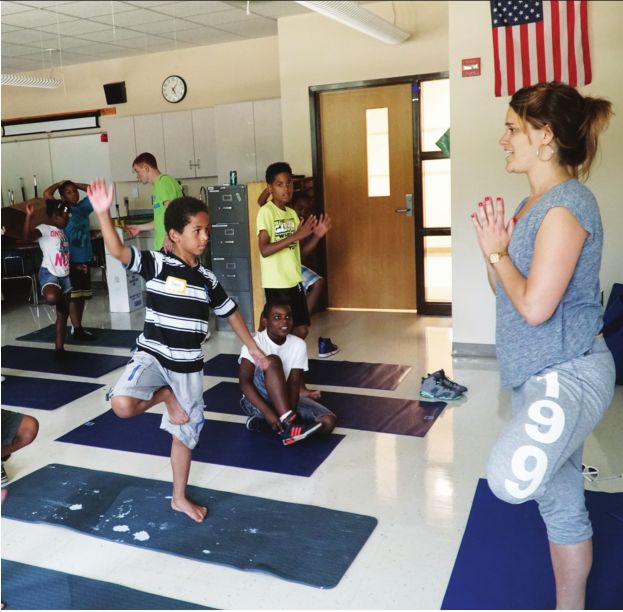
based around a weekly theme. One recent theme was “healthy living,”
which brought visits from a yoga instructor who led the kids through
some basic poses, representatives of genHkids, who provided information
on exercise and healthy eating, and martial arts instructor John
Geyston, who imparted some basic karate moves and philosophy. “Most of
these community members are very generous and donate their time,” said
Berendt. Once a week there is a trip to the Nelson Center for swimming.
“That’s usually the highlight for the kids, they love swimming,”
according to Berendt. Also once a week the campers go on a field trip,
which is usually coordinated with that weekly theme. “They love getting
to go new places and experience new things,” Berendt said. For healthy
living week the field trip was to HSHS St. John’s Hospital, where the
campers took part in “Operation Kid Clinic,” each creating a
personalized doll which they then learned to examine using a stethoscope, blood pressure cuff and thermometer.
A
typical day at Camp Compass begins with breakfast followed by a brief
orientation before breaking into morning class groups. The day IT visited,
the fourth and fifth-grade math students were studiously calculating
perimeters while their first and second-grade counterparts played a math
game called “Take Four and Add,” with a deck of cards. The kids were
well behaved and attentive, with one teacher offering future “iPad time”
as positive reinforcement. Meanwhile, one reading class took turns
reading a story about Johnny Appleseed out loud, and later those kids
built “Johnnys” with apple juice box bodies, applesauce heads, raisin
shoes and straw arms, all topped off with a construction paper
headskillet, a nutritious art project which they later ate during lunch.
Also on the healthy living theme, another class read an essay together
about the ways people in different countries go about getting their
nutrition based on climate and availability.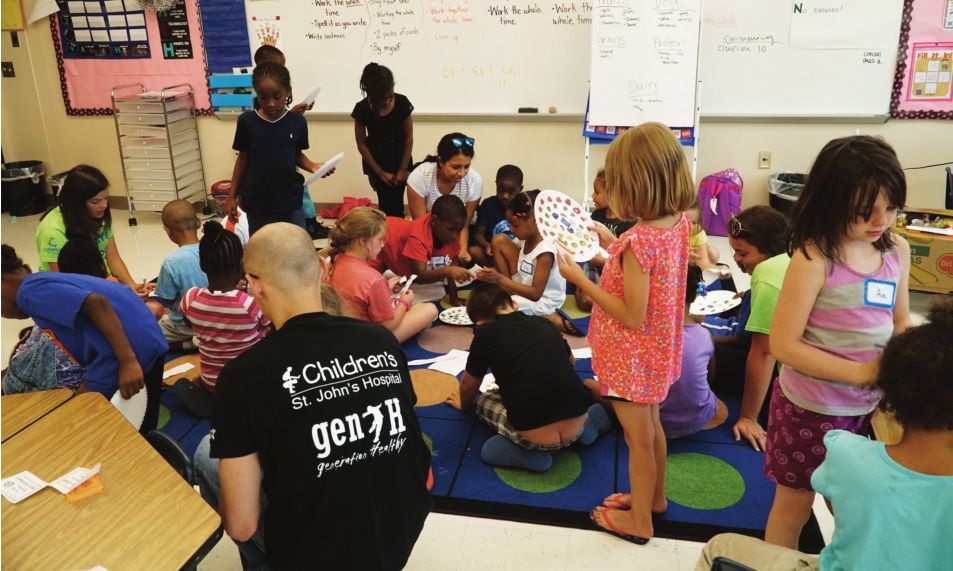
The
Compass program was founded in 2011 by Berendt as a ministry of Douglas
Avenue United Methodist Church, starting as an after-school program for
students at Dubois elementary school. After a successful first year, it
became a program of the Family Service Center and, after receiving
pilot funding from the United Way, was able to expand and serve
additional schools. In 2013, the first Camp Compass summer program
started and in 2016 it left FSC and became an independent nonprofit,
adopting the Compass for Kids name. “This is our fifth year doing Camp
Compass but it’s our second year as our own independent organization,”
Berendt pointed out.
In
previous summers, Camp Compass typically served 80 kids, but this
summer they increased that number to 100 after receiving new grant money
(120 students are currently enrolled, with average attendance of
between 80 and 90 per day). “This is the second time we’ve done a
six-week camp,” said Berendt. “Six weeks and a hundred kids, that’s our
biggest ever.”
“We are the lucky kids.”
“The reason
why we have this program is to keep our brain going during the summer,
but it’s also really fun,” said fifth-grade student Courtney, who hopes
to attend Lincoln Magnet School in the fall. “My favorite thing this
summer so far was when a dog came here from APL for ‘living things’
week. It looked like a Labrador, it was nice. It was a girl.”
Donovan
said that his favorite thing so far this summer was learning how to
divide whole numbers by decimals. “I don’t always enjoy math in regular
school but I like it here,” he said. “My favorite subject is usually
gym.” He also said he enjoyed a project where he and the other campers
made a working volcano with baking soda and vinegar.
Fifth-grade
camper Maurvelle has been attending Camp Compass for the past few
years. He said his favorite activity is swimming and that he appreciates
the structure the camp provides. “If I wasn’t coming here I would just
stay home and do what I need to do and then go on my phone.” He says
that most of what they learn in class he already knows from school but
that it doesn’t hurt to review.
For
Ta’Coreyia, another fifth-grader, this is her second and final year at
Camp Compass and it has been a memorable one. “There was one lady who
came in with miniature horses named Winnie, Bailey and Jasper. She told
us to ‘Just say whoa to bullying.’” She was also thrilled when
Henson-Robinson Zoo staff visited with a possum, a turtle and an owl. “I
really like the owl; they taught us the owl’s head goes all the way
around 360 in a circle.”
After
a full morning of classes followed by lunch, it was time for 30 minutes
of recess in order to “get the wiggles out” (in the words of the
staff). The campers broke into two groups, with one venturing outdoors
to brave the sweltering heat and climb on a jungle jim, swing on swings,
throw Frisbees and footballs, jump rope, and perform oddly topical
handclapping chant games (“I don’t wanna go to Mexico no more-more-more /
There’s a big fat policeman at my door-door-door”), while the indoor
group ran around the Ridgely gymnasium shooting baskets, kicking
kickballs and swinging hula hoops. This was clearly an energetic, well-nourished group of youngsters.

This
is not always the case for lower-income children and the Compass for
Kids “backpack program” is an attempt to address this. “We do this at
both our after-school programs and here,” explained Berendt. “It is
designed to address food insecurity.” As part of camp, kids receive
breakfast and lunch every day and a snack every day (because it is held
at Ridgely Elementary School, District 186 includes Camp Compass as part
of its summer food service program). The Backpack program, funded by
HSHS St. John’s Hospital, provides meals for the campers to be taken
home and eaten over the weekend.
“The purpose is to make sure the kids
are getting to eat between when camp lets out on Friday and resumes on
Monday,” Berendt said The Camp Compass staff is a dedicated group, all
of whom come across as devoted to the well-being of the campers. Vicki
Martin is
about to enter grad school and has been working as a counselor for Camp
Compass every summer since her junior year in high school. “The kids
are mostly what keep me coming back,” she said. “During my first year,
one day I was serving the kids snacks and I was leaning over one of the
girls to pour her a glass of milk and I overheard her telling one of the
other kids that she was really excited that her family was moving into a
hotel because that meant that she got to go to the pool every day. That
kind of broke my heart.
 I
knew the kind of population that we were working with but to actually
hear it from the kids is a completely different thing.” Martin says it
is satisfying to see the kids grow up year after year. “I get to see
some of the third-graders coming into their own and becoming their own
little people and I also get to see my fourth-graders from last year and
how much they’ve progressed. One of my kids last year had trouble
focusing, so much so that you couldn’t even have a conversation with him
because he couldn’t keep eye contact with you. Even when he was looking
at you it was like he was looking past you and now I can talk to him a
lot more than I could.”
I
knew the kind of population that we were working with but to actually
hear it from the kids is a completely different thing.” Martin says it
is satisfying to see the kids grow up year after year. “I get to see
some of the third-graders coming into their own and becoming their own
little people and I also get to see my fourth-graders from last year and
how much they’ve progressed. One of my kids last year had trouble
focusing, so much so that you couldn’t even have a conversation with him
because he couldn’t keep eye contact with you. Even when he was looking
at you it was like he was looking past you and now I can talk to him a
lot more than I could.”
Teacher
Amy Anderson finds working with the Camp Compass campers both difficult
and rewarding. “My interactions with the kids are really good,” she
said. “There’s challenges every moment but that keeps me on my toes and
creates moments where we can help them be aware of their behaviors and
how they can then make better choices.
There are teachable moments every second so we’re all pretty worn out by
the end of the day. It’s hard work, more than some people might think.”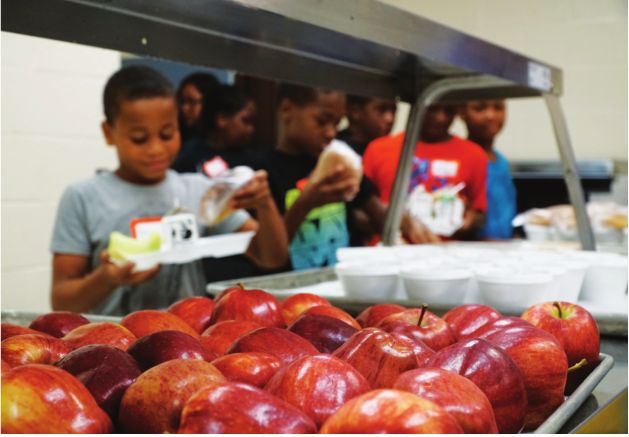
Torie
Faulkner is a counselor new to the program. “This is my first summer
here. I love it,” she said. “I am getting a lot closer to the kids than I
expected I would in such a short time. It’s going to be so sad to
leave.” She said it has been an eye-opening experience working with
lower-income students. “In the past, I’ve spent a lot of time with
privileged kids who have more opportunities. I love the idea that Camp
Compass is free for them and they get all these opportunities they might
not have otherwise. Not all of the kids understand why they are doing
all this stuff but in the long run I think it is definitely going to
benefit them.”
“We are
the lucky kids,” said camper Ta’Coreyia, “cause this camp would usually
cost, like, $100 but Miss Molly raises money to keep it going and she
does not have to do that.” For more information on Compass for Kids,
visit http://www.compass4kidz.com/.
Contact Scott Faingold at [email protected].


