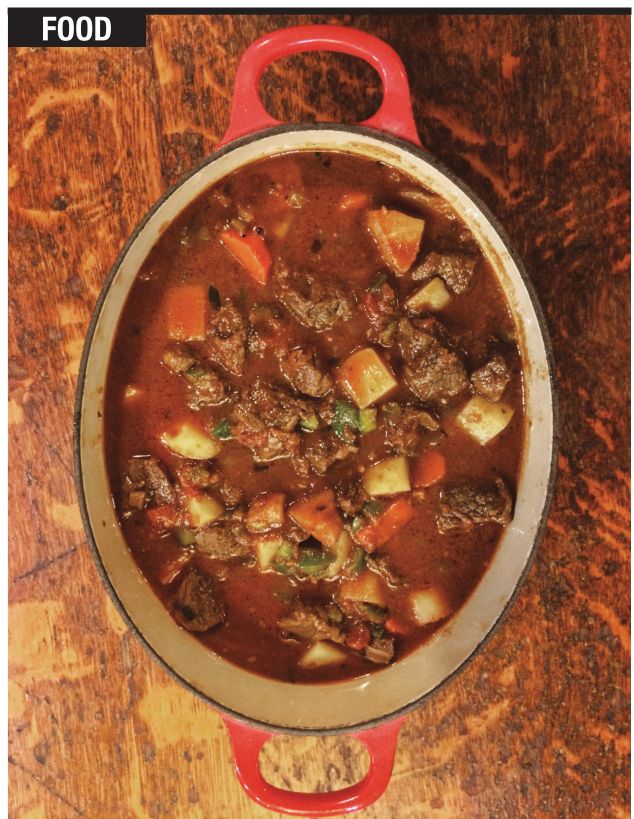
Hearty, tasty, nutritious and easy
My father was of
Austro-Hungarian descent so when I was a kid growing up in the 50s and
60s, we enjoyed goulash the way folks around here enjoy chili. Goulash
is a beef stew seasoned with caraway seeds and paprika. Goulash was once
a very popular dish in North America; a 1969 Gallup Poll found that
goulash was one of the five most popular meat dishes in the U.S.
Nowadays in America, unless you are dining in a Hungarian restaurant,
goulash is seldom seen on a menu.
Goulash is a perfect cold-weather meal:
hearty,
tasty, nutritious and easy to make with minimal skills or cooking
equipment. It is a rustic stew that had its origins going back to the
ninth century. It was a simple stew made by Hungarian herdsmen from
preserved ingredients that were easily transported.
The plains of Hungary
provided ideal terrain for raising cattle and became famous for
producing an ancient breed called Hungarian Grey. Hungarian herdsmen
known as Gulyás would go on cattle drives, sometimes lasting as long as a
year, to sell their prized cattle all over Europe. Along the way, the
weaker cows would be butchered and used to make a stew or soup. To
preserve the meat without refrigeration, the herdsmen would cut the meat
into cubes and cook it with onions in a heavy iron kettle over an open
fire. The meat would be stewed slowly until the liquid was gone, and the
remnants would be dried in the sun and stored in a bag made from a
sheep’s stomach.
Dinnertime on the cattle drive consisted of a bowl of stew made by rehydrating the dried beef in boiling water with onions and any other vegetables that
were available. The resulting stew became known as goulash. It was
originally seasoned with black pepper, but the now-characteristic
paprika was substituted when black pepper became unavailable. Black
pepper and paprika not only flavored the meat, but also helped preserve
it.
Paprika is made from dried and ground chili peppers, capsicum annuum, which
originated in Mexico and were introduced to Europe in the 16 th
century. When the spice route from India to Eastern Europe was cut off
by Ottoman conquest, dried and powdered paprika became a stand-in for
black pepper. Due to Napoleonic War trade embargos in the early 1800s,
black pepper was hard to obtain and prohibitively expensive, so it was
replaced by paprika as the dominant seasoning in goulash.
Paprika
has higher sugar content than its cousin, cayenne. Paprika should be
added to the other cooked ingredients with the pan removed from the
burner; if overheated, the sugars scorch and the color and flavor is
spoiled. So when making goulash, the onions should be sautéed in lard,
allowed to cool a bit before adding the paprika, and then stirred to
coat. Then the other ingredients can be added before returning the pot
to the heat.
Hungarian Goulash
Serves 4-6
Ingredients
• 2 tablespoons lard
• 1 cup finely chopped onions
• ½ teaspoon finely chopped garlic
• 3 tablespoons sweet paprika
• 2 pounds of beef chuck or short rib, trimmed and cut into 1-inch cubes
• ¼ teaspoon caraway seeds
• 4 cups chicken stock, fresh or canned*
• ½ teaspoon salt • Freshly ground black pepper
• 2 medium carrots, cut into ½-inch cubes (optional)
• 2 medium parsnips, cut into ½-inch cubes (optional)
• 2 medium-sized boiling potatoes, peeled and cut into ½-inch cubes
• 1 pound tomatoes, seeded and finely chopped (about 1 ½ cups), or substitute canned tomatoes
• 2 medium sized green bell peppers, ribs and seeds removed, finely chopped
• 1/2 tsp. dried marjoram
*If
you use canned stock, buy the low-sodium type. I prefer canned chicken
stock to beef stock. Canned beef stock just doesn’t taste very beefy to
me.
Instructions
Heat
lard in a 4- or 5-quart heavy saucepan or Dutch oven until it shimmers,
then adjust the heat to medium and add the onions and garlic. Cook 8 to
10 minutes, stirring frequently, until the onions are translucent.
Remove pan from heat, allow it to cool a minute or two and add the
paprika. Stir until the onions are coated.
Add
beef and caraway seeds and season with salt and pepper. Cook,
uncovered, stirring only once or twice, until the meat is lightly
browned, about 5 minutes.
Add
the carrots, parsnips and a small amount of stock to the pan. Bring
liquid to a boil, reduce to a simmer and partially cover the pan. As the
stock boils away, add more stock in small increments. There should be
very little liquid in the pan at any time so that the meat fries in its
own fat. Simmer for 40 minutes, adding additional stock as needed.
Meanwhile,
parboil the potatoes in boiling water 8 to 10 minutes, or until they
can be easily penetrated with the point of a sharp knife for ¼ inch or
so. Peel the potatoes and cut them into 1-inch cubes. Add the potatoes,
the tomatoes, the peppers and marjoram to the pan after the initial 45
minutes of cooking. Partially cover and cook over medium heat for an
additional 25 to 35 minutes, or until potatoes are done and meat is
tender. Skim off surface fat and taste for additional salt and black
pepper.
Serve goulash in deep bowls.
Contact Peter Glatz at [email protected].


