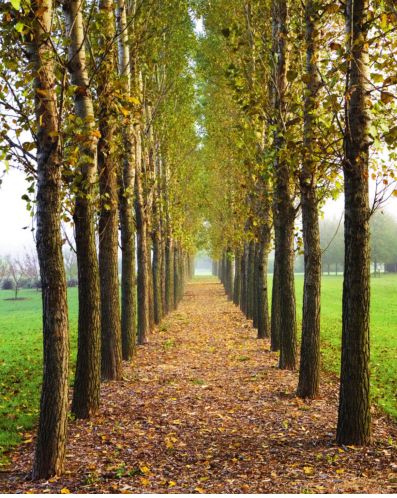
Photographer Larry Kanfer explores the countryside again
If its citizens struggle to see anything new in a landscape with which they have become too familiar, what is the poor landscape photographer to do? In Larry Kanfer’s case, he does nothing much at all, to judge from the evidence of his new collection of Midwestern landscape photographs, A Prairie State of Mind, from the University of Illinois Press.
Most landscape photographers work in Ozark-y southern Illinois or the Wisconsin-ish northern third, because that’s where the scenery is. When Kanfer debuted in the 1980s, the flat middle third of the state was terra incognita to the art photographer. His first published collection, Prairescapes (U of I Press, 1987), offered views that intrigued if only because of their novelty.
Kanfer, whose studio is in Champaign, has been compared to Eliot Porter and Ansel Adams, which flatters him (the Adams comparison in particular). You can’t make Illinois look like Yosemite; Kanfer’s Illinois is pretty, not dramatic. His ostensible subject is that least dramatic of subjects, the prairie, and it was with some relief that I could recognize prairie in only one or two shots. What we get instead are farmscapes from the flattish Midwest, and here and there a bit of unmanicured nature, a gallery of spring redbuds and ponds in autumn and gathering storms, austere snow-covered fields and country lanes.
These photos have interest as documents if not always as works of art. My reaction to nearly every shot was not “how beautiful” but “where is that?” Kanfer prefers to give his compositions poetic titles that tell us nothing about what we are seeing and where it was shot; a helpful index to locations in the back of the book at least provides the nearest town and state. While most scenes by far are taken in Illinois (and most of those from central Illinois) we also get glimpses of Indiana, Wisconsin, Minnesota, Ohio and North Dakota, all of which, it should be noted, are more intrinsically interesting than those shot hereabouts.
Ours is a landscape not lavishly endowed by nature, but elements of beauty are here; they only need human imagination to assemble them in more pleasing wholes than nature did. The photographer creates as much as he records, using cunning camera angles or shooting during the only three minutes of a day when the sunlight creates a photogenic shadow.
Some places don’t need artists to add beauty to their countryside. Driving in June through Nebraska along I-80 in 2014, I was struck by the scenes created by the juxtaposition of line and form. Crop rows laid out along hillside contour lines, sinuous grassy swales, the textures of forage crops, beans and fallow land, rows of round hay bales – the resulting compositions were too regular to have been unpremeditated. Everywhere I saw evidence of an aesthetic sense of the sort usually associated with the countryside in parts of France or Italy.
Kanfer does not give us such scenes because in Illinois they don’t exist. Kanfer does find the picturesque in the weathered and the ramshackle (including a rural bridge near Ogden that is perfectly Illinois – the unpainted girders are rusting and the yellow line dividing the road was painted crooked.) The old barns and corn cribs and fences are the sole grace notes in many scenes. Our new farmsteads are less handsome new, and they won’t age well. Yes, they are durable, easy to erect and don’t have to be painted, but the farmers’ gain is the countryside’s loss.
I should confess my biases. I dislike color in any photographic medium. Black and white images force you to see the thing, not its color. I look forward to seeing someday the work of some local Marty Knapp, to name just one California photographer working in black and white, who reveals more of his Marin County landscape by showing less of it. Kanfer offers us four views in black and white, two of them striking and all four seeming as if they’d come not only from a different collection but a different photographer, someone like David Plowden.
The artist promises in his introduction that he dug deeper into his subject, but his new collection differs in no important way from his earlier ones. (In addition to Prairiescapes, they include On Second Glance (University of Illinois Press 1992) and On Firm Ground (U of I Press 2001). The least of these images do not lift themselves above calendar art, but calendar art has its audience. (The artist cannily recommends it as a “perfect gift book for friends and family who have moved away, and visitors.”) These images serve as wish-I-was-here postcards to ourselves.
Contact James Krohe Jr. at [email protected].
Editor’s note
Americans discouraged by the presidential campaign should read President Barack Obama’s essay, “The way ahead,” in the latest issue of The Economist. “Why have some on the far left and even more on the rar right embraced a crude populism that promises a return to a past that is not possible to restore – and that, for most Americans, never existed at all?” he asks. Some of the anti-immigrant, anti-refugee fears have come up in numerous historical eras. “We overcame those fears and we will again.” Then he offers a recipe for dealing with four economic structural problems: “boosting productivity growth, combating rising inequality, ensuring that everyone who wants a job can get one and building a resilient economy that’s primed for future growth.” Obama addresses each of these at length. On income inequality, he quotes Abraham Lincoln: “While we do not propose any war upon capital, we do wish to allow the humblest man an equal chance to get rich with everybody else.” His remedies include raising the minimum wage, expanding the Earned Income Tax Credit, limiting tax breaks for high-income households and assuring women equal pay for equal work. For those who say Obama should have done these things before his time was up, he wisely remarks, “The presidency is a relay race,” requiring his successor to take up the effort “to bring the country closer to its highest aspirations.” –Fletcher Farrar, editor and publisher