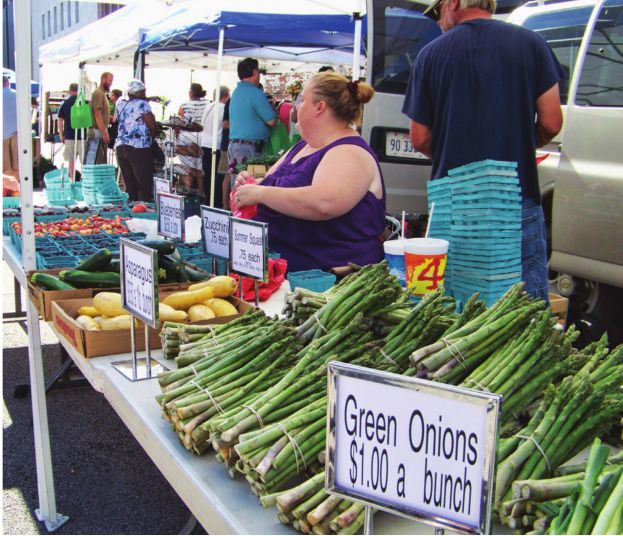
The first farmers market day is one of my favorite days of the year. For me it signifies that summer has finally arrived. The glorious, slightly wild flavors of the market’s first few weeks compel me to strip away any extraneous flavors or richness and look for ways to prepare the vegetables to allow their character to shine through. Here are my tips for some of the produce that will be available at local farms and markets for the next few weeks:
Asparagus Look for strong, well-formed tips that are still juicy and fresh. Try to purchase bundles of asparagus that are uniform in size, so they cook evenly. Contrary to popular belief, the size of the spears does not correlate to tenderness or flavor, so choose whatever size works best for your recipe.
Purple asparagus will turn green when cooked, and is deeply pigmented due to high levels of anthocyanins (the plant compounds responsible for the red, blue and purple hues in plants). It has less fiber and about 20 percent more sugar than the green variety, making it a more tender, sweeter vegetable.
Once you get your asparagus home, cut off the ends just like you would a bouquet of flowers, and store them in a container with a little water in the bottom (a quart yogurt container works well). It will keep well for several days, but plan to eat it as soon as possible. Fresh asparagus, according to my grandmother, can taste “as sweet as sugar,” and the fresher the stalk, the better.
Your options for preparation are virtually endless. Asparagus can be thinly sliced with a vegetable peeler and added raw to salads, tossed with olive oil and grilled or roasted until just tender, and added to stir-frys or vegetable sautés. However you decide to prepare it, break off the bottom end of the stalk. It will snap at the tender point, and ensure you don’t have any tough, fibery bits in your dinner.
If you’re feeling industrious, you can add bottom pieces to a pot of simmering water or stock, along with garlic or onion, and cook for 20 minutes. Remove from heat and cool, then blend it till very smooth. Pour the soup through a fine meshed sieve to remove the tough fibers, and season to taste with lemon juice, salt and pepper. I try to put a few jars of this away in the freezer each year. When February rolls around, I can take one to work and enjoy a breath of spring as I eat lunch at my desk and watch the snow fall.
Scallions/ green onions According to Jo Robinson, author of Eating on the Wild Side, green onions have 100 times more phytonutrients than regular onions. The green part of the plant is especially rich in these cancer-fighting plant compounds, so be sure to add them into your dishes as well.
My absolute favorite way to enjoy green onions is to simply brush them with olive oil, sprinkle with salt and pepper, and grill over medium-high heat until tender and slightly charred in spots. Be sure
to prepare more than you think you’ll need; they will go quickly and are
delicious left over in sandwiches or wraps.
Thinly
sliced green onions are a lovely choice for most raw salad type dishes,
and add a wonderful finish to soups, chilis, tacos, pastas and roasted
vegetables. Cut into one-inch pieces, they are a delicious addition to
almost any vegetable sauté.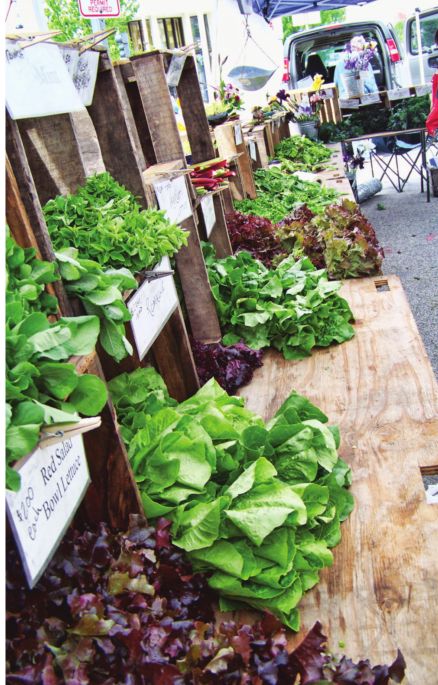
Green garlic or
spring garlic looks very similar to green onions, but has the distinct,
sharp-sweet aroma of garlic. Generally garlic is planted in the fall
and allowed to overwinter, and then begins to poke up out of the ground
after a long thaw. Spring garlic is usually available in April and/or
May, depending on the season. An immature plant that has not formed a
bulb yet, it is sweeter and more delicate in flavor than fully formed
bulb garlic. It can be added into any recipe that calls for regular
garlic, but can also substitute for leeks or spring onions.
Green
garlic is prepared much the same as green onions: cut off the root end
and remove the tough outer skin. The green bits are delicious as long as
they are not too tough, but even the tough top portions of the plant
make a savory and nutrientenhancing addition to stocks or soups.
Green
garlic makes a delicious pesto when processed with olive oil, salt and
Parmesan cheese. Spread the pesto over bread and broil or use as a
marinade for grilled chicken or roast lamb.
Spring greens Store
your fresh greens in a zip-top bag with a barely moist paper towel, and
wait to wash them until just before use. Mustard greens, spinach, kale,
collards and Swiss chard are some of the most nutrientdense foods in
existence, and when prepared correctly, also some of the most delicious.
These cold-hardy greens are at their most delicious under mild spring
conditions, as they can become bitter with hot, dry weather.
Remove
tough center stems and steam or lightly sauté in butter or olive oil
with some green garlic and a squeeze of lemon juice. Sautéed greens can
help round out a variety of weeknight meals, from pasta dishes to
scrambled eggs.
Lettuces
are another quintessential spring green, as they too suffer once the
daytime temperatures stay above 80 degrees for too long. Black Seeded
Simpson is a variety that my great-grandfather always grew, and I
continue to grow in my garden every year. The delicate, lime green,
ruffled leaves are delicious tossed in a hot bacon vinaigrette, topped
with hardboiled egg, thinly sliced radishes and green onions.
Rhubarb Known
in bygone days as the “Pie Plant,” the tart, fleshy stalks of this
vegetable are most often used in pies and desserts. Additionally they
can be used in savory applications, such as chutneys and mustard
relishes.
The simplest
and best way to enjoy rhubarb, according to my grandmother, is as a
basic rhubarb sauce, spooned over hot buttered toast. Simply wash and
chop the rhubarb stalks, add about one cup of sugar for every four cups
of chopped rhubarb, a pinch of salt, a splash of water and simmer away
for about 15- 20 minutes, until the pieces have broken down and have a
texture resembling applesauce. You can experiment and add other
ingredients like lemon peel, cardamom, vanilla or ginger. Spoon the
mixture warm over pound cake or ice cream, or use it chilled as a
filling for a layer cake.
Ashley
Meyer is the executive chef for genHkids and has farmers markets in her
blood. Her great grandfather and dad together operated a 20-acre truck
farm in Springfield from the 1970s to the ’90s, selling tomatoes, green
beans and limas at the farmers market on the downtown mall and out of
their garage.


