
The human cost of Illinois’ budget crisis
Someone may have to die before this is resolved, and even that might not be enough.
That’s the consensus among several social service agencies in Springfield which are running on fumes as a result of the state budget crisis.
The list of organizations and programs being starved is long and sobering: homeless shelters, rape crisis centers, mental health clinics, student financial aid, after-school programs, disease prevention programs, autism services, breast and cervical cancer screening, home meal delivery for seniors, juvenile jail prevention programs, sudden infant death prevention, sickle-cell screening and more. As the nine-month mark approaches without a state budget, many of the agencies which provide these crucial services say they’re fast approaching their limit, having already cut staff, hours and programs. As a result, the state’s safety net for people in need is disintegrating.
Voices for Illinois Children, a statewide advocacy group, released a report this month on the types of services being gutted and an overview of the damage so far. An update from an earlier report issued at the start of the budget crisis, the document reveals nearly $3 billion in state funding withheld so far, resulting in several closed facilities, laid off staff, slashed programs and vulnerable populations left to fend for themselves. Emily Miller, director of policy and advocacy with Voices for Illinois Children, says the report isn’t even comprehensive.
The de-facto cuts are the result of Illinois’ failure to implement a budget for the current fiscal year, which began July 1, 2015. Without a budget, the state comptroller isn’t allowed to issue checks, meaning many organizations can’t receive money even though they have contracts with the state. Most of those groups continue to provide services in hopes that they’ll be reimbursed later.
The Democrat-controlled Illinois General Assembly passed a budget for the state’s 2016 fiscal year in June 2015. Gov. Bruce Rauner vetoed most of the spending, calling the Democrats’ budget unbalanced and demanding proposals from his non-budget “Turnaround Agenda” be adopted before he would consider additional revenues like a tax increase. Democrats have accused the governor of using the budget process to push unrelated ideas, many of which would negatively affect unions. Rauner counters that his ideas are necessary for the good of the state.
On
March 3, the Illinois House passed House Bill 2990, which would release
about $3 billion for programs which aren’t already covered by standing
court orders. Some of the money would come from the General Revenue
Fund, and the rest would come from wiping out special state funds. A
separate measure, House Bill 648, would allow the legislature to not pay
back the money taken from special funds.
Rauner
promptly issued a press release strongly hinting that he’d veto the
spending if it passes the Senate and comes to his desk.
“Plain and simple, Illinois taxpayers cannot afford HB 2990,” Rauner said.
Although
HB 2990 passed with a theoretically veto-proof majority, the
accompanying HB 648 only passed with a 61-52 vote. Assuming both bills
pass the Senate and are vetoed by Rauner, it’s unlikely that HB 648
would draw enough support for a veto override attempt, which would
likely doom HB 2990, as well.
Meanwhile, the human cost of the budget crisis increases. Miller says she doesn’t see a resolution in sight.
“I
don’t know that someone’s death would be enough to do it,” Miller said.
“This isn’t about human impact; it’s about ego. If devastating human
impact were going to move the needle, it would already be moving.”
“I don’t know that someone’s death would be enough to do it. This isn’t about human impact; it’s about ego.
If devastating human impact were going to move the needle, it would already be moving.”
Prairie Center Against Sexual Assault
Shelley
Vaughan, executive director of the Prairie Center Against Sexual
Assault in Springfield, says implementing cuts has been heartbreaking.
PCASA provides victims of sexual assault with counseling, medical
advocacy and other services. Vaughan says the organization had to
suspend the program which provides counseling to child victims of sexual
assault. That program usually serves about 250 child victims each year.
The waiting list for adult victims hovers around 35 to 40 people. PCASA
normally serves 11 counties in central Illinois, but the group had to
cut services to Christian, Mason and Montgomery counties. Because there
is no money for travel, any victims who live in rural areas must come to
Springfield or PCASA’s satellite office in Jacksonville. Anyone who
can’t make the trip can’t receive counseling or other help.
When
the state’s 2016 fiscal year started on July 1, PCASA had eight
full-time employees. That’s down to four now, and the empty positions
aren’t being filled. Currently, PCASA has enough money on hand through
loans to stay open until April 30. Vaughan hopes that the group’s
upcoming “Walk A Mile In Her Shoes” fundraiser on April 16 will provide
enough cash to stay open through the end of June.
“We
try not to have too much alarm for the victims because we’re not closed
yet,” Vaughan said. “But there are only 29 rape crisis centers in
Illinois, and we’re the only ones who do this. I can’t even fathom what
it would be like without it. We help victims through the justice system
and help keep perpetrators off the streets.”
Vaughan says the state’s safety net is at a “crucial moment.”
“We
don’t want to cry wolf, but there may not be a rape crisis center in
your community soon,” she said, adding that she’s not sure what it will
take to convince Rauner and the General Assembly to reach a compromise.
“Saying we’re on the verge of closing has not been good enough. They
seem to be waiting for places to close (before they adopt a budget), but
it’s going to be too late. Once we close our doors, we won’t return.”
Springfield Center for Independent Living
Pete Roberts, director of Springfield Center for Independent Living, says his agency will be lucky to survive the budget crisis.
“This
is kind of a scary time,” he said. “I’ve been in this business for 40
years, and this is probably the worst year I’ve had in terms of
stability and being able to provide services.”
SCIL
helps people with disabilities live on their own instead of in more
costly staterun institutions. The services SCIL provides include job
training, help finding affordable and accessible housing, technology
assistance, personal advocacy when dealing with bureaucracy and more.
About
$22,000 of SCIL’s funding comes directly from the federal government,
with the state acting as a “pass-through” for the rest, but the state
hasn’t been passing on the federal funding. Some of the agency’s
programs are required to be funded by court order, which Roberts says
has helped keep SCIL open.
“I
think it’s inevitable that if they don’t pass a budget for fiscal year
2017, we’ll probably close,” Roberts said. “We can’t keep going. Even if
they do pass a budget, I think we’ll be permanently hurt in terms of
our ability to provide service.”
Roberts
says SCIL has stayed open so far by instituting furlough days, delaying
new programs and not filling positions as workers leave for more stable
employment. There’s no waiting list for services yet, but that’s likely
to happen soon, Roberts says. He took a 40-percent pay cut and
sometimes fills in around the office by cleaning toilets or doing other
entry-level tasks.
“Our staff is overloaded,” he said. “We can’t get all of our work done.”
Roberts says social service groups have already tried pleading their case in the Statehouse, to no avail.
“I don’t know what it’s going to take,” he said. “I really don’t know.”
Boys and Girls Club of Central Illinois
Bill
Legge says the good news is that his group isn’t going anywhere. He’s
the executive director of the Boys and Girls Club of Central Illinois,
which he says will remain open as a safe place for kids to go. The bad
news is that the club won’t be much more than that until the budget
crisis is resolved, Legge says.
“We will not be able to genuinely achieve the outcomes these children need to be successful,” he said.
The Boys and Girls Club hasn’t received state funding since June 2015. The group was due to receive $60,000 from the state
for
a juvenile violence prevention program and $50,000 from the state for
the Teen REACH program, which offers high-risk kids academic help and
mentorship. That money is being withheld, along with a $35,000 grant
from the Illinois Department of Commerce and Economic Opportunity. Legge
says the club has remained open through a combination of private
donations and cuts like reduced hours and programs.
Legge is especially discouraged at the loss of the teen program and the field trips to colleges that the program provides.
“It’s
hard to put a value on that, but what I’ve seen is when kids are able
to get out of town and set foot on campus, it starts to shed light on
what they might become,” he said. “It’s a light bulb moment; it gives
them drive.”
Like
other social service leaders, Legge is at a loss about what would break
the logjam in the Statehouse. Even someone’s death resulting from the
budget crisis may not be enough, he says.
“Honestly
I don’t even think that would do it,” he said. “Their heels are dug in
so deep that I don’t see the governor budging, and I don’t see the
legislature budging.”
Legge
notes that even the advice of respected former Gov. Jim Edgar was
ignored. In October, Edgar called on Rauner to not “hold the budget
hostage” on unrelated issues.
“It
just seems on all cases – nationally and here at the state level – that
nobody seems to understand what the word ‘compromise’ means,” Legge
said. “The government is burning down and our leaders are whittling
sticks to roast marshmallows.”
SIU School of Medicine 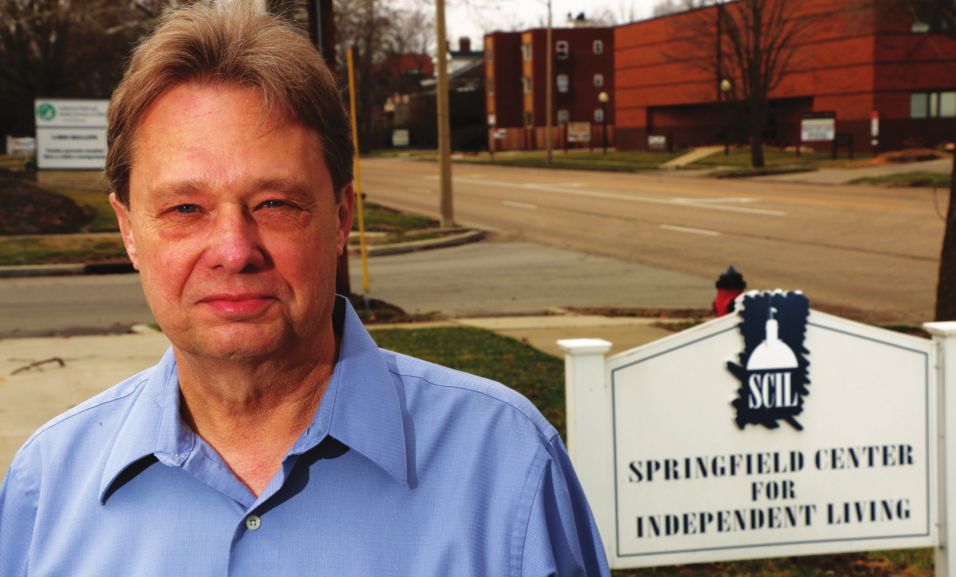
While
primarily a medical school, SIU School of Medicine in Springfield also
provides medical care for thousands of people in central Illinois
through Medicaid and Medicare. Though general patient care at SIU hasn’t
been affected by the state budget crisis, the school may have to
suspend some programs.
The
Memory and Aging Network through the SIU Center for Alzheimer’s Disease
and Related Disorders provides education, outreach and clinical
services for memoryrelated conditions at 30 sites around the state.
That network, which ultimately serves 93 counties in Illinois, will be suspended unless the school can raise $500,000 by May 31.
SIU’s
Community Support Network offers case management for people with mental
illness, including services like psychiatric care, assistance with
housing, transportation and medicine, home visits, crisis intervention,
personal advocacy, life skill training and more. Those services are safe
for now, but SIU has had to lay off one non-clinical employee and
significantly reduce education and research efforts. Additionally, five
CSN clients who are residents of Hope Springs Apartments, a permanent
supportive housing development on North Ninth Street, have lost their
state housing subsidy as a result of the budget crisis, meaning they may
have to move out.
The
medical school’s ThinkFirst program, which focused on teaching children
and teenagers how to avoid brain and spine injuries, was suspended in
late February.
Habitat for Humanity of Sangamon County
Even service groups which don’t rely on state funding are affected by the budget crisis.
Colleen Stone, executive director of Habitat for Humanity of Sangamon County, says donations are down because so many other charities are in greater need.
“What
we’re hearing from the generous community we live in is there are a lot
more charities out there asking for donations because they’re impacted
by the budget crisis,” Stone said. “There’s more competition now. Our
number one employer is the state, and state workers are wondering if
they’re going to have a job tomorrow, so they’re holding on to their
donated dollars tighter.”
As
a result, Habitat hasn’t scheduled any more home builds after their
current build is finished in mid-March. The group usually serves four
families per year, and the last family which would have received their
house this year has been waiting two years already.
“They’re
waiting for a chance to have a Habitat home and get out of their
current situation, which is typically unsafe, unhealthy or too much
money,” she said.
Stone
predicts that the effects of the budget crisis on social service
providers will soon worsen. Many charities borrowed money to stay afloat
in the first six months, she said, but those loans have to be paid back
sometime.
“Now we’re going to start seeing the real impact on health and human services,” she said.
Emily
Miller, the director of policy and advocacy with Voices for Illinois
Children, says the financial cost of not funding the social safety net
for several months will actually be greater than if a budget had been
passed.
“There’s this
argument that we need to starve the beast – short-term pain for longterm
gain,” she said. “Who is this shortterm pain for? Is it short-term?
When you starve the beast, you end up costing the state far more because
students aren’t getting educated, homeless people are sleeping on the
streets. … Starving the beast is really propping it up to consume more
in the future.”
Contact Patrick Yeagle at [email protected].


