There’s never any doubt as to what James Vanderbilt’s intent is with his new film
Truth. Based on the memoir
Truth and Duty: The Press, the President and the Privilege of Power, the movie goes out of its way to martyr all women who strive to get ahead in any male-dominated industry. Problem is, its author, former television news producer Mary Mapes, comes off as myopic, arrogant, impulsive and foolhardy rather than unjustly persecuted; a woman whose irresponsible behavior caused many to lose their jobs, leaving their careers in tatters.
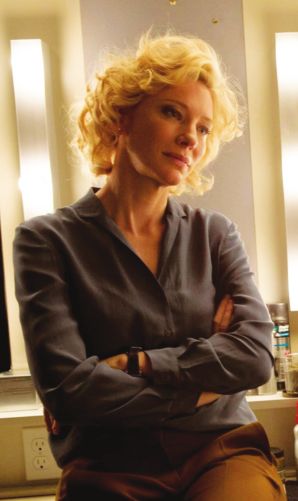
Having just broke the story on the Abu Ghraib prisoner abuse scandal, Mapes (Cate Blanchett) is seen as a journalist who can do no wrong, one who’s given carte blanche by her producers at “60 Minutes” who are eager to see what she’ll turn up next. Wanting to capitalize quickly on her recent success and cement her position at CBS, she follows up on a lead that suggests that then-President George W. Bush tried to avoid military service during the Vietnam War by arranging to be enlisted in the Texas Air National Guard. In order to run the story down, Mapes reassembles her crack investigative team, which includes retired Lt. Colonel Roger Charles (Dennis Quaid), and young journalists Lucy Scott (Elisabeth Moss) and Mike Smith (Topher Grace). All of them are eager to please the cornerstone of CBS News, Dan Rather (Robert Redford), anchor of their national, nightly newscast.
The first half of Truth is dedicated to the team’s investigation, a fascinating story, all of which ultimately proves to be a cautionary tale as ambition overshadows good judgment. More than a few red flags appear as the journalists dig deeper and deeper yet Mapes’ insistence on making yet another big splash and meeting a tight deadline blinds her to danger of not sweating these details. Of course, all of this comes back to haunt her as the second half of the film deals with the scandal that erupts when key documents used in the story are shown to have been doctored. The fall out from this malfeasance results in Rather being forced to resign, Mapes losing her job, the producers of “60 Minutes” being terminated and the careers of the young journalists being irrevocably damaged.
As you would expect from the veteran cast, the performances are solid across the board as all concerned bring a degree of humanity to their roles which helps us sympathize with them when all goes south. However, Vanderbilt’s script errs as the part of Rather is underwritten. Redford does his best to give a complete characterization, but he simply isn’t given enough complex scenes to do so and the film suffers in the end as a result.
Blanchett shines as she always does yet her fine work contributes to the muddle of a movie that results. As Mapes, she oozes arrogance, preens when the spotlight is upon her, relentlessly pushes her underlings, intimidates those that would defy her and defiantly testifies before an independent panel that’s convened to investigate her. The result is a portrait of a strong woman who feels she must outdo her peers at every turn and whose egocentric personality and sense of invincibility led to her downfall. As a consequence, Mapes isn’t seen in a compassionate light, though that’s surely Vanderbilt’s intent. Sympathetic strains of Brian Tyler’s score are heard as we see her hit bottom, the director underscores her despair again and again as her world falls apart and when we’re informed at film’s end that Mapes hasn’t worked in the news industry since 2004, we’re supposed to shake our heads in disgust at the injustice of it all. In the end, it simply doesn’t fly as Truth fails to adequately explore the true tragedy of this story, namely the lives of all those who were shattered by her hubris and folly.
Contact Chuck Koplinski at [email protected].


