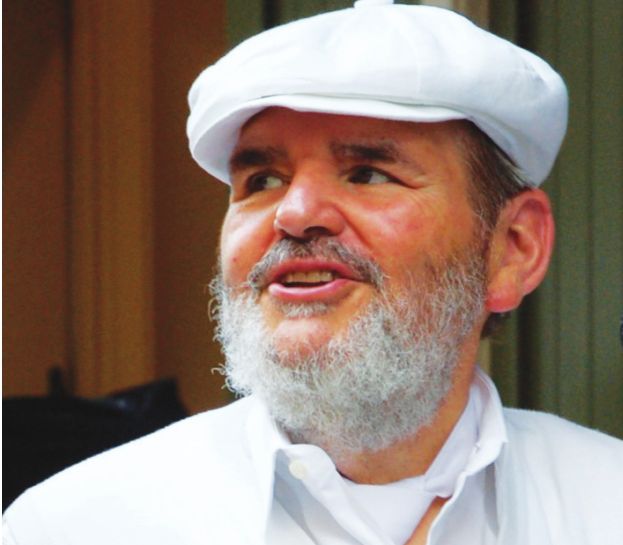
Emeril Lagasse may be a more familiar household name these days. But it was another chef who introduced Cajun cuisine to America, creating a popularity that still exists: Paul Prudhomme, who passed away on Oct. 8 at the age of 75.
Have you ever eaten blackened fish?
Blackened chicken? Blackened steak? Credit Prudhomme, who invented the technique of blackening. In the 1970s and ’80s, when American food and cooking were experiencing a revolution brought about by such people as Alice Waters and Wolfgang Puck on the West Coast and Julia Child and James Beard in the East, Prudhomme roared into national prominence. A Southwestern Louisiana native, he offered the emerging food scene new dimensions that were equally rooted in tradition.
Perhaps no other American regional cuisine is as distinctive as Louisiana’s; certainly none is more delicious. Though long celebrated, it had been mostly enjoyed by natives and visitors, never entering America’s mainstream until Prudhomme brought it to the forefront. And he helped launch a nationwide craze not just for Cajun cuisine, but one that also spread to embrace Cajun music and culture.
Prudhomme was the youngest of his sharecropper parents’ 13 children. The family was poor, but their farm and nearby waterways provided abundant food. “I had the inspiration of a family that had nothing but food as their pleasure, their entertainment, and their most important thing in life,” he says. “We didn’t have electricity, so there was no refrigeration – we used only what was fresh and in season. I learned to appreciate herbs and vegetables right from the garden, freshly slaughtered chickens and fish and crawfish just caught in nearby streams and bayous.”
By the time Prudhomme was six, he was cooking at his mother’s side. By age 17, he realized he wanted to make it his life’s work. After finishing school, he worked in New Orleans restaurants then decided to learn about cooking in other parts of the country. He built a camper on the back of his truck and spent the next 12 years traveling, working with cooks and chefs, he says, of “every conceivable educational and ethnic background and experience,” including an American Indian reservation. Prudhomme wasn’t just learning, though; even then he was living up to his now-trademarked slogan, “Life’s too short for dull food.” “When I thought the food was too bland,” he says, “I’d sneak in a few herbs and spices.” Prudhomme began making different spice blends and keeping track of customers’ favorites.
Occasionally, though, his initiative didn’t make him popular with the head chefs.
Returning
to New Orleans in 1972, Prudhomme spent the next years in various
restaurants, including a stint as the first non- European executive chef
at the legendary Commander’s Palace (a position Lagasse eventually
occupied) before striking out in 1979 with his late wife, K, to open
K-Paul’s Louisiana Kitchen in the French Quarter. At the time, most top
New Orleans restaurants featured Creole cuisine, less spicy and
considered more refined and elegant than its rustic cousin, Cajun
cooking.
K-Paul’s food
combined some of those refined elements with the flavors and traditions
of Prudhomme’s Cajun background as well as ideas and techniques he’d
absorbed in his travels. The restaurant initially struggled, but soon
K-Paul’s had endless lines, and Prudhomme became one of the world’s
best-known chefs. He made numerous TV appearances and features in
culinary and other magazines; cooked for heads of state, including
Ronald Reagan at his inauguration; and was named the 1986 Culinarian of
the Year by the American Culinary Federation. In 1994, he broke barriers
again by holding cooking demonstrations at Paris’ remowned Cordon Bleu
cooking school. Prudhomme was the first American chef to be awarded the
French Mérite Agricole.
Blackened
food became a nationwide craze. Redfish, used in Prudhomme’s original
creation, had been considered a trash fish, rarely seen in fine
restaurants. Because of the ensuing demand, it became endangered; today
it’s fished commercially with strict limits.
Blackening
is a deceptively simple technique: a really hot pan, a little butter or
oil, a spice rub and the food to be blackened. Done correctly, it’s
fantastic: A light spice sprinkle creates a crusty exterior and imparts
flavor without overwhelming the main ingredient, and the high-heat
quick-cooking seals in flavor. Timing is everything – just seconds
separate blackened from burnt, something I learned the hard way the
first time I tried it. (Sadly, many restaurants’ versions are just bad
imitations.)
His first cookbook, Chef Paul Prudhomme’s Louisiana Kitchen, was on The New York Times Best
Seller List for weeks. The first time I made one of its recipes, I
thought, “This guy really knows how to make food taste good!” Some
techniques he used and described in that first cookbook were revelatory,
offering entirely new possibilities.
When
I met Prudhomme in 2008, he was – what else? – stirring something that
smelled wonderful. I hadn’t expected to see someone who’d been
instrumental in changing the face of American cooking at Chicago’s Fancy
Food Show. “Want some, darlin’?” he asked with a smile. It was even
better than it smelled: a soup that was a perfect fusion of new and old.
I wanted to lick the cup. Prudhomme was promoting his Magic Seasoning
blends and products. The herb-and-spice mixtures he’d made years ago are
now widely available nationwide and in more than 30 other countries.
I
was hesitant when asking to interview him, but shouldn’t have been. “Of
course, darlin.” He scribbled something on the back of a card. “Can’t
do it now, but call this number and we’ll set something up next week.” I
half-expected he’d have forgotten, but the person answering my call had
been expecting me: “You’re supposed to call him at home; here’s the
number.” We chatted for almost an hour. [Parts of this column are from
that 2008 interview.] Confinement to a wheelchair about 25 years ago
made it impossible for Prudhomme to continue as K-Paul’s chef, though he
remained intimately involved in the restaurant’s operation and
concocting Magic Seasoning Blends. Some are available at Springfield
groceries; the full line, as well as Prudhomme’s cookbooks, cookware and
other Louisiana products, can be ordered online at http://chefpaul.com. Prudhomme authored many other cookbooks. Perhaps my favorite is the Prudhomme Family Cookbook, featuring Prudhomme’s recipes alongside those of his siblings and their spouses; it’s as much a memoir as cookbook.
Soft-spoken
and modest, Prudhomme was clearly in love with food and with life to
the end. Many of his employees, including K-Paul’s chef de cuisine, are
from his hometown; still more have been with him for more than two
decades.
Great chefs
are often great mentors, and Prudhomme was no exception. “Paul created
from the heart,” said Brigtsen, who worked for him at Commander’s Palace
and K-Paul’s. “I was his arms and legs, and it was fun to watch him
make up stuff.”
Prudhomme’s
mentoring changed Chicago restaurateur Jimmy Bannos’ life. After eating
at K-Paul’s, Bannos called Prudhomme with questions. “Paul said, ’Just
come on down and I’ll teach you,’” Bannos told me last week. Thus began
Bannos’ intern stints (called stages (stah-juz) in restaurants) at
K-Paul. Eventually Bannos turned his family’s Greek diner into Chicago’s
legendary bastion of Cajun cuisine, Heaven on Seven, with lines almost
as long as K-Paul’s.
In
Brigtsen’s case, Prudhomme did more than teach him about cooking. He
lent Brigtsen $135,000 to purchase the building for his own now-highly
regarded restaurant.
By
sheer coincidence, I’m in New Orleans as I write this. Though I missed
Prudhomme’s funeral on Oct. 12, I’ve been watching online the
combination of mourning and celebration that’s unique to New Orleans and
Louisiana funerals. Thousands lined the streets to watch the procession
into St. Louis cathedral and concluding lunch at K-Paul’s, including
dignitaries and celebrated chefs.
Safe passage, Paul Prudhomme. You were truly, as your last name says, a good man.
Contact Julianne Glatz at [email protected].