Springfield police to wear body cameras
New state law contains accountability measures for police
LAW ENFORCEMENT | Patrick Yeagle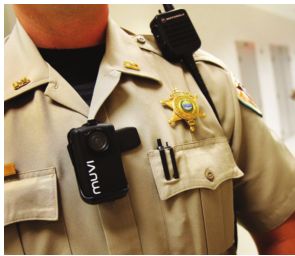
The Springfield Police Department plans to adopt body cameras for officers under a new state law which took effect last week.
The law was prompted by a growing public consciousness concerning people of color dying violently during encounters with police. It’s unclear how soon Springfield police will be wearing body cameras or how much implementing them will cost.
Senate Bill 1304, signed into law on Aug. 12, contains several provisions meant to address the distrust between many minority communities and police. While the adoption of rules regarding body cameras for police officers is the most high-profile provision, the new law also requires police training on cultural sensitivity and proper use of force, independent investigation of officer-involved deaths and detailed records of pedestrian stops by police, among other provisions. In aggregate, the law is a sweeping reform to police accountability, offering communities of color a measure of assurance that their rights will be respected during encounters with police. The law has support from several law enforcement groups, many of which helped craft it.
Deputy Chief Daniel Mounce with the Springfield Police Department sees officers wearing body cameras as positive and says the department plans to use them eventually. First, however, he says the department must review the new law, adopt a policy for body cameras and then field-test them. Mounce says body cameras protect both the public and the officers who use them. He points to a recently publicized case in which Texas state Rep. Garnet Coleman accused a police officer of unprofessional conduct, only to have the dash camera video from the officer’s car contradict Coleman’s claims. Coleman had been driving 94 miles per hour in a 75-mileper-hour zone, for which received a warning.
Mounce says it’s too early to know how much it will cost to outfit the department with body cameras and implement the other aspects of the new law, but he notes that there will be some funding available through a state grant.
Two cases in particular have galvanized public support for body cameras and the accompanying accountability measures: Michael Brown, a young African-American man shot and killed by a police officer in Ferguson, Missouri, and Eric Garner, an African-American man who died when a New York police officer put him in a chokehold. Brown’s case is notable because no video seems to exist, which would have clarified the murky details of the incident.
Garner’s case, on the other hand, was videotaped. It prompted Illinois lawmakers to include in the new law a prohibition on police officers using chokeholds, but it also illustrates that body cameras alone aren’t a perfect answer. Video shot by a bystander shows police confronting Garner, and the police appear to know they are being recorded. It didn’t seem to matter, because the officer who choked Garner still broke that police department’s protocol regarding use of force. That’s why Illinois’ new law also requires officers to renew their training every three years on proper use of force and several other aspects of policing.
Shelly Heideman, executive director of the Faith Coalition for the Common Good, which advocates for racial justice in Springfield and elsewhere, says body cameras are a step in the right direction toward transparency and trust between police and communities of color.
“Any time a person is aware their actions can be watched later, they’re going to be more cautious,” she said. “I just think it’ll make people think twice.”
Heideman notes that body cameras do have shortfalls: some models have a narrow field of view or can be intentionally turned off, for example.
“It’s not an end-all answer,” she said, “but it is a good step forward.”
Heideman praises the efforts of Springfield police Chief Kenny Winslow to build trust in his department by meeting regularly with leaders in Springfield’s African- American community.
“It’s important for police officers to be in relationship with the people,” she said. “Chief Winslow has really been on top of that since what happened in Ferguson. I think that’s so important.”
Deputy Chief Mounce welcomes the additional accountability in the new law.
“I see it as increasing our transparency with everybody,” he said. “We’ve never been afraid of it. We have no problem with people seeing what we do.”
Contact Patrick Yeagle at [email protected].


