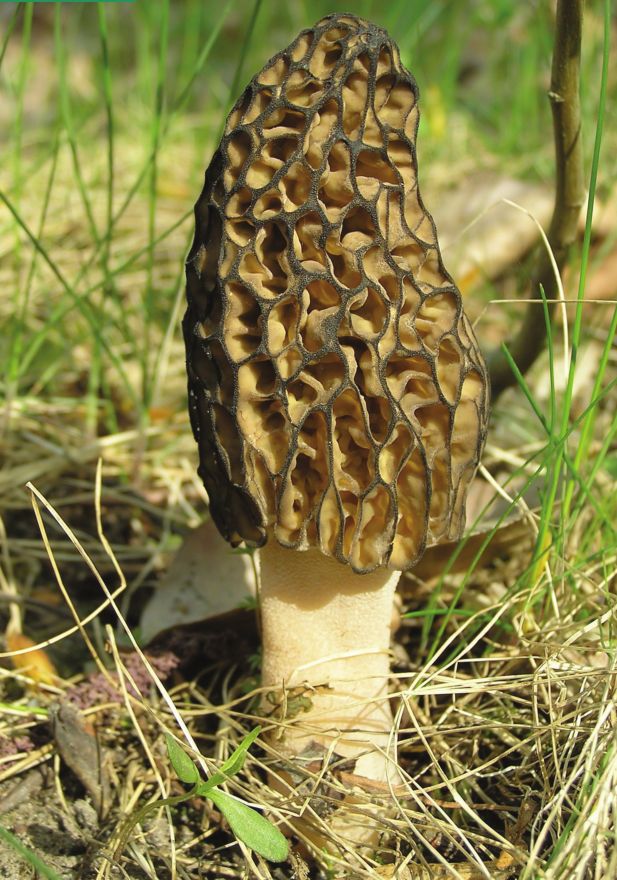
Slow Food morel dinner
FOOD | Julianne Glatz
Spring and morels. For mushroom aficionados the two are inseparable. For the last five years, morel mushrooms have also been linked locally to Springfield’s Slow Food chapter, thanks to their annual fundraising morel dinners at Maldaner’s Restaurant.
What is slow food? Well, basically, it’s the opposite of fast food. The movement began in the 1980s. Founder Carlo Petrini was deeply involved in left-wing causes but uncomfortable with his comrades, who were a grim, dour bunch, suspicious of anyone enjoying themselves too much. Sensual pleasures were bourgeois and decadent. This was Italy, however, and Petrini had grown up enjoying with family and friends abundant, delicious local foods, including white truffles, cheeses, nuts, fruits, honeys and renowned Barolo wines. Laughter, jokes and work songs accompanied by accordions dominated harvest feasts.
Petrini couldn’t understand the point of not enjoying such things: “I came to understand that those who suffer for others do more damage to humanity than those who enjoy themselves,” Petrini says. “Pleasure is a way of being at one with yourself and others.”
He and a few like-minded friends began holding dinners combining gustatory pleasures with learning that often lasted until dawn. Petrini’s group had little use for elitist clubs, but they also disdained “moralistic revolutionaries” and especially “anyone who doesn’t laugh.”
Their
loose association gradually became more organized, with a goal of
drawing “strong connections between pleasure and where food came from
and the rural life behind it.” In 1989, a galvanizing catalyst defined
for Petrini and his friends what was destroying their national culinary
identity and what they must oppose to sustain it: the opening of a
McDonald’s in one of Italy’s most beloved and historic spots, a place
that symbolized the very essence of Italy: the Piazza di Spagna, at the
foot of the Spanish Steps in Rome. Multiple protests were staged but
Petrini’s group chose a different route than placards and raised fists:
They set up a long table in front of the new McDonald’s and sat down to
enjoy bowls of pasta and bottles of red wine, inviting everyone to share
in the feast.
Publicity
of the Petrini group’s protest led to the formation later that year of a
new organization with delegates from 15 countries. They christened it
Slow Food and adopted a snail, an “amulet against speed” as its logo.
Slow Food eventually made its way to the U.S., and in 2000 opened a
national headquarters. Slow Food has become a worldwide entity, with
over 200,000 supporters, 200 chapters and 12,000 members in America
alone.
The Springfield
Slow Food chapter was formed in January 2006. From its inception, the
Springfield group has followed its parent organization in its dedication
to expanding access to and awareness of local seasonal foods,
supporting those involved in producing and preparing them and, not
least, creating pleasurable ways to do so.
Tours
of farms using sustainable practices during the growing season are
interspersed with dinners throughout, featuring such themes as a Cajun
Mardi Gras, and one that focused on a rare heritage breed of pig, the
Hungarian Mangalitsa, developed for its extraordinary flavor and raised
by local farmer Stan Schutte. There have been road trips to explore St.
Louis’ long-established Italian culinary scene as well as that of its
more recent influx of Bosnian culture.
The
next events on Slow Food Springfield’s calendar are the annual morel
dinners at Maldaner’s Restaurant, which began some five years ago. The
dinners became so popular that a second dinner was added; they have
become major fundraisers for the organization. This year’s dinners will
take place on Friday, May 1, and Saturday, May 2. The four course feasts
are created by Maldaner’s chef/owner Michael Higgins, who was the first
local chef to emphasize using locally sourced seasonal ingredients,
even going so far as to ask small local producers to plant crops such as
fava beans which were unfamiliar to the farmers. Higgins’ legendary
morel pie appears without fail each spring; to mushroom fanciers it’s
become a Springfield creation as iconic as the horseshoe. Higgins hasn’t
decided on the final menu, but it will include that pie.
Other
events on Slow Food Springfield’s horizon include a Mad Men 50’s-style
suburban BBQ, complete with Intemperance bartender Ed Burch’s classic
cocktails. Most Slow Food events are open to the public, but the Mad Men
BBQ is for members only. There is also an upcoming tour of an apiary
(bee-keeping operation) and a charcuterie class at Lincoln Land
Community College. Charcuterie is the art of making sausages and cured
meats. The cost of $50 includes wine; participants will make something
they can take home.
Slow
Food Springfield is also involved in a number of food-related
outreaches, some by itself, others in co-operation with the Illinois
Stewardship Alliance and other organizations. They support the food
pantry, school garden projects, and are one of a consortium of groups
participating in Grow Springfield, whose purpose is to increase
community gardening and urban agriculture in the city.
One
of Slow Food Springfield’s “coolest” events is their Kids Day at the
Farm, according to former chapter leader Ann Hamilton. School-age
children spend the day learning about where real (not processed) food
comes from and what’s involved in producing it. Participating farmers
receive a small fee; the kids are given a $5 coupon they can use to buy
food right at its source.
One
of Slow Food founder Petrini’s most important insights is that
consumers need to change their thinking about themselves in relation to
their food. Slow Food USA’s website states it succinctly: “We consider
ourselves co-producers, not consumers, because by being informed about
how our food is produced and actively supporting those who produce it,
we become part of, and a partner in, the process.” Discovering ways to
participate in and celebrate that process is what the Slow Food movement
is all about. And Slow Food Springfield is doing it with gusto.
Slow
Food Springfield’s Morel Mushroom Dinner will be held on Friday, May 1
and Saturday, May 2 at Maldaner’s Restaurant, 222 S. 6 th Street. There
is a greater availability of seats for the Saturday dinner. The
four-course dinner will cost $65, and will feature morel mushrooms. The
price includes coffee or tea, tax and gratuity. The evenings will begin
with a cash bar at 6 p.m.; dinner will follow at 7 p.m. For online
reservations and payment, visit Slow Food Springfield’s website, http://
slowfoodspringfield.org. For more information, email slowfoodspringfield@ gmail.com or call 691-5035. The deadline for reservations is Monday, April 27.
Contact Julianne Glatz at [email protected].


