In his own words 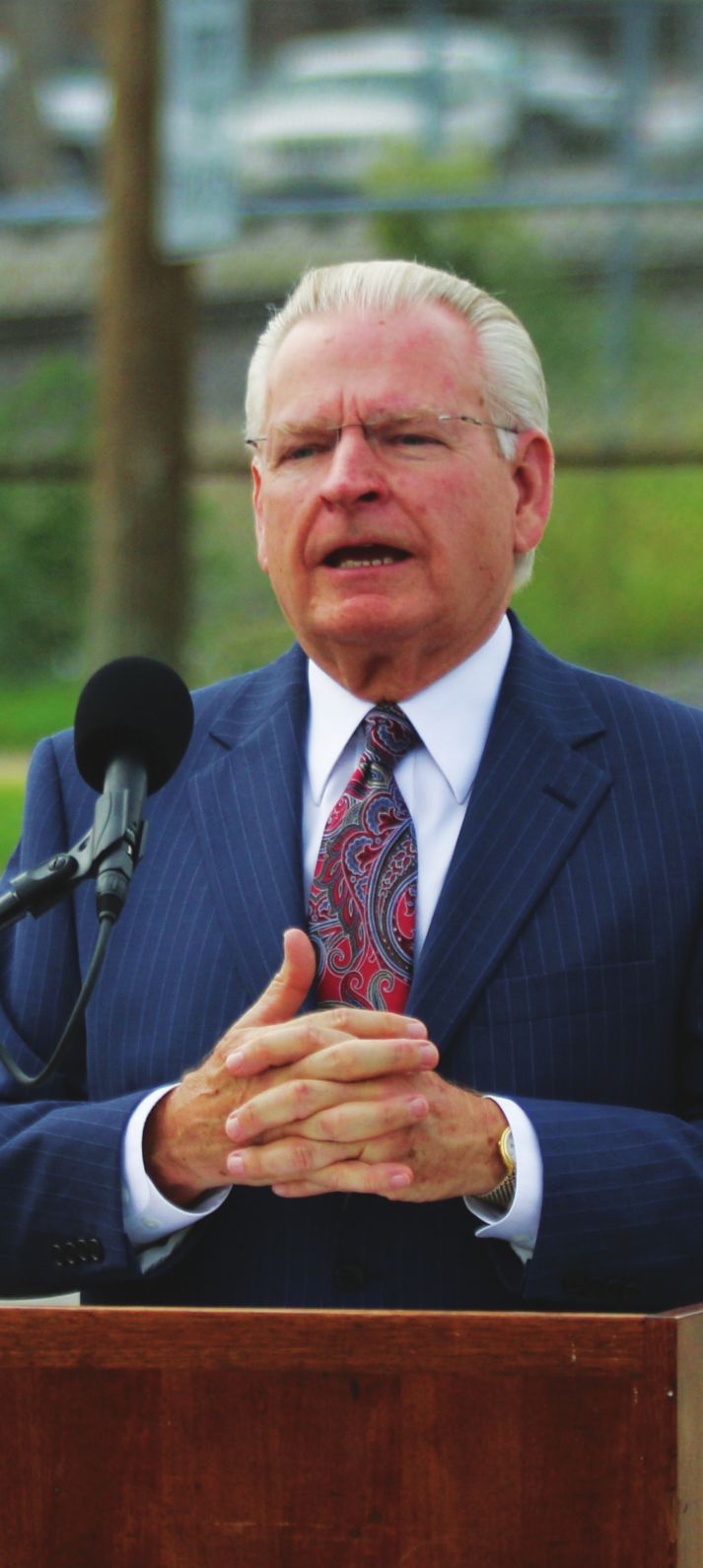
Mike Houston reflects on 12 years as mayor
GOVERNMENT | Bruce Rushton
Having finished third in the Feb. 24 primary, Mayor Mike Houston is finished as mayor. But he isn’t categorical about running for elective office in the future, nor is he shy about defending his record as mayor, both this time around and for two terms from 1979 to 1987, when he failed to win a third consecutive term. Having won three terms as mayor, Houston is a rarity in a city where voters have traditionally had their fills of mayors after two terms. We sat down with him last week to talk about the past, the present and the future. The hour-long interview has been edited for length and clarity.
What do you consider to be your greatest accomplishment in office? Not just now. You’ve been mayor for 12 years. If I go back and think of when I served in 1979 to 1987, probably the thing that had the most impact on the city on a long-term basis was the [downtown] tax increment district which we created. It was the first tax increment district in the state of Illinois, and certainly would be considered to be one of the most successful tax increment districts in the state of Illinois. So, as you think about Springfield today, it would be hard to imagine what downtown Springfield would be like if I had not created that district in 1984. … Without the tax increment district, I don’t think the downtown would be in any way, shape or form the way it is today.
I also think, and what I often said about my first terms, whether anyone realized what I did or didn’t do was unimportant. When I walked away, I knew what wouldn’t have happened had I not been here. As we go back to going through the lawsuit that we had over the form of city government, one of the things that I looked at as most important was making sure we kept the city together. You have to keep in mind that we settled that right off the bat. I walked into a city council meeting thinking we had five votes to approve that settlement. It would have been a transition form of government that would have continued with our commissioners and then added 10 aldermen, making a 15-member city council, and we would have avoided all the lawsuits. We walked out of that meeting with myself and Commissioner (Jim) Norris having voted for it, and (Ossie) Langfelder, (Frank) Madonia and (Pat) Ward voting against it. That would have totally changed what took place afterwards. … The only difference between the form of government that we have today and what I proposed was that I initially had the city treasurer and the city clerk be appointed positions by the mayor as opposed to elected positions. When we finally came to a compromise on what form of government we were going to use, we allowed for the election of both the city clerk and the city treasurer, but everything else remained the same. And I was probably the only person in the city of Springfield who knew what was in that form of government or understood [it], and that’s what we use today, which is, in fact, the strongest mayor form of government in the state of Illinois.
The voting rights lawsuit. You didn’t win a third term. Is that what sunk you or was it something else back then? It’s hard to say. I’d also run for state treasurer in 1986. That didn’t particularly help the situation. And the lawsuit. As you look at the history of the city of Springfield, there are only three people that have served more than two terms.
Twice, you were unable to
get the support of the Republican Party. I’ve never gotten the support
of the Republican Party in the times that I have run.
Why
not? What we’ve tried to do is run city government on a professional
basis as opposed to a political operation. We hire people based on their
qualifications, not who sent them.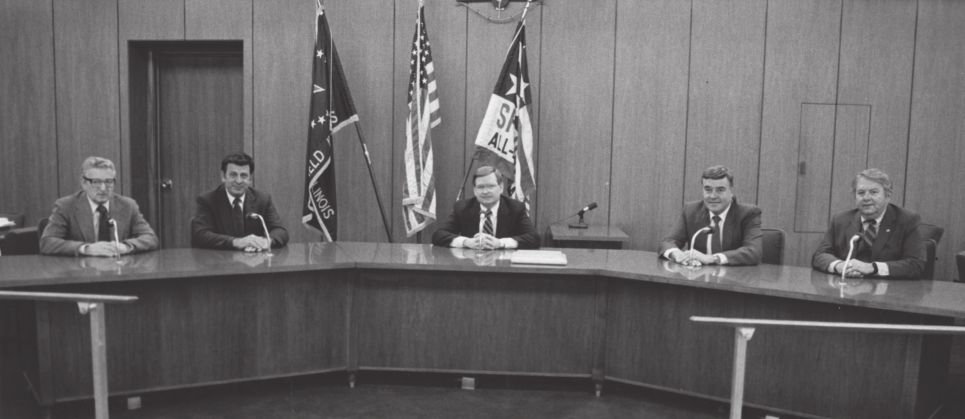
We
received a mailer at our house from your campaign, fairly late. It
included what the State Journal-Register had to say about Mr. (Jim)
Langfelder, what they had to say about (Paul) Palazzolo and a long
excerpt about what they had to say about you. The entire thing. I
included my entire comments and then I took the ending paragraphs that
they had for each of the other candidates.
Why
did you do that? In yours, it wasn’t entirely positive, glowing things.
It mentioned Shredgate, among other things. I thought it was a fair
thing to do. What the State Journal-Register did in writing about
the two primary opponents in the primary election was…basically to
indicate that Jim Langfelder may have vision, but they couldn’t see the
vision. Paul Palazzolo had a lot of ideas, but they questioned his
ability to move into a city government the size and complexity of
Springfield.
You didn’t go negative on Palazzolo in a big way. I didn’t go negative on anyone.
Why not? Palazzolo was vulnerable in some spots. Certainly, I would say he went negative on me from day one.
You didn’t respond in kind. Why not? It’s just not my nature to do that.
If you’d have done that, would the result have been any different? One never knows.
Do you have any regrets about the way you ran your campaign? I am
fully responsible for running my campaign. So, anything that was done
that was a mistake was my fault. Anything that was done that was
correct, I take credit for.
If
you had won a second term, if you’d been mayor for the next four years,
what would you have done? In the first term, you reduced head count by a
fairly significant amount. You take credit for getting the city’s
fiscal house in order. You passed a tax increase that has resulted in
some infrastructure improvements in fairly short order. I believe that
the percentage of hiring for minorities improved under your
administration as opposed to your predecessor. What would Chapter Two
have looked like? You want to go back to my accomplishments for this
term?
Absolutely –
it’s open-ended. Coming into this term, to say it was a trying time in
city government would be an understatement. … I knew that the city was
in bad shape financially. I had no idea as to how bad of shape the city
was in. One of the things we found was that the average daily balance in
our general fund had been in the red for the entire previous two fiscal
years, that the year before I came in, the average daily balance was
just a little over negative $3.5 million a day for all 220 working days.
… One of the things that we have been able to do in terms of the city’s
general fund is to go from that negative $3.5 million-plus to, maybe
two weeks ago Friday, the average daily balance for this fiscal year was
$9.1 million a day. That’s well over a $12 million turnaround in a
four-year period of time. We did that as a result of reducing employment
within city government. We did that by managing city government and the
budget, trying to approach things in a more efficient manner. That in
and of itself is a major accomplishment.
We’ve
taken City Water, Light and Power to a point where I really believe
that it has turned the corner. We were able to avoid a technical default
this year. … We’ve had, for our purposes, a cold winter, which has
allowed us to sell power on the wholesale market. But we also have had
the situation where the price of natural gas is at a two-year high,
which made electricity sales more attractive. … Also, interest rates
have come down. … As a result of interest rates being lower, we are now
in a position where we can go out and refinance that $575 million worth
of electric division debt at a lower interest rate, which will then
allow us to have a better cash flow coming out of the utility. At the
same time, we have the opportunity to, in the very near term,
renegotiate the major contract within City Water, Light and Power’s
electric division, and we anticipate that we will be able to lower our
cost of operation as a result of that. It’s the coal contract. … At the
same time, as we look forward, we have our wind contracts coming in 2017
and 2018, and we anticipate that we will need to continue to have wind
as a part of our electric production, but that we will again be able to
substantially reduce the cost of buying that wind. … And when we look at
improving our cash flow as a result of the refinancing, the coal
contract and the wind contract, this is totally going to change the outlook of CWLP in terms of their financial situation.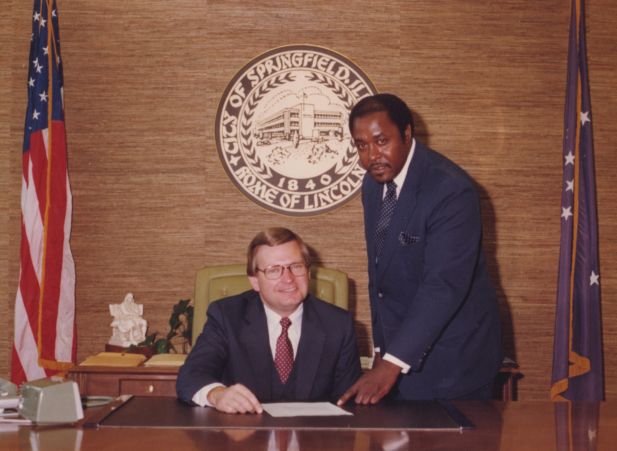
I
would remind you that the most critical issue facing the city of
Springfield on a longterm basis is rail consolidation. As we talk about
accomplishments, in 2009, although I didn’t know it at the time, the
city had actually agreed to go down Third Street. I was told as a
candidate, that this was a done deal, there was nothing we could do to
change this. The reality is that, over the last four years, we’ve got a
record of decision to use the Tenth Street corridor, we’ve received a
$14.4 million…grant coupled with money from the ICC (Illinois Commerce
Commission)…that is financing a $20 million underpass at 10 th and
Carpenter that the city of Springfield, at this point, has $365,000 in,
in total, that I would expect that we would be reimbursed for when the
project is done. … And while, again, this is, in 2010 dollars, a $315
million project, and there’s no real money available to do this at
either the state or the federal level, we’ve been able to move this
along in useable segments with the idea that we keep the project alive. …
The county’s been involved with it, the chamber’s been involved with
it, but I’ve been very, very involved with it. I’ve put more of my own
personal time into that because of its long-term impact than anything
else I’ve done.
Do you
have any concerns that what you’ve set in place, what you’ve started
out, will be followed through upon by whomever is the next mayor? Had
someone stepped forward to run for mayor who I’d been comfortable with
in doing this, I probably would not have sought re-election.
Will you endorse? I have never endorsed anyone in a mayoral race. That’s not to say I won’t.
Has anyone asked? No response.
Fair enough. Not directly.
I
want to ask you about something that happened early in your tenure.
That was the Maximus study. It wasn’t a great deal of money in the
scheme of things. $40,000. … I think it was a 5-5 vote. Everything was
5-5.
A, did you expect
that? B, what explained that? Do you have an explanation of why that
became such a controversial issue on the city council when we’re talking
about that amount of money? You had to reduce employment in city
government in order to have an out-year impact. … Most departments in
city government, when you get beyond the public works department, are 90
percent-plus salary and benefits. So, if you’re going to have an
out-year impact in the general fund, what you have to do is eliminate an
expense. You can take police cars, firetrucks, public works vehicles
out of the budget, but you have to buy them at some point. But if you
reduce people, you don’t necessarily have impact in the year you do it,
but you have 100 percent impact the following year. When I ran for
office, I talked about the fact that if we’re going to get our financial
house in order, we had to be able to reduce our employment. By doing
the Maximus study, we eliminated – and I said this at the time – that if
we did the study, that the city council wouldn’t have to make
decisions, that I would go ahead and make the decisions and take the
blame for reducing our employment. That’s what we did.
We
had a study that said if we consolidated all our garages, we bought a
new garage building, we bought the equipment we needed, we did all that,
at the end of a five-year period we would save $5 million. And the city
council balked at it. The city council balked at the NAPA contract. …
Mike Palazzolo, the fleet manager, went ahead and asked each of our four
garages to give him the 50 most common parts they used. And he made up a
list of, I believe, 72 items, out of that and then looked at what we
actually paid for those items and what the NAPA contract was and we
saved about $200,000 off those 72 items. The city council didn’t want to
do that because we had to eliminate some jobs. … (T)hey weren’t
necessarily looking at what was best for the city as you move forward. …
As mayor, I had to make very difficult decisions. Not an easy thing to
do. But I’m not a politician. I’m a professional manager. My entire
career has been spent making decisions, and a lot of those decisions are
tough decisions. Sometimes they impact people’s lives.
Are
you saying or suggesting at all that the opposition to the Maximus
study was based on a fear that folks were going to lose jobs and the
city council didn’t want to have jobs lost? We were able to take most of
the people and move them. But we had managers in each of those four
garages. We only needed one manager.
That was it? That was what they were worried about? I believe so.
You
said when you announced last summer that you weren’t perfect. What did
you mean by that? The only perfect person in the history of the world is
Jesus Christ. I’ve made mistakes. One of the differences between being
in the public sector and being in the private sector, people make
mistakes all the time. Everybody is aware of what you do in the public
sector. And everybody can second guess.
Let’s
talk about Shredgate for a second. If you had to do it all over again,
would you fire those guys from the get-go? We certainly would do things
differently. But as we look at Shredgate…I’m really not prepared to make
specific comments about Shredgate because I haven’t read the full
report. … One of the impressions that I have is that, probably, Mark
Cullen was treated very badly as a result of that. I think that he was
relying on an assistant corporation counsel to do certain things and
give certain information. And I think that that person didn’t do a very
good job. May have lied. And, ultimately, he made decisions based on
that.
Are you
referring to Geanette Wittendorf? Again, as we look at what she did and
we look at things in hindsight, she probably should never have been
hired to start with. She handled this very, very poorly. The only reason
why she was here for eight months was, my job was to protect the city
of Springfield, and our attorneys did not want her fired until we got to
a certain point in the case [a lawsuit that alleged illegal document
destruction] because they felt it was better to have her employed and be
on more of a friendly basis than to have someone who was let go who
suddenly becomes more of a negative factor in the case. She was the
person who was really involved with this.
She
did have a history that was not a very good one [a judge had found
Wittendorf in contempt of court for allegedly mishandling a criminal
case when she was working as a prosecutor in Winnebago County]. How do
people like that get hired? I make the assumption, and it’s an
assumption on my part, that we simply did not do a good job of checking
her background. Today, with our attorneys, we run that through the
personnel department just like we would any employee that’s coming to
work for the city of Springfield. At the time that she was hired,
basically Mark (Cullen) was doing the hiring and the checking and that
type of thing.
Who’s
your favorite city council member? I don’t want to necessarily pick
somebody… out. I don’t think that would be fair any more than picking
out my least favorite. But the reality is, I have been criticized for
not working with members of the city council. We now, every major thing
we’ve done, I’ve had to have the city council to do that. I apparently
have been able to work well enough to come up with the five votes, with
me the sixth vote, to make things happen.
Is
it more difficult than it was when you were mayor before to get the
city council on board with stuff? Given the makeup of the city council,
this has certainly been more difficult to work with.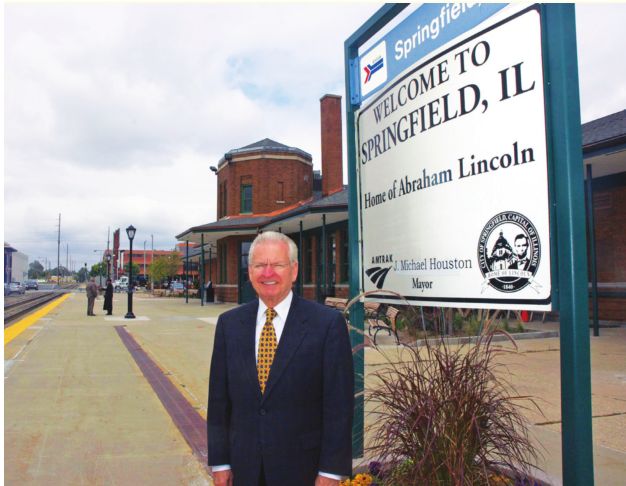
What
do you mean by makeup? Under the commission form of government, one of
the things you had was five people who were elected on a citywide basis.
So they made decisions based on the fact that they were answering to an
electorate that was citywide, so that their focus was more on a basis
of what was good for the city because they were going to be held
accountable for what was happening on a citywide type of basis as well
as what they were responsible for within their individual departments.
I’m almost hearing you say that we were better off back then with that form. No. Keep in mind I wrote this form of government.
Sure,
after you were sued. Actually, I was in favor of an aldermanic form of
government prior to the time I was elected to the commission form of
government. There had been a vote where I had publicly stated that I was
in favor of (the) aldermanic form of government.
I’ll
take you on your word. The commission form of government lasted as long
as it did in the city of Springfield because we had a utility – that
had a tendency to really work for the commission form of government,
having someone who was elected who was responsible to the people for the
operation of City Water, Light and Power. But as we have gone over a
period of time, operating city government had become more complicated.
Union contracts have become more complicated. One of the problems you
had with the commission form of government is that you had the mayor and
four commissioners. Three of those commissioners had union contracts
along with the mayor having a union contract. …
So
we had no centralized collective bargaining unit. Everyone was doing
their own thing. But when members of the city council brought their
contracts to the city council for approval, they didn’t necessarily
outline everything that was in the contract, all the changes. Once it
was approved, then other members of other unions (said), well, they got
this, we want this, too. It made it very, very difficult and expensive.
As you move forward with a more unionized operation, you can’t do that
today. There were a certain amount of inefficiencies within the
commission form of government. People who lived under that, there are
many of them that simply believe in it, think it’s a better form of
government. My personal belief is, you couldn’t operate with it today.
So
far as I know, you didn’t have the parties send so-and-so over and I’ll
figure out a job for them. Is it possible to run it the way that you
did and still have friends? I think I’ve got a lot of friends. … Again,
under the previous administration, it was not uncommon, when they needed
votes on the city council, they just simply passed out jobs. That was
one of the reasons we ended up with a bloated labor force.
Are you ever going to run for office again? I would not anticipate that I would ever run given my age.
You’re
70, correct? Seventy years old. But, I would also say that in 1987,
when I finished up my second term in office, I never anticipated that I
would run again. The difference is age. I feel blessed, and I’ve had the
time of my life the last four years. I enjoyed it.
Contact Bruce Rushton at [email protected]


