
FOOD | Julianne Glatz
“Hallo! A great deal of steam! The pudding was out of the copper. A smell like a washing day! That was the cloth. A smell like an eating-house and a pastry-cook’s next door to each other, with a laundress’ next door to that! That was the pudding! In half a minute Mrs. Cratchit entered – flushed but smiling proudly – with the pudding, like a speckled cannon-ball, so hard and firm, blazing in half of half-of-a-quarter of ignited brandy and bedight with Christmas holly stuck into the top.
Oh, a wonderful pudding! Bob Cratchit said, and calmly, too, that he regarded it as the greatest success achieved by Mrs. Cratchit since their marriage.”
From A Christmas Carol by Charles Dickens
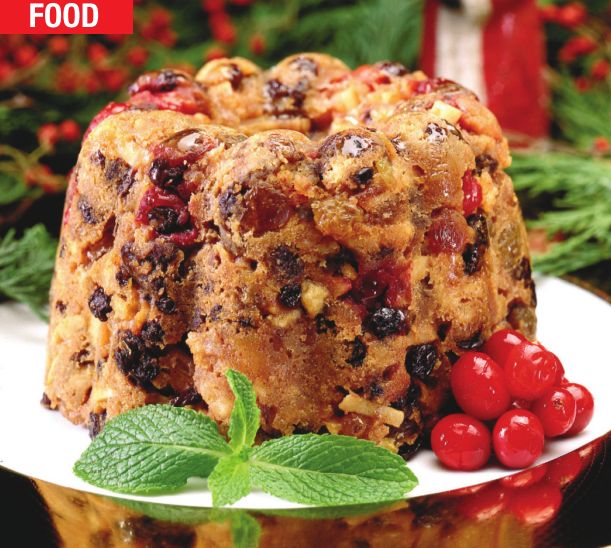
The world of British puddings is vast. But none is more revered than Christmas plum pudding. The “plum” refers to dried/candied fruits, not actual plums.
My family’s traditional Christmas suet pudding differs from classic plum pudding, although the recipe my grandmother made each year is probably more than 200 years old. It contains no candied citron or glacéed cherries, only raisins. And it’s not infused with brandy, although apparently not because of any alcohol aversion.
I’d always enjoyed Nana’s suet pudding but looked forward to tasting “real” plum pudding the first year I sang in the University of Illinois at Urbana-Champaign’s Christmas Madrigal dinners. It looked spectacular wreathed in blue flames but the pudding itself was disappointing. I didn’t care for the candied fruit and the texture was nowhere near Nana’s melt-in-your-mouth version. And both the residual brandy on the pudding and in the accompanying butter seemed harsh.
After 3 years (24 performances) of Madrigal dinners, I came to appreciate plum pudding but still preferred the taste and texture of my family’s Christmas classic. And because I’m making it myself these days there’s another reason: suet pudding is much less complicated and fussy. Now if I could just figure out how to get some blue flames in the act…
Plum pudding with brandied butter
• 1 1/2 c. currants
• 2 c. dried figs, snipped into raisin-sized pieces
• 2 c. white raisins
• 3/4 c. finely chopped candied mixed fruit peel
• 3/4 c. finely chopped candied cherries
• 1 1/4 c. blanched and lightly toasted slivered almonds
• 2 medium-sized tart cooking apples, peeled, cored and coarsely grated
• 2 T. finely grated orange peel
• 1 T. finely grated lemon peel
• 1 c. all-purpose flour
• 1 c. almond flour/meal (Bob’s Red Mill Almond flour is available at several local groceries)
• 4 c. fresh soft breadcrumbs made from home-made-type white bread
• 1 tsp. ground cinnamon
• 1/2 tsp. ground allspice
• 1/2 tsp. freshly ground nutmeg
• 1 1/2 tsp. salt
• 1 c. dark brown sugar
• 1/2 lb. ground beef suet, highly preferred or butter
• 6 large eggs
• 1 c. brandy, plus 1/2 c. additional for flaming if desired
• 1/3 c. freshly squeezed orange juice
• 1/4 c. freshly squeezed lemon juice In a very large bowl, combine the dried and candied fruits, slivered toasted almonds, grated apples and citrus peels.
Separately mix together the flour, almond flour, breadcrumbs, spices and salt. Stir the dry ingredients into the fruit mixture, making sure that the fruits, nuts and peels are coated with the flour mixture.
In the bowl of a mixer or other large bowl, cream together the brown sugar and suet until light and fluffy. Add the eggs one at a time and beat until creamy. By hand whisk in 1 cup of the brandy and the citrus juices, then use a rubber spatula to completely incorporate the fruit/flour mixture. Cover tightly and refrigerate for at least 12 and up to 48 hours.
Grease four 1-quart or two 2-quart pudding basins or heatproof molds. Fill with the pudding, leaving 2-inches headspace. Cover each mold tightly with buttered foil. Place each basin on a very large lint-free towel. Bring up opposite corners of the towel and tie them, then repeat with the other two corners. If your towel isn’t large enough, tie the corners together with kitchen string.
Place the puddings in a large pot of water.
Pour in enough boiling water to reach about 3/4 of the way up the pudding basins. Bring to a boil over high heat, cover the pot tightly, then reduce the heat to a bare simmer and steam the puddings for 8 hours, replenishing the water as needed.
Remove the puddings, cool to room temperature, then remove the cloths. The puddings should age, refrigerated, for at least a week and up to a year; they mellow with age.
Re-steam the puddings (without the cloths) for two hours before serving. If desired, unmold the pudding onto a platter, pour over the remaining brandy and set alight to bring to the table.
Brandied butter
• 1/2 c. unsalted butter, at room temperature
• 1 c. sifted confectioner’s sugar
• 1/3 c. brandy
• 1 tsp. vanilla extract
• 1/2 tsp. freshly grated nutmeg
• 1/4 tsp. salt Combine all ingredients on low with an electric mixer until everything is incorporated, then beat on high until the brandy butter is light and fluffy.
To mix by hand, combine all the ingredients except the brandy and vanilla, then, stirring constantly, drizzle in the brandy and vanilla. When they are incorporated, whip with a rubber spatula or whisk until light and fluffy.
Refrigerate the brandied butter until firm.
Serve small spoonfuls alongside slices/servings of plum pudding.
Nana’s suet pudding
• 2 c. all-purpose flour
• 2 tsp. ground cinnamon
• 1 tsp. ground cloves
• 1 tsp. freshly grated nutmeg
• 1 tsp. salt
• 1 c. chopped/ground suet, at room temperature
• 1 c. dark brown sugar
• 1 c. hot water
• 1 c. raisins Mix together the flour, baking powder, spices and salt. Set aside.
Beat the suet and brown sugar together in an electric mixer or by vigorously beating by hand with a spatula until the mixture is fluffy and light tan in color. Slowly add the hot water and mix until combined. Stir in the dry ingredients and combine thoroughly, then stir in the raisins.
Put the pudding batter into a heatproof (not perforated) bowl or other container that will hold it with some headspace at the top. You’ll need a pot with a lid and something to elevate the pudding container over, not in, simmering water. If you don’t have an appropriate steamer set-up, it’s easy to improvise one with an upside down metal colander or something similar placed in a big pot. I once even used a bamboo steamer set atop a big wok.
Fill the pot with as much water as possible without reaching the bottom of the pudding basin. Cover the pot snugly and place over high heat. When the water boils, reduce the heat to a simmer. Steam for 2–5 hours, the longer the better. Add additional simmering water as needed.
The pudding can be served immediately or it can be made a week ahead and kept refrigerated or frozen for up to a month. Steam it again until heated through before serving. Spoon into small dessert dishes and top with warm vanilla or hard sauce.
Vanilla sauce
• 1 stick (8 T.) butter
• 2 c. water
• 2 c. sugar
• 2 T. flour
• Pinch of salt
• 1 T. pure vanilla extract Put the butter and water into a medium saucepan over medium-high heat. When the mixture is hot and the butter melted, whisk in 1 cup of the sugar. Add about half of the second cup, then stir the 2 tablespoons of flour into the remaining sugar (to prevent flour lumps) and whisk that and the pinch of salt in as well.
Bring to a simmer, stirring frequently, and cook until the mixture has thickened. Remove from the heat and stir in the vanilla. Serve warm, spooned over suet pudding, bread pudding, etc. The vanilla sauce can be made up to several days ahead and kept refrigerated. Warm the sauce before using.
Variation: hard sauce Add 3-4 tablespoons of brandy, dark rum or bourbon to the butter and water at the beginning of cooking. Simmer for 5 minutes before adding the sugar, flour and salt. Reduce the vanilla to 1 teaspoon.
Contact Julianne Glatz at [email protected].