Five new holiday films
FILM | Chuck Koplinski
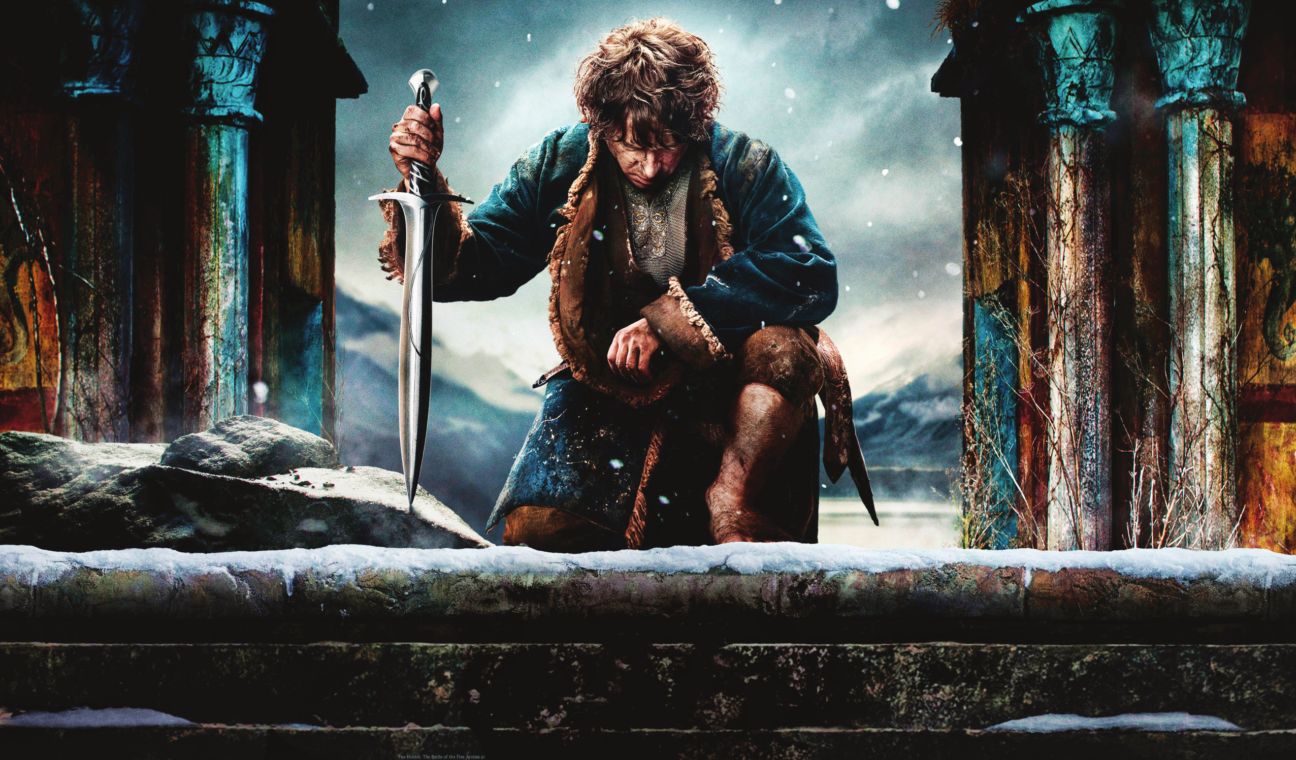
Hobbit: Armies finally gets us back again
And so, Peter Jackson’s Hobbit films have come to an end…at least I think they have. With these movies and the director’s Lord of the Rings features, you could never be quite sure. Just when you thought a conclusion was in sight or a fight was going to come to an end, the director would extend it again only to extend it again and again.
I did espy credits at the end of the latest Hobbit chapter, The Battle of the Five Armies, so I’ll assume things have come to a close. This episode picks up right where the last left off, with the dragon, Smaug, laying waste to Laketown as the noble Bard (Luke Evans) tries to slay him, Bilbo (Martin Freeman) and his crew ensconced in Erebor watching the dwarf leader, Thoron (Richard Armitage), slowly go mad and the wizard, Gandalf (Sir Ian McKellen), trapped in a rusty cage outside a castle in dire need of renovation. And it all comes to an action-packed end when Orcs, elves, dwarves, giants and humans come to Erebor to get their share of Smaug’s booty, riding, among other things, huge moose and ironclad rams. Oh, there’s a sled pulled by bunnies in there somewhere as well.
These films are not for those who, like me, have only a cursory knowledge of all things Middle Earth. No, all along these have always been for the obsessive ones like Jackson who’ve lost count of how many times they’ve read J.R.R. Tolkien’s works. Interestingly, the Rings movies were more accessible, taking into account that some of us wouldn’t know an Ent if we hacked one down for firewood. That first trilogy was justified as the story was grander and Jackson urged those of us on the outside to dip our toes in the waters of Middle Earth, allowing us to take it all in and become immersed in the story. The Hobbit films however, are another animal. Needlessly elongated from the source novel, these movies, ironically, move at a far faster pace yet go nowhere, abiding no fools where magic rings and talking dragons are concerned, wholly unconcerned whether the poor boyfriend or girlfriend who’s been dragged to them knows what’s going on.
That’s fine. These features are for the fans and they all seem happy with them as evidenced by their massive box office take. There’s no doubting that there’s great artistry on display here, that Jackson is a master of bringing an epic vision to the screen, though someone needs to talk to him about pacing, and occasionally a genuinely emotional moment occurs amid the tumult. (This time, its Bard’s killing of Smaug with the help of his son, a rousing early scene the film never equals.) I’m just glad I can finally stop feigning interest in these movies and no longer have to fight off the temptation to nap through the umpteenth battle between characters whose intentions are murky.
Fire missing in Jolie’s Unbroken On the surface, adapting Laura Hillenbrand’s best-selling book Unbroken for the big screen would seem a slam dunk. Its story is perfectly suited to serve as a basis for a rousing movie about self-reliance, redemption and forgiveness. Yet in Angelina Jolie’s hands, the story of Louis Zamperini comes off as a tale filled with exceptional events executed in a languid, tepid manner that saps any of its inherent poignancy. Surprisingly, what should have been an inspirational experience comes off as a bit of a slog.
To be sure, Zamperini’s life is an extraordinary one. As chronicled in Hillenbrand’s book, his was truly an American story. The son of Italian immigrants living in southern California, he was on the wrong path as a young man – a chronic thief and delinquent headed to a bad end. However, his brother, Peter, saved him, getting him involved with his high school’s track team
where he developed an interest in long-distance running, something that
would ultimately earn him a spot on the 1936 U.S. Olympic team. Joining
the Air Force after the outbreak of World War II, Zamperini would endure
a horrific ordeal at sea, spending 47 days adrift after his bomber went
down in the Pacific Ocean, only to be imprisoned in a Japanese
prisoner-of-war camp for more than two years, suffering with subhuman
living conditions and systematic torture at the hands of a sadistic
guard nicknamed “The Bird.”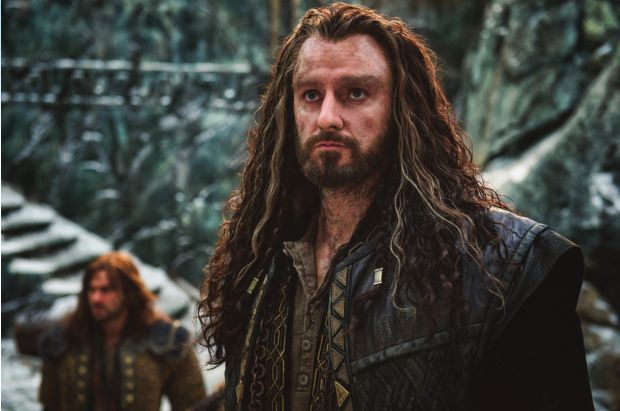
A
story this compelling can’t help but inspire. Yet Jolie’s approach is
too safe, a throwback to the sort of biopics made in the ’40s and ’50s.
While it would be unfair to say that the portrayal of Zamperini here
smacks of hagiography, it’s close. As portrayed by Jack O’Connell,
giving a solid if uncharismatic performance, Zamperini is a man of great
strength and fortitude whose religious faith carries him through his
many trials. That Jolie casts him as a Christ figure during the film’s
third act comes as no surprise. However, the fact that Zamperini comes
off as bland hurts the film in the long run, making it nearly impossible
for us to relate to a man so noble, yet lacking in charisma. Even the
villain of the piece, Mutsushiro “The Bird” Wantanabe (Takamasa
Ishihara), seems to be pulled from central casting as we get little in
the way of motivation where he’s concerned.
 What’s
most frustrating is that Zamperini’s post-war struggles with
post-traumatic stress disorder and the way in which he forgave his
enemies, going so far as to return to Japan in order to find and absolve
them, is merely mentioned in passing over the end credits. This is a
missed opportunity. There’s a nobility to the way the world of the
Greatest Generation is rendered here as well as the way in which the
film’s hero is presented. Unfortunately, Unbroken gets hopelessly bogged down by that quality, telling its story with surprisingly little fire or emotion.
What’s
most frustrating is that Zamperini’s post-war struggles with
post-traumatic stress disorder and the way in which he forgave his
enemies, going so far as to return to Japan in order to find and absolve
them, is merely mentioned in passing over the end credits. This is a
missed opportunity. There’s a nobility to the way the world of the
Greatest Generation is rendered here as well as the way in which the
film’s hero is presented. Unfortunately, Unbroken gets hopelessly bogged down by that quality, telling its story with surprisingly little fire or emotion.
Big Eyes, big fraud
A companion to his 1994 film Ed Wood, Tim Burton’s Big Eyes is
an examination of an artist’s struggle to be heard. In the early 1960s,
Margaret Keane’s work became a sensation in the pop art world. Her
portraits of beautifully unkempt waifs, each rendered with overlarge,
seemingly bottomless black eyes, became the must-have objet d’art of the
jet set and movie stars the world round. When Joan Crawford commissions
a portrait from you, you’ve made it. The problem was, Margaret wasn’t
getting any of the credit. Instead, her second husband, Walter, a
frustrated artist himself, accepted the acclaim and money that came his
way thanks to his wife. It was an arrangement destined to end in
acrimony.
Though she
would be passive in her second marriage, Margaret (Amy Adams) took the
progressive step of leaving her first husband, with her daughter in tow,
in 1958. It was a decision that would alter her life, as it would take
her to San Francisco, where she would paint portraits in the park for a
dollar apiece, a weekly ritual that drew the attention of Walter Keane
(a wonderfully deplorable Christophe Waltz). Recognizing his own
insecurities in her, he manipulated Margaret, telling her she
undervalued herself and her work, compliments she’d longed to hear.
Blossoming under his praise, the two were soon married, and Walter took
it upon himself to get them both recognized in the art world. However,
when her work wound up selling better than his, he claimed it as his
own, an easy task as Margaret signed her paintings “Keane” and stayed
hidden in their home.
Walter
would go on to perpetrate one of the greatest cases of fraud in the
world of art in the 20 th century, basking in the spotlight, thanks to
his wife’s efforts, for five years. Eyes recounts all of this in a
concise, breezy manner, something Burton is not always adept at. Not
having his usual grotesque tropes to fall back on seems to reinvigorate
the director here, as he’s required to concentrate on the story. It’s
compelling enough, though its predictable nature hinders it at times.
Adams
gives a solid, if unremarkable performance. Hemmed in by the timidity
of her character, who felt trapped and hesitated to break free from the
traditional gender role she felt shackled by, the actress is left with
little to play. Still, the moments in which the artist finds the
fortitude to stand up for herself are effective, thanks to the actress’s
skill. Obviously, Waltz has the showier role and plays it for all it’s
worth. He’s slick, charming, slimy, frightening and the actor conveys
each quality with a conviction that brings this flawed man to vivid
life.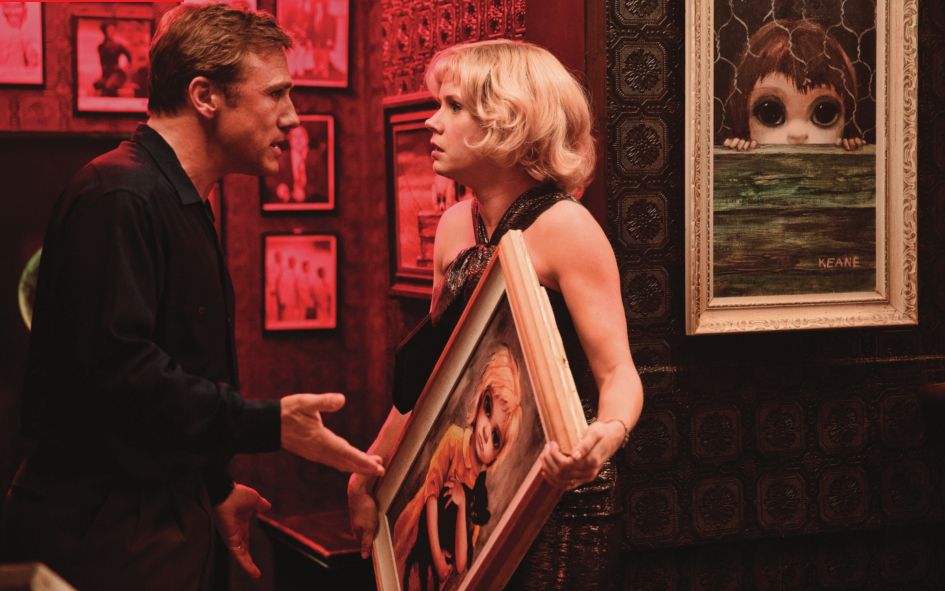
As
for the appeal of Keane’s paintings, that remains a mystery, one that
Burton and screenwriters Scott Alexander and Larry Karaszewski don’t
pretend to answer. That’s a question only those willing to pay thousands
of dollars for one could answer. Maybe.
A Grimm, wondrous trip Into the Woods
Often
I wonder where all of the money being spent on big-budget franchise
films goes. You go to see them and the reaction at times is, “That’s all
there is?” With Rob Marshall’s adaptation of Stephen Sondheim’s Into the Woods, the
reaction is the opposite. Sporting a relatively modest budget of $50
million, the movie is a rich, immersive experience that transports the
viewer into a magical forest where characters from various Grimm’s Fairy
Tales collide. Not only is the production design top-notch, but the
assembled cast would be hard to equal. Veteran stars and up-andcoming
performers combine their talents to deliver a version of this play that
should delight fans of Sondheim’s work and newcomers as well.
“Little
Red Riding Hood,” “Jack and the Beanstalk,” “Rapunzel” and “Cinderella”
are the stories intertwined. The Baker (James Corden) and his wife
(Emily Blunt) are the glue that holds them together. They’ve been trying
to have a child for years and then one day find out why their struggles
have been in vain. Years before, a witch (Meryl Streep) cursed the
Baker’s family bloodline after she found his father stealing her magic
beans. However, the curse can be lifted if they can find a white cow, a
red cape, a golden slipper and golden locks of hair. All must be
returned to the hag in three days time or the curse can never be lifted.
It’s
obvious who has these items. The script conspires to place Red Riding
Hood (Lilla Crawford), Jack (Daniel Huttlestone), Cinderella (Anna
Kendrick), Rapunzel (Mackenzie Mauzy) and a couple of princes (Chris
Pine and Billy Magnussen) in the woods to collide with the desperate man
and wife. Sondheim’s brilliant songs propel the story, particularly
“Into the Woods,” in which each character tells why they’re venturing
into the forest. This song and all the others are orchestrated in a
grand manner befitting the massive set, as one comes rapidly on the
heels of another, giving the film a nearly reckless sense of momentum.
The show is incredibly dense as its first hour includes no less than 15
songs, which bring these tales to their traditional endings.
However,
the film’s second act takes a darker turn, looking at the ramifications
of these stories, reminding us that not every tale ends happily ever
after. Couples split, characters are abandoned and a major player dies.
“Your Fault” is a rat-a-tat number that wittily sums up the bind the
Baker, Red and Cinderella have gotten themselves into, each pointing
fingers at the other, only to find the blame thrown back in their faces.
Sondheim’s
light and dark approach to these stories is a wonderful approach,
causing us to reevaluate their meaning, as well as the purpose of these
tales. That we are treated to exceptional singing, witty dialogue and
wondrous sights along the way makes Woods not only a complete entertainment but a delightful one as well.
The Imitation Game The code that couldn’t be broken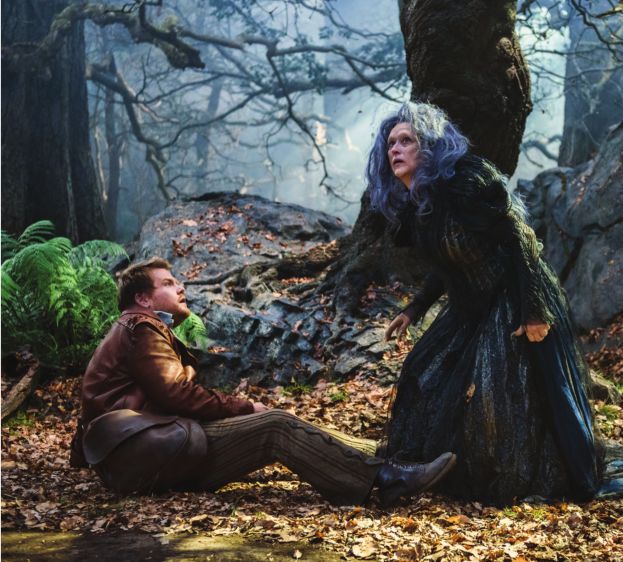
Every
great conflict has its unsung heroes. Alan Turing was one such figure
during World War II, a British mathematician charged with breaking the
Nazis’ secret code they used to communicate around the world. Troop
movements, routes of supply lines and other key pieces of information
were found out once Turing and his team cracked the code, thanks to his
pioneering work in computer science. Without his efforts, it’s possible
the war would have had a different outcome. However, his sexual
orientation and incidents from his private life would unjustly tarnish
his reputation for decades.
Morton Tyldum’s excellent The Imitation Game examines
this fascinating, tragic story, shifting back and forth between three
periods in Turing’s life, a strategy that ultimately puts this troubled
genius into focus. Smartly written, sharply told and beautifully acted,
what emerges is a portrait of a man under siege, forced to live a lie in
a society not ready to accept him.
The
task Turing (Benedict Cumberbatch) volunteered for was seemingly
impossible. The Nazis’ Enigma coding machine was capable of creating 159
million, million, million different communication settings that would
change daily. While his colleagues Alexander (Matthew Goode), Good
(James Northcote), Cairncross (Allen Leech) and Hilton (Matthew Beard) –
all resentful of Turing’s intelligence – worked diligently to decipher
this system, their way of thinking wasn’t up to the task. Turing
understood how the system worked and invented his own machine – a vast
system of wires, cogs and wheels that wheezed, clicked and spun – which
ultimately succeeded.
Tyldum
alternates between this story and that of Turing’s days in prep school
where he was bullied, as well as scenes dealing with a break-in and
scandal that occurred many years after the war. The rhythm the filmmaker
adopts is seamless; the movie effortlessly moves between each time
period, doling out key pieces about Turing’s life in a way that keeps us
intrigued, ultimately providing us with the answers we seek about his
behavior and private life. Much like the machine he created, he comes
off as cold, unfeeling and analytical. However, screenwriter Graham
Moore and Cumberbatch reveal another layer to Turing. A homosexual
during a time in Britain when this was illegal, he was forced to repress
his true nature. This, coupled with his eccentric behavior and shy
demeanor, doomed him to life as an outcast.
Cumberbatch
is exceptional here, breaking your heart as he captures Turing’s
struggle to belong and find happiness. He poignantly conveys the
scientist’s sense of alienation, capturing his anxiety, frustration and
suffering with a conviction that is moving. As Turing’s coworker Joan
Clarke, Keira Knightley impresses as well, giving us an honest portrayal
of a woman who unexpectedly shares his sense of alienation.
One of the year’s best, The Imitation Game is
not only a bracing thriller but a lacerating look back at a less
enlightened time and at a genius who was unable to crack the code of how
to interact with his contemporaries.
Contact Chuck Koplinski at [email protected].


