Pot biz lights up
Medical marijuana investors count on secrecy, profits and expansion
A RESCUING ILLINOIS REPORT | Kari Lydersen
 The 900 block of West Lake Street is the northern border of a meatpacking and warehousing district now occupied by trendy Chicago restaurants and bars.
If this company, Clinic West Loop, gets its way, that stretch of road will also be home to one of the 13 medical marijuana dispensaries scheduled to open next year in Chicago as the state rolls out the medical cannabis pilot program created by legislation passed and signed into law by Gov. Pat Quinn last year.
A subsidiary of a consortium called Green Thumb Industries (GTI), Clinic West Loop has applied for licenses for four marijuana cultivation centers and three dispensaries statewide.
Their team includes The Clinic Colorado, a nonprofit policy and lobbying group that also operates six clinics in Denver; Hillard Heintze, a security risk management firm co-founded by former Chicago Police Superintendent Terry Hillard; and Terrance Gainer, former Illinois State Police director and former Chicago police detective.
While it’s ironic that a couple of former cops are now eager to provide security expertise for marijuana providers, Clinic West Loop is just one of several hundred applicants awaiting the state’s announcement, expected in December, that determines who will get a stake in what is expected to become a booming and highly lucrative new industry.
But getting in on the ground floor of Illinois’ medical marijuana business isn’t cheap or easy, a BGA Rescuing Illinois investigation details. The opportunity is drawing an elite crowd of applicants from the world of high finance, along with a flurry of technical, legal and marketing experts from states where medical marijuana has been legal for years.
That rush of big money and power, along with Illinois’ sorry track record of tricky deals, has some applicants questioning whether selections will be influenced by cronyism, politicking and mystery.
“Plenty of people contacted us saying they would like to apply for one of these licenses, but they think the application process is going to be rigged and corrupt and they don’t want to waste the money if it’s going to be someone’s brother-in-law getting the licenses,” said Dan Linn, executive director of the Illinois chapter of the National Organization for Reform of Marijuana Laws (NORML).
State officials disagree. They vow an honest selection process, free of influence peddling, and assert that any mistakes or problems made along the way will be corrected.
“No law is perfect, no set of rules is perfect, and there will probably have to be adjustments – I’ll be there to make those,” said State Rep. Lou Lang, D-Skokie, lead sponsor of the law that created the fouryear pilot program and presumably laid the groundwork for future and potentially expanded medical marijuana legislation.
Applications roll in
In total, the state received 214 applications for up to 60 dispensary licenses and 159 applications for 21 cultivation centers statewide, with each application costing $5,000 and $25,000 to file, respectively.
Cultivation
center applicants must show proof of $500,000 in liquid assets and post
a surety bond of $2 million to the Illinois Department of Agriculture;
dispensary hopefuls must show $400,000 in liquid assets. There will be
two cultivation centers in Chicago and the northern suburbs.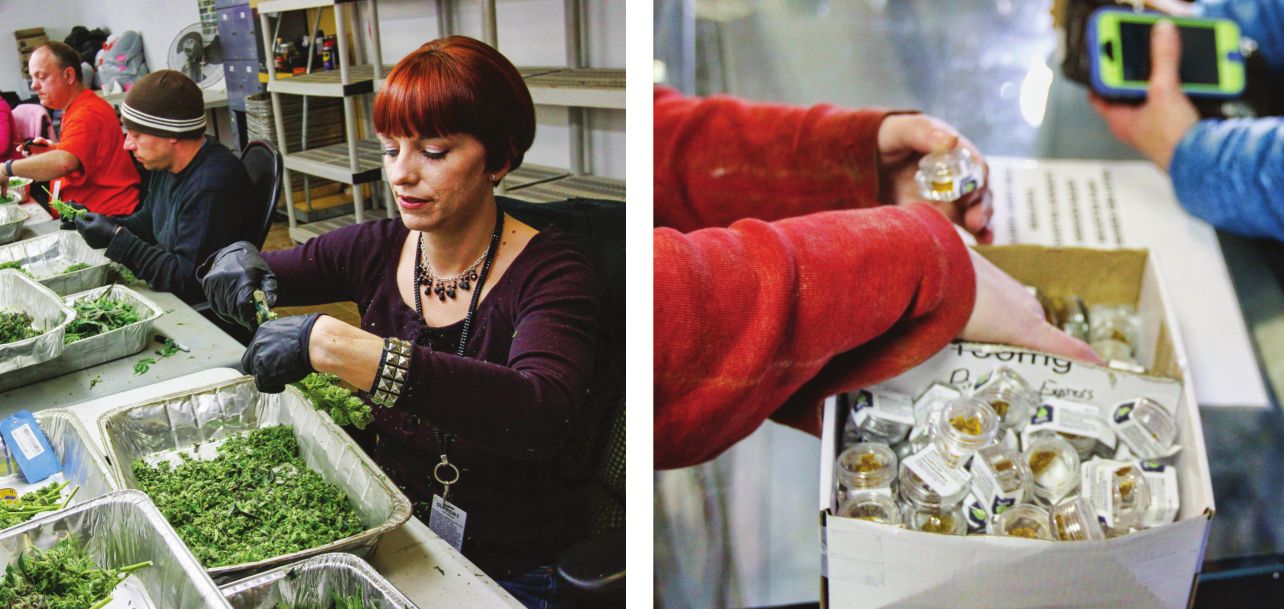
These
numbers show just how big people expect Illinois’ medical marijuana
industry to become. Their hopes are bolstered by financial data from
other states with medical marijuana and projections regarding full
marijuana legalization, which some see in the cards for Illinois down
the line.
For example,
Michigan brought in $10.9 million in fees from its medical marijuana
program last year, providing significant revenue beyond the $4 million
the program costs to administer. And the blog Wallstcheatsheet.com
recently predicted that Illinois is among the seven states with the
greatest potential revenue if marijuana were fully legalized.
It estimated that an Illinois marijuana industry could bring in $544 million in revenue, and $126 million in taxes to the state.
The
teams applying for cultivation center and dispensary licenses appear
typically to be made up of successful local businesspeople from a
variety of sectors along with wealthy financiers and expert growers and
sellers from states like California and Colorado where medical marijuana
has been legal for years.
“This
is the hottest business opportunity in the United States,” said
attorney Bradley Vallerius about legalized marijuana in general. “An
already existing market made legal. An opportunity to get in on the
ground floor of a new industry, to become the Budweiser of marijuana, to
secure family wealth for generations.”
Checks and balances
More
than 23 states and the District of Columbia have legalized medical
marijuana and four of those states and Washington, D.C., have legalized
marijuana for recreational use.
Illinois’
medical marijuana law is among the country’s strictest, many experts
say, with a relatively limited list of three dozen qualifying medical
conditions for patients, high fees and standards for dispensary and
cultivation center owners, strict operational rules and a promise of
tight regulation.
Applicants
had to propose extremely detailed security plans, undergo background
checks, submit personal tax returns and provide various other documents
ultimately resulting in single applications filling multiple bankers
boxes. A cottage industry has sprung up for lawyers and consultants
assisting with applications.
“It’s
kind of putting marijuana on the same playing field as plutonium,” said
Chris Lindsey, legislative analyst of the national Marijuana Policy
Project, which favors legal regulation of marijuana sales similar to
selling alcohol. “It’s pretty phenomenal how high the bar is” to even
apply for a license.
The
patient ailments eligible for medical marijuana under the Illinois law
include: cancer, HIV, lupus, muscular dystrophy, severe fibromyalgia and
about 30 other diseases. Medical marijuana is typically used to treat
pain, nausea and other symptoms associated with these diseases.
It
does not include post-traumatic stress disorder (PTSD), chronic pain or
other common ailments that are covered under other states’ medical
marijuana laws. The Illinois law includes a process allowing people to
petition to add new ailments to the list. Patients can get 2.5 ounces of
marijuana every two weeks, or more with a special waiver.
The
marijuana cultivation centers will be high-tech industrial indoor
agricultural facilities, typically covering 20 acres or more, with
complicated ventilation, lighting and watering systems. The law requires
security to be tight, with video surveillance, ID cards for entry and
“perimeter intrusion detection systems.”
The
dispensaries will essentially be retail outlets, likely located in
storefronts in commercial areas. However no walk-in buyers will be
allowed; patients must be registered with one specific dispensary.
The
Illinois Department of Financial and Professional Regulation will
regulate dispensaries and the Illinois Department of Agriculture will
regulate cultivation centers, while the state Department of Public
Health handles patient registration.
The
departments are all part of the state’s Medical Cannabis Pilot Program,
a new entity within the state government which brings together
employees of the public health, agriculture and finance and professional
regulation departments along with 40 new employees, said Melaney
Arnold, a health department spokesperson who is also spokesperson for
the pilot program.
Illinois: A bad trip?
Some
applicants are wary of doing business in Chicago and Illinois, which
has a rich history of doling out sweetheart government contracts,
ranging from driving trucks, cleaning city buildings or construction
work, to vendors and suppliers with political connections.
For
years, Dick Simpson and colleagues at the University of Illinois at
Chicago have produced regular reports outlining years of Chicago and
suburban corruption and suspect business practices.
Simpson said this is a valid concern in the medical marijuana process.
“It’s
always a problem with contracts that are very profitable,” said
Simpson, a political science professor and former Chicago alderman.
“It’s even more tempting when it’s something at the margins of legality –
for instance Al Capone in the Prohibition era, or gambling or [horse]
racing. Every time gambling has been brought to the state it’s been a
concern, and medical marijuana has the same potential…[With fears] that
it would end up on the street or be very lucrative and bribes would be
paid to get the (licenses).”
Still, Linn and other lawyers and policy experts say they expect a rigorous and fair process.
“The
officials in the state who are making these decisions realize there are
many, many eyes on them,” said Brendan Shiller, an attorney representing several
applicants. “If it’s not very clear, very obvious that the best
applicants got chosen, then there will be all sorts of problems they
don’t want to deal with.”
State
lawmakers recognized that influence peddling would be a concern so
dispensaries and cultivation centers or political action committees
formed by them are prohibited from making political donations.
Dispensary
and cultivation center applications will be reviewed by committees of
about a dozen people, each from the finance and agriculture departments,
according to the state.
Committee
members have “policy, program and legal expertise, as well as
horticulture expertise for cultivation center panelists,” Arnold said.
The
selection committees will review applications with names and
identifying information redacted. However, some question whether
redaction could be done imperfectly, intentionally or not, and whether
letters of support or other supplementary materials will reveal
applicants’ identities.
Security
plans account for 20 percent of the decision in both categories. The
cultivation plan counts for 30 percent for centers, with other
categories including business plan and “suitability.”
“Bonus
points” are awarded for women and minority-owned businesses and for
plans to give back to the community, for example with educational
outreach, donations to HIV services or job training for veterans.
The
applications are not public or subject to the Freedom of Information
Act (FOIA), a provision lawyers and advocates say is necessary since
they include personal information like tax returns and competitive
business and security plans.
Arnold said officials are figuring out what if any documents from the decision-making process will be subject to FOIA.
While the Quinn Administration is on board with keeping applicants’ names confidential, Governor-elect Bruce Rauner is not.
“The
application process for medical marijuana should not be held in secret
where insiders win and taxpayers lose; it should be open and
transparent,” Rauner said in a campaign press release. Rauner also
called for passage of a new law making changes to the application
process.
Lawyers argue
their clients involved in other industry sectors fear reputational harm
if it’s known they are interested in medical marijuana.
Proposals
for dispensaries and cultivation centers have also drawn opposition in
communities where they are proposed, with some neighbors associating
them with crime or debauchery, a connotation many business leaders want
to avoid.
When
licenses are awarded it is likely the recipients’ identities will all
become public, but there is no point in revealing the identities of
people who never get licenses, attorneys argue.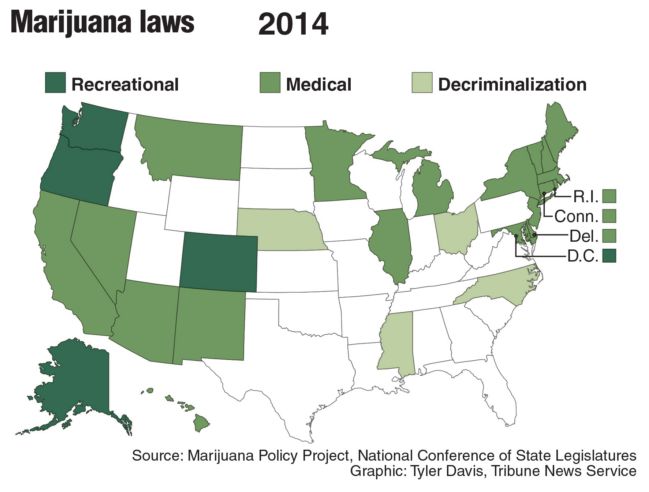
“It’s
typical to see a business or investment fail, that’s nothing new,” said
attorney Vallerius. “But it’s different when you go to church and
everybody keeps staring at you because they heard you grow and smoke
drugs.”
So far, the identities of
some dispensary and cultivation center applicants has become public
primarily through filings for the special use permits required from
municipalities, which can be obtained before or after a state license is
issued.
In Chicago,
City Council decides on the special use permit. This summer City Council
passed legislation allowing dispensaries in business and commercial
districts as long as they are 1,000 feet from schools and not in
residential areas.
Walter
Burnett Jr. is alderman of the 27 th ward where both GTI and Mandera
want to open dispensaries. Burnett told DNAInfo that he fears “yuppie
wards” will get all the dispensaries. (Burnett did not respond to
requests for comment.)
The
dispensary licenses will be awarded in “townships” geographically
spread across the city. The South Township drew no applications, while
the West Township had 10.
Rules, regs abound
The awarding of licenses is only the start of a raft of new responsibilities for a stressed state government.
The
state needs to select labs to test the marijuana being produced, and
carry out strict oversight of the cultivation and dispensing processes.
Licenses are renewed annually, after reviews by the state.
Operators
are required to carefully log and account for all the marijuana
produced. It must be packaged at cultivation centers and sold by
dispensaries unopened – no jars of loose product to sample or bundle
on-site.
Unsold marijuana must be destroyed and transported to landfills in a regulated process, with state police notified.
The
law includes provisions meant to prevent monopolies and keep prices
fair. One party can have an interest in only three cultivation centers
and five dispensaries statewide.
And
cultivation centers must offer the same prices to all dispensaries. But
some are concerned patients and independent businesspeople will still
be taken advantage of by big conglomerates.
“If
everybody who has a cultivation center has a dispensary or vice versa,
there’s not going to be a whole lot of competition,” said Shiller.
“People will just sell to themselves – that may be problematic.”
Tammy
Jacobi owns Good Intentions LLC, a clinic in West Town that advises
patients on how to register for the program and connects them with
doctors.
Jacobi said
she sees much potential for market manipulation under the rules. She
thinks cultivation centers will find a way to offer favorable prices to
dispensaries they also own, perhaps by selling different types of
products to different dispensaries. And she fears dispensaries could
band together to agree on prices higher than patients should have to
pay.
She points to a
law proposed in Michigan that could allow medical marijuana sales to
Illinois patients, potentially competing with Illinois dispensaries.
Meanwhile
experts note that if Illinois dispensary prices are higher than street
prices, many consumers will still go the illegal route.
Lang said that any such problems will become apparent as the pilot program plays out, and can be addressed in a new law.
“I
actually think these guys will not make as much money as they think
they will, certainly not now. When we refine this, when the model
program sunsets and we make a new law, there may be better opportunities
for businesses and better prices for patients.
“We’ll
have a better grip on what it means and how to make it work for really
sick people and how to enhance the revenue for the state of Illinois,”
Lang said.
Kari
Lydersen is a Chicago-based author and freelance writer who regularly
reports on government for the Better Government Association and other
media outlets.