
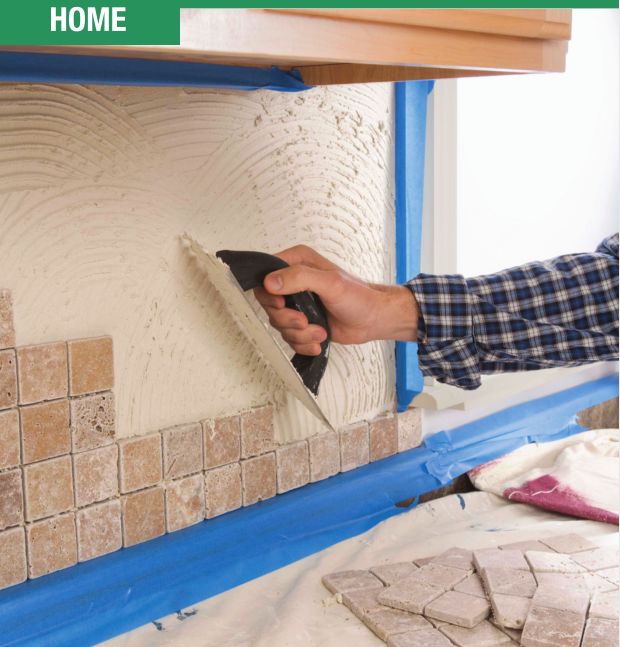
You want your home to stand out as your own, but you also want to be able to sell it down the road. Here’s what you should remember when you decorate, remodel and even build.
HOME IMPROVEMENT | Emerson Nagel, CTW Features
It was a house of mirrors. But this was the kind you had to live in. “No matter which way you turned, you saw yourself reflected back. It seemed like the entire house was covered in mirrors. Every wall, the ceilings, even the kitchen was mirrored,” says Allyn Rawling, a real-estate agent with Coldwell Banker in Evanston.
When Rawling and a group of real estate agents walked through the house, they kept bumping into walls. “Sometimes you see mirrors on an entire wall, but this was something else,” Rawling says.
Such is an example of a homeowner who is probably not going to get his money back out of his investment in remodeling. As nice as mirrors are, few people would pay extra for a house that was quite so reflective.
Hallie Howell, with Hunt Real Estate in Buffalo, New York, calls it “overimproving.” In moderately priced houses, Howell says, if you put a lot of money into an improvement that is outside the public’s basic taste, you may not get your money back when you sell the property. The bottom line is that if you are planning on selling your house within the next five or so years, avoid costly and/or nonstandard improvements.
How far can you go?
It really depends on the property and how long you intend to live there. Howell says you need to consider both “value in use” (what you get out of using whatever the improvement is) and “value in exchange” (what you’ll get for that improvement when
you sell).
Rawling
cites a house she recently listed as an example of value in use. The
couple who owned the house expected to be there for a long time, so they
put a lot of money into a fabulous kitchen: fancy miniature Viking
stove, Corian countertops, excellent layout, lots of storage. To them,
the investment was worth it, regardless of the resale value.
The problem Howell sees with selling that kind of a kitchen, or any other state-ofthe-art big-ticket improvement, is that not everyone would choose to have a state-ofthe-art kitchen: “When you improve your house, do it so that anyone who comes in can imagine living there.”
Respect your home’s integrity
 Another
rule that Rawling says she can’t stress enough is, “Don’t go against
the style of your house. Maintain the property’s integrity.” Don’t
remove all the beautiful hand-carved molding from an old Victorian and
replace it with flat modern trim, as a couple Howell knew did. Whatever
the style of your house, make sure your improvements are consistent with
it.
Another
rule that Rawling says she can’t stress enough is, “Don’t go against
the style of your house. Maintain the property’s integrity.” Don’t
remove all the beautiful hand-carved molding from an old Victorian and
replace it with flat modern trim, as a couple Howell knew did. Whatever
the style of your house, make sure your improvements are consistent with
it.
Big winners
Certain
improvements almost invariably improve the value of a property, Rawling
says, as long as they are done tastefully, in  the same style as the
rest of the house, and without going to extremes. Some examples: an
updated kitchen or an additional bathroom, garage or fireplace.
the same style as the
rest of the house, and without going to extremes. Some examples: an
updated kitchen or an additional bathroom, garage or fireplace.
Also worth a homeowner’s while is combining two small bedrooms into a master bedroom suite or adding decks, patios or even an outdoor grill. When improving a kitchen or bathroom, she recommends spending 5-10 percent of the value of the house. Seventy-five percent or more of that can be recouped when you sell, Rawling says. “Curb appeal” is a big factor in how easily your house will sell, Howell says. Landscaping, for example, gives you enormous bang for your buck.
Pitfalls to avoid
Some
things may be best to avoid, such as in-ground swimming pools and
ponds. Remember, you want everyone who sees your house to be able to
imagine living there, and a lot of people view the maintenance on a pool
or pond with horror.
Those structures also might make them concerned about safety.
 Don’t
spend a fortune rehabbing basement or attic space, either, unless you
get a lot of value in use out of it, Howell says. In most instances you
can’t count the attic or basement as part of the square footage of your
house.
Don’t
spend a fortune rehabbing basement or attic space, either, unless you
get a lot of value in use out of it, Howell says. In most instances you
can’t count the attic or basement as part of the square footage of your
house.
Large pet habitats and jungle gyms fall into the category of things you might want to offer to remove when you put the house up for sale, Howell says. Someone might come along with a boa constrictor for that seven-foot reptile habitat you installed – but it’s not likely.
Maintenance improvements
An
area in which you can almost not go wrong is with what Howell refers to
as “maintenance improvements”: putting in a new boiler, roof or
windows; repainting (but not magenta with puce trim); buying sensible
new appliances.
Sweat equity
One of the best ways to get a lot of value out of your improvements is to do them yourself. “You can do a lot to your house with sweat equity, and don’t worry how much you do because it’s not out-ofpocket,” Howell says. If you do some or all of the work (without cutting corners or going against code), you can usually recapture that value when you sell.
Stay neutral
Keep your improvements classic and neutral unless you’re planning on staying in your house beyond the lifetime of your improvements, Howell and Rawling both say. “Paint should be neutral, maybe cream or yellowy. It’s really easy to paint over cream,” Rawling says.
Bottom line
Improve your house so you like it. Maybe talk to your real-estate agent first. But as long as you don’t go overboard and you maintain integrity of style, you should be able to get most of your money back when you sell.
(c) CTW Features
