Young renters wanted
DOWNTOWN | Lauren P. Duncan
Renovate it and they will come. That’s what architects are hoping is the case in downtown Springfield.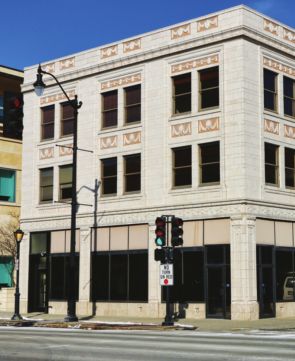
The Springfield Sustainable Design Assessment Team (SDAT) has been working since 2012 to find a way to revitalize the city’s downtown area. The group joined architects and residents at a Feb. 28 Citizens Club meeting to provide an update on the team’s latest focus: bringing businesses and residents back to the .81-square-mile area that it describes as downtown. The first step in attracting amenities, team leaders said, is to provide housing for young adults.
In 2012 SDAT released a study completed by the Bowen National Research Group that labels downtown as having a “missing persons” problem. Issues such as commercial office relocation to areas outside the inner city and shrinking government payrolls caused Springfield’s “inner core” to lose 2,600 workers in the previous seven years.
In November, the group came out with a report that emphasizes the need for more housing units for graduate students and interns working and wanting to live in the downtown area.
The study states that about 160 units for young adults, or “millennials,” are needed now. Once more young people have reasonable housing options and can move into the area, there will be a greater draw for businesses to move into the area, the study suggests.
But a recent millennial who left downtown, 36-year-old Dave Heinzel, pointed out it could be a “chicken or the egg” dilemma, at least in his case, as downtown’s present lack of amenities is what led him to move.
Heinzel was paying higher rent than what he’d originally wanted because he couldn’t find a place in the price range that suited him. It was hard finding an apartment.
While
there were numerous things he loved about downtown living, challenges
such as a lack of parking and few businesses have caused him to move. If
there had been a more affordable place with greater amenities, he may
have stayed.
“I would love to move back downtown.
Someday maybe I will. It’s going in the right direction. I just don’t see the city itself doing much,” he said.
Creating
affordable living is a goal of the American Institute of Architects,
which helped form SDAT. They’re trying to attract developers by tying
the need for downtown housing with the fact that there are many vacant
buildings in the area.
Larry
Quenette, owner of Renaissance Architects and an SDAT committee member,
has proposals for two separate sites for new housing opportunities,
including one that has the support of local universities. The other
project involves renovating the Kerasotes building at Sixth Street and
Washington Street.
Before a developer commits to renovating the building, though, Quenette said it may need committed renters.
“There are several people who would be willing to buy this building if they knew it would be occupied,” he said.
Springfield’s
affordable living can be a double-edged sword for the development of
downtown. Quenette pointed out that “downtown buildings are a dime a
dozen.” On the other hand, it can cost a developer a lot to bring older
buildings up to date. Yet, building owners can’t charge Chicago-like
rental prices.
“Downtown Springfield is very affordable, but that inhibits further development,” Quenette said.
There
are signs of progress. Timothy Smith, president and architect of Evan
Lloyd Associates, is working on a new three-story apartment building,
called Metropolitan Place, planned for Second Street and Reynolds
Street. It is set to have 36 one-bedroom units, which Smith said could
be ideal for medical school students wanting to live near the medical
district.
Charles
Pell, SDAT Action Committee cochair, said the committee’s next step is
to look into possible funding alternatives. In 2016, the downtown area’s
tax-increment financing district is scheduled to dissolve, which will
be a loss of a major development incentive.
“A lot of these things can’t happen if there aren’t incentives,” he said.
SDAT’s
livability committee is also looking at more immediate projects that
can liven up downtown, such as art installations, more outdoor dining
options, the prospects of a year-round farmers market, traffic flow and
ways to make the area more pedestrian-friendly.
Contact Lauren P. Duncan at [email protected].


