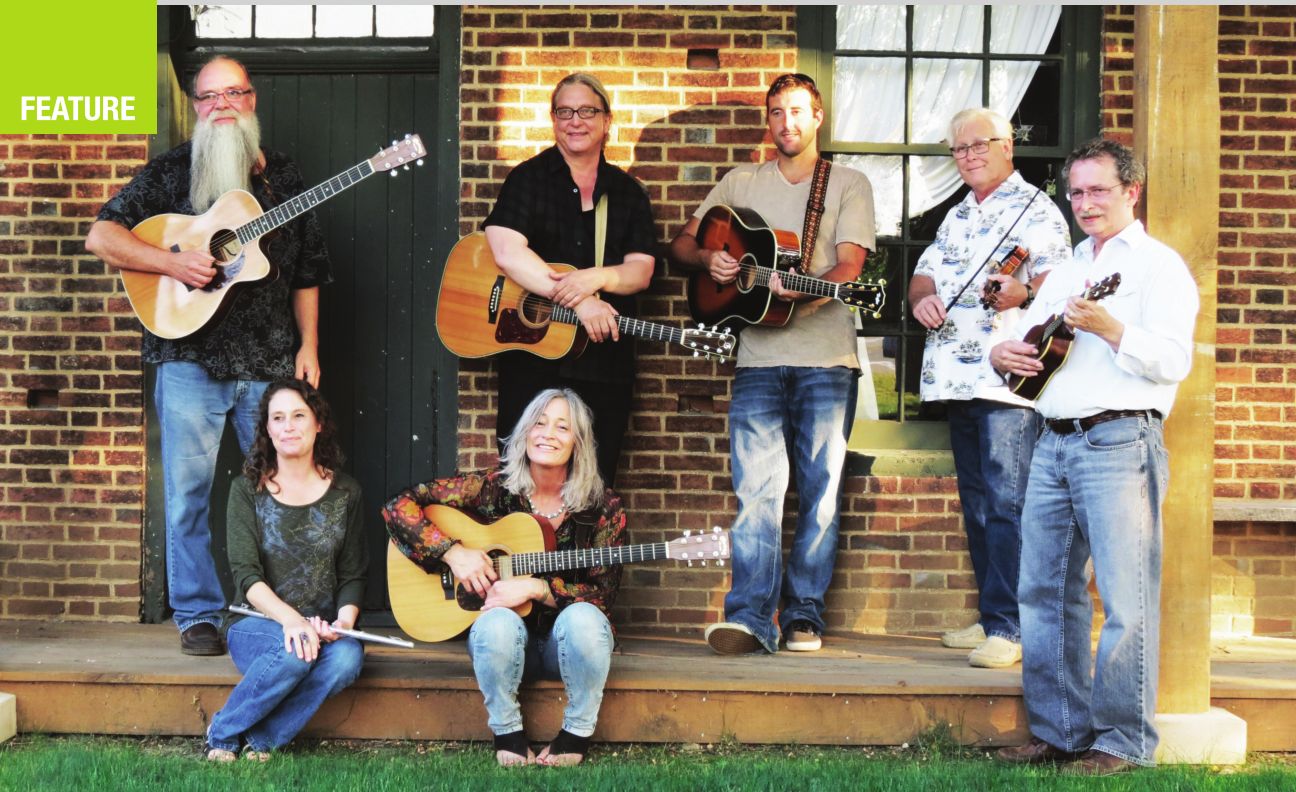
Reviving a tradition at Clayville
The Clayville Folk Music Festival comes to life Aug. 24
MUSIC | Tom Irwin
Close your eyes and drift back in time. There are no cars, no cellphones, no computers, no electric grid. Not a film in a theater or a movie on TV and not one single musical recording via iTunes, albums, eight-track or Mp3. Only through direct human involvement, right before your eyes and ears, can entertainment be discovered and enjoyed.
Now listen within that setting and hear fiddles and banjos, guitars and dulcimers, music made by human hands alone, voices singing songs passed down through the ages, mostly unaltered for hundreds of years, conveying history and tradition through story and song. This is music of the people, history and culture learned by listeners, delivered by artists, called folk music by some and a way of living by those involved.
When “the folks” gather this Saturday, Aug.
24, at the Clayville Historic Site, about 10 miles west of Springfield near the village of Pleasant Plains, this notion of performance as a way of presenting culture and tradition will spring to life at the Clayville Folk Festival. Twenty-five years ago, during the modern heyday of the Clayville site, a music festival was an annual event, well attended and
nationally known and respected throughout the region as a fine folk
festival indeed. I remember seeing the famed fiddler and songwriter John
Hartford perform in the mid-eighties as a highlight of my concertgoing
experiences, ranking right up there with Led Zeppelin in 1977 and
Talking Heads in 1983. The story of how the folk music revival came to
be, along with my involvement, is all tied into the history of the area
and of the Clayville site.
Early
settlement by our European ancestors in central Illinois began in about
1820. The Broadwells, builders of the brick home at Clayville, were in
the thick of it. Settlers attracted to the oasis of trees in the middle
of the vast prairie around
Richland Creek, a few miles east from what is now Pleasant Plains in
western Sangamon County, came from all parts of the country. John and
Betsy Broadwell landed here in 1819 and the rest of the Broadwells, led
by family patriarch Moses, came down the Ohio River to St, Louis, then
up to central Illinois all the way from Cincinnati, Ohio, by 1820. My
Irwin clan came up from Cabarrus County in North Carolina around 1830.

Moses
Broadwell earned his wealth from Ohio land speculations and promptly
bought as much land as he could in this area, with reports claiming the
Broadwells owned about 3,000 acres at one time. This was common practice
in the newly opened lands for settlement in the early days of the U.S.,
as those with connections and capital bought up as many tracts as they
could afford and resold them at a profit to new, incoming settlers. On a
side note, Moses laid out and founded Sangamo Town, where young Abraham
Lincoln outfitted his flatboat raft before heading for New Orleans with
help from Charles Broadwell. The town, once a contender for the site of
the state capital, slowly disappeared from the map after Springfield gained the seat.
 The
enterprising Broadwells soon established a working farm, tannery, wood
mill and, with the building of their house, currently recognized as one
of the oldest brick dwellings in the area, made a lasting impression on
the region. The house and grounds, well situated on the road to
Beardstown from Springfield, soon became a destination for travelers. By
1824 the Broadwell house became an inn and tavern, used as a stagecoach
stop and gathering place for travelers heading to and from the Illinois
River port of Beardstown and the growing capital city of Springfield.
No documentation exists of music performances on the grounds of
Clayville – named after Henry Clay, the great American statesman and
hero of the young, aspiring Whig, Abe Lincoln – but it would be easy
enough to imagine many a night was spent sitting around the fire
listening to the strains of a fiddle, the most common instrument of the
time, sawing away on a familiar tune.
The
enterprising Broadwells soon established a working farm, tannery, wood
mill and, with the building of their house, currently recognized as one
of the oldest brick dwellings in the area, made a lasting impression on
the region. The house and grounds, well situated on the road to
Beardstown from Springfield, soon became a destination for travelers. By
1824 the Broadwell house became an inn and tavern, used as a stagecoach
stop and gathering place for travelers heading to and from the Illinois
River port of Beardstown and the growing capital city of Springfield.
No documentation exists of music performances on the grounds of
Clayville – named after Henry Clay, the great American statesman and
hero of the young, aspiring Whig, Abe Lincoln – but it would be easy
enough to imagine many a night was spent sitting around the fire
listening to the strains of a fiddle, the most common instrument of the
time, sawing away on a familiar tune.
There
are no cited sightings of Abraham Lincoln at Clayville, but it would be
hard to believe the working lawyer and prairie traveler didn’t stop by
the tavern to water his horse, grab a bite to eat or spend some time
swapping stories with the locals. If nothing else the buildings are good
examples of what the world looked like as Lincoln worked the court
circuit.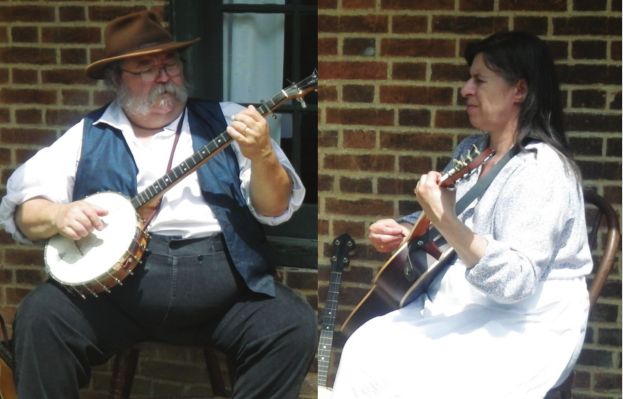
When
transportation modes changed with the advent of the railroads, the
Broadwell Inn declined and the family sold the property. Here we jump
nearly a hundred years to the 1930s, when a civic- and historic-minded
Dr. Fink purchased the land and listed the house in the Historic
American Buildings Registry. Clayville’s next landmark came in 1961 when
Dr. Emmett and Mary Pearson purchased the grounds and expanded the site
with the addition of several outbuildings. Doc Pearson, prominent as
historical collector (see his donated collection of medical items in the
Southern Illinois University building near Memorial Medical Center),
worked to restore the grounds and buildings and created the Clayville
that those of us who attended those wonderful festivals for years, well
remember. I recall my Grandma Hodgen allowing Doc to put up a Clayville
advertisement on our hill just east of Prairie Creek before the
Petersburg turnoff. The painted wooden sign stood there for many years.
 I’ve
spoken with so many people who recall a fun and memorable time seeing
the old ways of doing things recreated during the spring and fall
festivals. My parents, and especially my dad, were really into square
dancing and we loaded up the van and traveled to Tallula, Yatesville,
Baylor or Jacksonville almost every Saturday night in my grade school
days for a good time. Dancing at the Clayville biennial festivals was a
highlight of our square dance experience. I do remember getting duded up
in a plaid cowboy shirt and jeans, then dancing ourselves silly at the
festivals to a band and a caller. The attendance at these events was
phenomenal. I bet you could ask the person sitting next to you now, and
if they lived around here then, would likely regale you with stories of
the days of Clayville festivals.
I’ve
spoken with so many people who recall a fun and memorable time seeing
the old ways of doing things recreated during the spring and fall
festivals. My parents, and especially my dad, were really into square
dancing and we loaded up the van and traveled to Tallula, Yatesville,
Baylor or Jacksonville almost every Saturday night in my grade school
days for a good time. Dancing at the Clayville biennial festivals was a
highlight of our square dance experience. I do remember getting duded up
in a plaid cowboy shirt and jeans, then dancing ourselves silly at the
festivals to a band and a caller. The attendance at these events was
phenomenal. I bet you could ask the person sitting next to you now, and
if they lived around here then, would likely regale you with stories of
the days of Clayville festivals.
In
1972 the Pearsons donated the property to the newly created Sangamon
State University and the site became the Clayville Rural Life Center and
continued with festivals and events, organizing folk crafts guilds and
continuing with live music and rural life demonstrations. Private owners
bought the property from SSU in 1992 and allowed the buildings and
grounds to deteriorate without proper maintenance. By 2007 Clayville was
nearly unrecognizable through sheer negligence. Signs of vagrants,
human and animal, living in the buildings, combined with broken windows,
damaged roofs and nature going its course, put the historic and
venerable site teetering at the point of no return.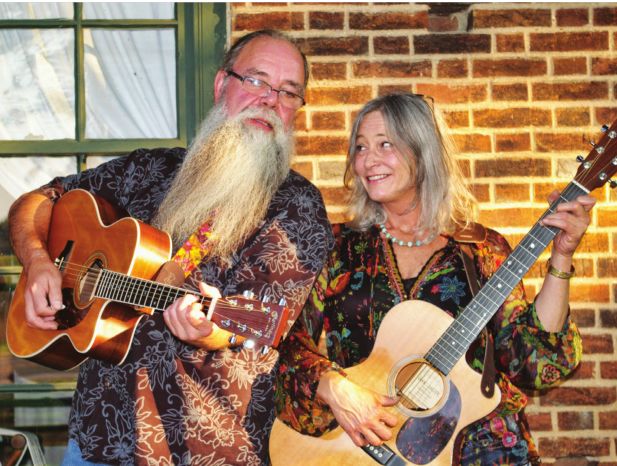
Fortunately
through the fundraising and volunteer efforts of the Pleasant Plains
Historical Society, headed by Pleasant Plains resident and mayor Jim
Verkuilen, the site was purchased in May of 2010 by the nonprofit
organization. Since then dozens of volunteers have cleaned up the
grounds and buildings, hosted many events, including the favored spring
and fall festivals, theater presentations, a haunted house,
organizational dinner meetings and classic car shows. The upper porches
were reinstalled on the Broadwell Inn for the first time in decades. The
historic site not only looked good again, but instilled in the
community a sense of partnership and pride. One could say the place
looks better that it did when the Broadwells were in residence.
Dan
Usherwood, current president of the historical society, watched the
process with a keen sense of understanding as to what the place means to the
residents of the area. He not only guides the volunteers and the events,
but also listens to what people in the area say they would like to see
at Clayville.
“Ever
since I’ve been here and after we got the spring and fall festivals
established, people have asked for two things – get a dinner theater
thing going and a folk music festival,” he said. “And we’re working on
getting both done.”
 When
I played a fundraiser in June of 2012 at Clayville, Dan and I
discovered our mutual desire to revive the Clayville Folk Festival. We
made plans and held the first folk music festival at Clayville in 25
years on Oct. 6, 2012. The lineup included Micah Walk, Ben and Kari
Bedford, Chico Schwall, Coondog and Parr, Samba Llamas and several other
artists, all nearly volunteering their time to see the event happen.
The weather, less than desirable, came in with temperatures around the
low 40s with a keen biting wind driving in from the northwest.
Performers used the ancient folk method of blowing on the hands between
songs to accomplish the task of playing a stringed instrument. The
chilled audience put up a valiant effort but the wind and weather won.
We finally moved the last acts indoors when the setting sun took what
warmth there was away. The disappointing day ended on a wonderful note
as we played inside The Batterton Cabin with the fireplace blazing and
songs wailing in a very traditional-like atmosphere, as unplanned as it
was. Even a folk festival needs to make some money to pay for costs and
our first attempt failed miserably on that level. Our greatest mistake
was not hosting the festival on Dec. 1. The temperature that day was in
the 70s and perfect for outdoor singing and playing.
When
I played a fundraiser in June of 2012 at Clayville, Dan and I
discovered our mutual desire to revive the Clayville Folk Festival. We
made plans and held the first folk music festival at Clayville in 25
years on Oct. 6, 2012. The lineup included Micah Walk, Ben and Kari
Bedford, Chico Schwall, Coondog and Parr, Samba Llamas and several other
artists, all nearly volunteering their time to see the event happen.
The weather, less than desirable, came in with temperatures around the
low 40s with a keen biting wind driving in from the northwest.
Performers used the ancient folk method of blowing on the hands between
songs to accomplish the task of playing a stringed instrument. The
chilled audience put up a valiant effort but the wind and weather won.
We finally moved the last acts indoors when the setting sun took what
warmth there was away. The disappointing day ended on a wonderful note
as we played inside The Batterton Cabin with the fireplace blazing and
songs wailing in a very traditional-like atmosphere, as unplanned as it
was. Even a folk festival needs to make some money to pay for costs and
our first attempt failed miserably on that level. Our greatest mistake
was not hosting the festival on Dec. 1. The temperature that day was in
the 70s and perfect for outdoor singing and playing.
For
2013 the decision was made to hold the Clayville Folk Music Festival on
Aug. 24 in hopes of warmer weather and friendlier winds. We connected
with local artists and made a good lineup of players, including a
balanced gender bill of 10 women and 9 men. Motherlode, a string band
trio of women immersed in all kinds of music and based in Charleston,
Ill., end the show, starting around 9 p.m. Gaye Harrison, fiddler and
mandolinist of the group, intends to feature several fiddle tunes
collected in Illinois by musicologist and musician Garry Harrison.
Lowder and Manning, a Petersburg duo of guitars and voices, play
original acoustic music and Gloria Attoun comes up from the St. Louis
area to perform original and traditional songs on mandolin, banjo and
guitar.
This year we
paired singer-songwriters together, with me joining Gloria, Jeff
Davidsmeyer of Jacksonville together with Ken Carlyle, formerly of
Rushville and the Cadillac Cowboys, and Pete Sander plays with Amy
Benton to do the famous Nashville-style songwriter swap. Mulligan Munro
features guitar, banjo, bass and fiddle doing an Irish and American song
assortment from Carter Family classics to Celtic folk standards. Jason
Eklund drives up from Nashville to show us why he’s respected as one of
America’s finest and truest songwriters and why the late, great Townes
Van Zandt, Texas songwriter legend, called him “the real thing.”
Opening the show we have the debut of the Blooming Heathers, featuring
Lori McKenzie, Theresa O’Hare and Megan Turner, the girls of The Emerald
Underground, out on their own singing and playing.
In
an added segment we are honoring a past player at Clayville with a
tribute to the late Don Buedel, an extraordinary fiddler and oldtime
musician who passed away June 6. Don played many a Clayville festival,
sometimes at the specific music events and many times during the spring
and fall festivals. He was a good friend of mine and he asked me to back
him on guitar at a 1991 festival and he played on my Roots in the Earth record
in 1993. I recently spoke with Don’s wife, Lori, who performed on
accompaniment guitar with him at Clayville this past spring. We talked
about his love of the old music and how he would look at a spot on the
ceiling far away as he fiddled for a tune, and we talked about his
dedication to Clayville and his reasons for a lifetime of playing
traditional folk music.
 “Don
knew and understood the value of passing the music along and was always
willing to share and show others,” she said. “It was important to him
to continue the music. His great joy was preserving and playing the old
tunes.”
“Don
knew and understood the value of passing the music along and was always
willing to share and show others,” she said. “It was important to him
to continue the music. His great joy was preserving and playing the old
tunes.”
In a State Journal-Register interview,
Don claimed one of his favorite pastimes was dressing up in period
clothing and playing the old music at get togethers like Clayville. I
could not think of a better way to not only honor Don and Clayville, but
to uphold the grand tradition of folk music and the underlying reasons
for reviving the Clayville folk festival than spending some time playing
the music he loved and passing it on to other folks. We will do this
with a memorial performance by fellow folk musicians, Don’s son Clay
Buedel and Don’s friend Steve Staley, at 2 p.m. Anyone caring to share
memories or songs are invited to join us at this time to commemorate the
life and music of Don Buedel and his time at Clayville.
The definition of folk music can be tricky.
Some
claim it can only be traditional songs passed down through ages and
some say it can be original acoustic music that was written yesterday
done in folk style. The real point must be in between, since someone
somewhere had to write “Barbara Allen” and that song written yesterday
just might make it into the canon of folk music in a few hundred years.
To me the beauty and the treasure of folk music and other areas of
folklore comes in the depth of artistry that gives us a way of looking
at our society, learning of past experiences and creating a future
reference, connecting generations to each other through traditions and
imagination.
It’s easy
to say in these modern times those connections are becoming severed by a
barrage of new contraptions, with the old ways being lost in time,
buried by the latest and greatest as society grabs hold of a new thing
only to cast it away as soon as another comes along. Whether we like it
or not the past is with us, driving, tugging, pushing and shaping our
present and future reactions sometimes unconsciously and other times
like a mad bull. By recognizing that fact, the past becomes our lifeline
to the future, our guide and mentor, showing us how it was done and how
it can be done or how it shouldn’t be.
This
is the legacy of the Broadwells, the Finks, the Pearsons and the many
past and current supporters of the Clayville site, a place that connects
our past and future through the present. Through music we gain
knowledge and experience in a very pleasurable fashion while enjoying a
simple fiddle line, a plaintive melody, a contemporary tune or a song
from across the ages. As Don Buedel was known to say, “Without the
people there would be no music.”
Contact Tom Irwin at [email protected].


