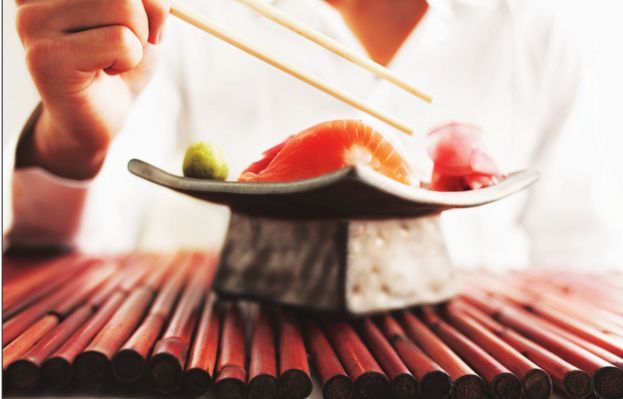
If you knew sushi
FOOD | Julianne Glatz
It seems as if sushi is everywhere these days – in eclectic restaurants and Chinese mega-buffets that offer a bewildering (and too often badly executed) mix of cuisines as well as prefab offerings in grocery stores. I’ve even seen sushi on display in gas stations, though not in Springfield or central Illinois.
Even so, some people still have mistaken ideas about sushi, and for lots of folks there’s a gross-out factor: “Raw fish! Yuk!” Well, not necessarily. The term “sushi” actually refers only to a method of rice preparation, one that oftentimes, but by no means always, is garnished with thinly sliced uncooked fish. Other garnishes include strips of savory omelet, cooked crab or shrimp, fried soft-shell crab, and barbecued eel (the slightly sweet teriyaki-style sauced barbequed eel is one of my favorites).
Since sushi entered mainstream American dining, options have exploded. One of the first is the California roll (cooked crab or shrimp and avocado, cucumber and Japanese pickles), Philadelphia roll (with cream cheese) and a host of other American innovations, many delicious though untraditional.
There are several types of sushi. Nigirizushi translates as “hand-formed.” Sushi rice is formed into an ovoid and then garnished. Another type is maki-zushi, or rolls. Most commonly, sheets of nori (pressed and dried laver, a type of seaweed) are laid on a bamboo mat, layered with sushi rice and other ingredients, and then rolled into a cylinder. Sometimes the rice is on the outside. A subset is temaki-zushi, hand rolls, for which the filled nori is rolled into a cone. Surprisingly, basic maki rolls are easier for amateur sushi makers than nigiri-zushi, though preparing any kind of sushi takes practice. An occasional maki maker, such as I, can always count on the first couple rolls looking a little ragged, though they’ll still taste good.
Master sushi chefs in Japan, who spend years perfecting their craft, are highly respected. Their creations can range from the elegantly simple to the elaborately precise. Korea also has a tradition of sushi, known as kimbap; in fact, many of the best sushi restaurants in Chicago are owned by Koreans.
About that raw fish: It must be pristinely fresh, with a silky texture and no fishy odor. When I go out for sushi, I’m looking for a place that’s busy (ensuring that ingredients are used quickly) and makes the sushi to order, at least those with a garnish of raw fish. Sushi that’s been hanging out on the buffet, looking a little dried out around the edges? No, thanks! I’m especially suspicious of discount sushi. Sushi is about quality ingredients, cooked or not. Those don’t come cheap, especially not that pristinely fresh fish.
I don’t mean to imply that a good sushi meal must be outrageously expensive, just that it can’t be fast-food cheap.
Sushi has become so popular that most non-Japanese Asian restaurants in Springfield offer it on their menus. Call me old-fashioned, but when I go to a Chinese restaurant, I want Chinese dishes, Thai food in Thai restaurants, etc. For years I avoided grocery store sushi, with the exception of sushi at Mitsuwa Marketplace, a huge Japanese “super-store” close to O’Hare Airport. A trip to Mitsuwa is about as close to being in Japan as you can get without leaving the Midwest. The food court alone is worth the visit, with multiple stalls selling house-made ramen and udon noodles, teriyaki, Japanese ice cream, and, of course, sushi.
Back in Springfield, I’ve violated my nogrocery-store sushi rule since the remodeled Montvale Schnucks installed Asian sushimakers in their own corner
of the deli department. They make sushi to order, and their premade
offerings in the display case have been recently made.
I
thought that I was innovative when I created a sushi-rice salad years
ago. It was healthy, lots easier to prepare than maki-zushi or hand
rolls (though not nearly as much fun), and my family loved it. I only
recently discovered that the Japanese have been making it for years. Now
my sushi salad has a Japanese name: chirashi-zushi.
Chirashi-zushi 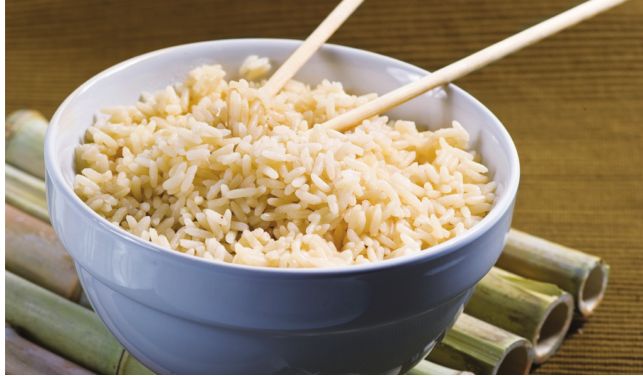
Sushi salad with seared tuna
For the rice:
• 2 c. Japanese short-grained (sushi) rice
• 2 1/2 c. water
• 1/3 c. seasoned rice-wine vinegar
Wash
the rice in a colander under cold running water until the water runs
clear. Combine the rice and water in a large saucepan and bring to a
boil over high heat. Reduce the heat to low, cover the pan, and simmer
the rice until all of the water has been absorbed, about 20 minutes.
Alternatively, use a rice cooker according to instructions.
When
the rice is cooked completely but before it becomes mushy, turn it out
onto a large shallow bowl or platter, tray or sheet pan. Immediately
drizzle the vinegar over the rice. Toss gently but thoroughly with a
wooden spoon or spatula, being careful not to mash or break the rice
grains. Cool to room temperature.
For the omelet:
•
4 eggs • 2 tsp. soy sauce, preferably Kikkoman
• 2 tsp. sugar
Whisk the
eggs together with the soy sauce and sugar. Spray a nonstick pan with
cooking spray and heat over high heat. Add the egg mixture and reduce
heat to low. Cook until the eggs have set. Cool to room temperature,
then cut the omelet into cubes or short strips.
To finish the salad:
•
1-1 1/2 lb. tuna, at least 1 inch thick
• 1/4-1/2 c. pickled ginger,
cut into thin matchsticks
• 2-4 c. of a variety of vegetables, according
to your preference and freshness
(Suggestions: blanched snow peas,
daikon radish, scallions, radishes, bean sprouts, crisp cooked green
beans or asparagus, cucumber, avocado, julienned carrot, chives or
garlic chives, zucchini) Sprinkle both sides of the tuna lightly with salt. Spray a heavy skillet
(preferably nonstick) with cooking spray and place over high heat. When
the skillet is very hot, sear the tuna for 30 seconds to 1 minute on
each side, depending on the thickness of the tuna. It should just be
seared on the outside and still rare in the middle. Set aside to cool to
room temperature.
Cut
vegetables into bite-size pieces or thin slices as appropriate. Seed
but do not peel cucumbers and zucchini. Mix pickled ginger, vegetables
and omelet cubes or strips gently into the rice. Check for seasoning.
You may want to add a little more seasoned rice- wine vinegar.
For garnishes and condiments:
•
1 or 2 sheets of nori
• Toasted sesame seeds
• Ponzu sauce: 1/3 c. each
of soy sauce (preferably Kikkoman) and lemon juice, mixed
• Wasabi
paste
Using tongs, hold the nori over a hot gas or electric burner for a
few seconds to crisp it. Cool it (if using two sheets, do not stack
them) then cut into thin matchsticks and set aside.
Mound
the rice on a large platter. Cut the tuna into thin slices and fan them
around the rice mixture. The chirashi-zushi can be made a couple of
hours to this point and refrigerated, covered. Sprinkle with a handful
of the thinly sliced nori and the sesame seeds. Serve the wasabi and
ponzu sauce on the side. Serves 4-8.
Contact Julianne Glatz at [email protected].


