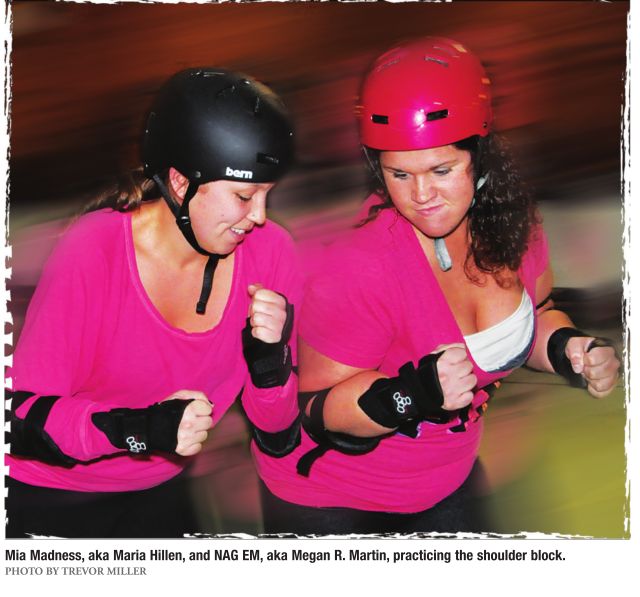
 “Next, we actually walk slowly through a game of roller derby, so everyone can see how it works. We don’t do any hitting at this point, to show everybody the mechanics of it. Then the last part of the night, we actually play roller derby with some bumping and minor blocking.” Moore pauses, chuckles. “Some girls get a little more zealous than the others.
But you can go as far as you want or stop at any point, if you think it might become too rough. Safety first.”
Skater Heather Easley agreed with her coach. “Any time you put on those skates you can get hurt. Then you add knockin’ one another around, going through people, skating really close. We wear protective gear ... I am a big enforcer of that. The more I have on the better. But you get your body in shape, develop the form you need to use. Off the court you have to get in shape, eat the right things, cross train, get involved in gyms.”
After all, roller derby is a contact sport. “I have always been that roughish, tomboy type, jumping out of trees as a kid, playing like one of the guys. That was always me,” Easley said. “As a derby family, we leave it on the court. I can’t wait to bout my best friend. I can’t wait to take her out. But you’re still good friends. It’s not a hate thing. It’s a game. We get competitive, you want to win, but outside the court we want to help each other get better. In practice you’re all best friends, but you have to get over that, ‘Oops, I just hit somebody. Are you OK?’ thing and just move on.”
Springfield roller derby has its roots in America’s long fascination with competitive roller skating. As early as the mid-1880s, there were organized, multiple-day endurance roller races offering cash prizes. Into the 20th century, spectators thronged to watch speed and endurance races on flat and banked tracks.
During the Great Depression, the team game of roller derby gradually evolved, with more and more physical contact allowed between the skaters. Roller derby eventually grew to become a caricature of itself, on television and in live spectacles, much like professional wrestling was and still is: over-the top theatrics, fake personalities and staged physical battles.
continued on page 12


