#1 More U.S. soldiers committed suicide than died in combat in 2010
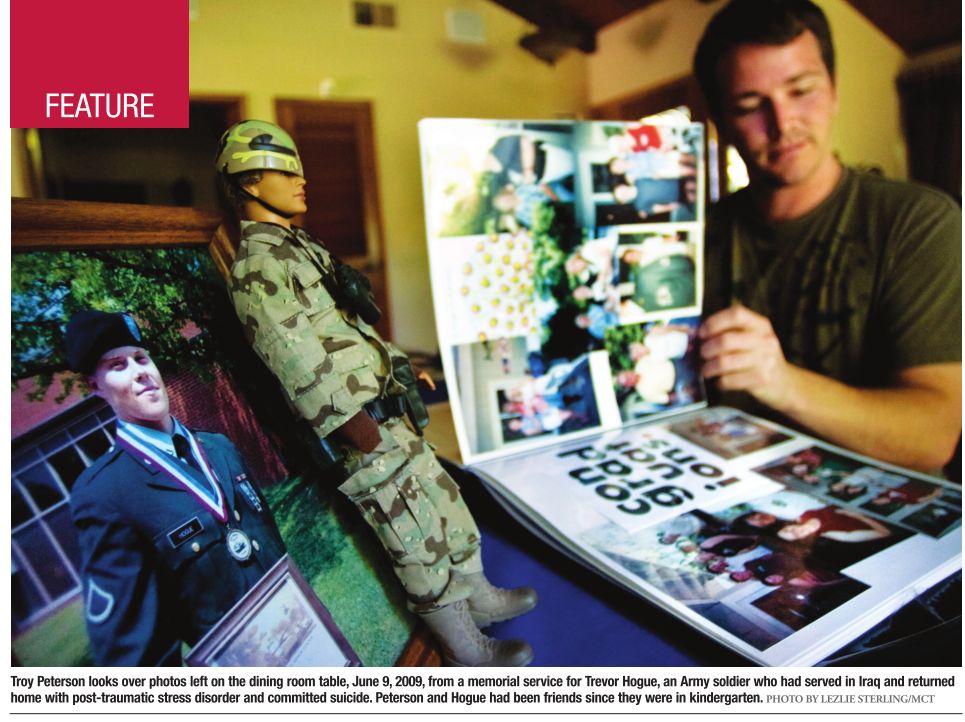
Six more, to be exact. That’s the figure reported by Good Magazine and spotlighted by Project Censored in an article highlighting the fact that 462 American soldiers were killed in combat in 2010 while 468 soldiers, counting enlisted men and women as well as veterans, took their own lives.
This was the second consecutive year that more soldiers died by their own hands than in combat; in 2009, the 381 suicides of activeduty soldiers recorded by the military also exceeded the number of deaths in battle. The Good report, which references Congressional Quarterly as a source, was published in January 2011, just weeks after military authorities announced that a psychological screening program seemed to be stemming the suicide rate among active-duty soldiers.
“This new data, that American soldiers are now more dangerous to themselves than the insurgents, flies right in the face of any suggestion that things are ‘working,’” Good senior editor Cord Jefferson wrote.
Project Censored also spotlighted Chris Hedges’ sobering portrayal of Jess Goodell, a marine who was stationed in the mortuary affairs unit in Iraq. Goodell published a memoir titled Death and After in Iraq, also the name of Hedges’ column.
 #2 U.S. military’s ‘friend’ fake-out
Anyone suspicious of “sock puppets,” those online commenters pretending to be someone they’re not, would be unnerved by the U.S. military’s “online persona management service,” a little-known program described in The Guardian UK, Raw Story, and Computerworld stories unearthed and highlighted by Project Censored.
The U.S. Central Command (Centcom) secured a contract with a Los Angeles-based tech company to develop the program, which enables U.S. service workers to use fake online personas on social media sites to influence online chatter. Using up to 10 false identities, they can counter charged political dialogue with pro-military propaganda.
“These ‘personas’ were to have detailed, fictionalized backgrounds, to make them believable to outside observers, and a sophisticated identity protection service was to back them up, preventing suspicious readers from uncovering the real person behind the account,” according to a Raw Story account.