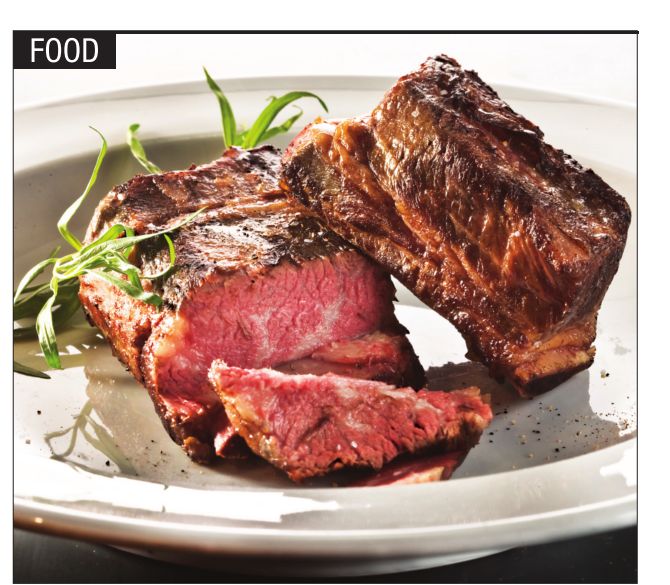
FOOD | Julianne Glatz
The heat is finally retreating. Even when daytime temperatures are warm, the nights are deliciously cool. Best of all, the high humidity has fled.
When days and nights turn crisp, my culinary thoughts move away from salads and grilling towards stews and braised dishes.
What’s the difference between the two terms? Not much. In fact, many aspects are the same. Michael Ruhlman, in his book, The Elements of Cooking, describes the difference:
“Stews are roughly distinguished from braises in that the meats and other ingredients are cut into smaller pieces and there’s much more liquid – usually the ingredients in stews are completely submerged. Also there tend to be more ingredients, all served in the cooking liquid. Stew ingredients (meats) may or may not be browned before being submerged in liquid. Otherwise the same general rules apply: low gentle heat that’s raised slowly and never brought to a full boil.”
To that I would add that braised foods [usually meats] are sometimes served without, or with a reduced version of, their braising liquid.
While the terms braising and stewing most often include meat-based dishes, vegetables can also benefit from long, slow cooking, something that’s the subject of an article in Sauveur Magazine’s current edition. In recent decades, chefs and experts all seemed to agree that vegetables were only properly cooked “al dente,” quickly cooked and often immediately immersed in cold water to keep them crisp and bright-colored. But what about some of the most glorious vegetable cookery in the American South: succulent long-cooked green beans, greens, and smothered cabbage? In the Middle East, many vegetables are also “rendered luscious via long stewing.” The Saveur article’s author, Leslie Porcelli, quotes her culinary school vegetable instructor, Chef Ted: “You find in big cities, or with people who think they’re more educated about gastronomy, that they’ll think crunchy vegetables are properly cooked. It’s the influence of French nouvelle cuisine; it was a reaction against classical French not to overcook vegetables. Like anything else that’s good, it got misinterpreted in the wrong hands.”
One of the best things about stews and braises is that they always taste better the next day. That makes them great for leftovers, but also a huge advantage for home cooks preparing for special occasions or dinner parties: the main course just needs reheating before it’s served.
That best thing is also the most intriguing. Just why do they taste better? I always assumed it was because the flavors had longer to fully mingle, but food science guru Harold McGee has a specific answer in his book, On Food and Cooking, the Science and Lore of the Kitchen. “The capacity of meat to hold water increases as it cools, so it will actually reabsorb some of the liquid it lost during the cooking.”
That explains the meat. But what about braised/stewed vegetables that also are most full-flavored the next day? Maybe it’s because of my assumption. And maybe just a bit of alchemy.
Contact Julianne Glatz at [email protected].


