
FOOD | Julianne Glatz
“When I was pregnant with my first child, I really thought that a fast food cheeseburger and fries was a complete meal. After all, there was meat, dairy in the form of the cheese, bread in the form of a bun, the tomato and lettuce were vegetables, and so were the fries.”
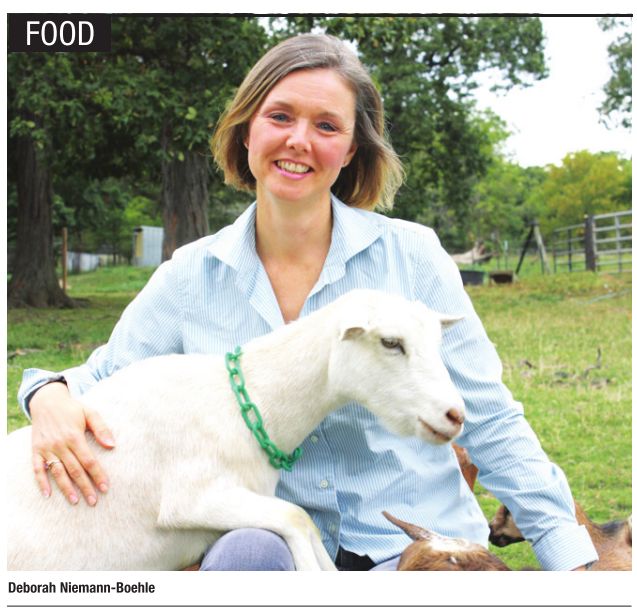
Deborah Niemann-Boehle has come a long way since then. Since 2002, the writer and former college instructor and her family live on a 32-acre spread they’ve named Antiquity Oaks that’s “just off I-55 between Bloomington and Joliet.”
The family grows and raises almost all of their food, from vegetables and fruits to eggs, milk, cheese and other dairy products, and meat. They make their own soap and spin wool from their own sheep. They built their house with minimal outside help, and Niemann-Boehle homeschooled their children (now in college) for all but three years.
It didn’t happen overnight. The self-confessed city slickers’ transition to sustainable living began in 1987, when an expectant Niemann-Boehle began attending La Leche League meetings (LLL supports and promotes breastfeeding). “I didn’t even know there was a difference between whole wheat bread and white bread,” she says. LLL introduced Niemann-Boehle to nutrition and healthy eating, and she began baking bread from scratch.
Husband Mike was in the Navy, and the family moved frequently. Their first attempt at backyard gardening was in Florida. “It was terrible,” Niemann-Boehle says. “It was so hot, everything we planted burned. We only harvested a few green beans that were so stringy, they were inedible.” But they kept at it, making changes and learning through a succession of moves. Niemann-Boehle was amazed at how much could be grown in even a tiny garden. By 2002 Mike was also a college instructor, having retired from the Navy and the family “decided to start living the adventure that Henry David Thoreau wrote about in Walden.”
Still striving to make Antiquity Oaks ever more self-sustaining, Niemann-Boehle is also committed to sharing the knowledge and experience they’ve gained, through speeches and by writing, in both a blog and a newly published book, Homegrown and Handmade. It’s an indispensible how-to primer for anyone wanting to learn about sustainability and self-sufficiency. The book is divided into four parts: The Sustainable Garden, The Backyard Orchard, The Backyard Poultry Flock, and the Home Dairy. Each part is divided into chapters dealing with planning, growing, raising, managing, producing, and cooking and recipes. There are also chapters on planning, managing and producing from a Home Fiber Flock.
The information is basic, practical and comprehensive, geared for novices as well as folks with a bit of knowledge. The gardening section includes such things as seed saving, composting and extending tomato harvests. Various methods of preservation such as canning, drying and freezing are explored. The orchard section includes pruning, planting and mulching. The backyard poultry section offers advice on diverse topics from brooding, laying, and coop management to injury prevention and treatment; the home dairy section includes information on subjects ranging from bedding and breeding to milking by hand or machine and cheese-making. Scattered throughout the book are testimonials and tips from other folks who are attempting to live sustainably.