The nuke next door
The data would help IEMA determine how much and what kind of damage occurred at a plant during a nuclear disaster, which in turn would help scientists predict the environmental consequences.
One of those consequences could be the release into the environment of radioactive elements, including Iodine 131, which only comes from nuclear power plants. During the ongoing crisis in Fukushima, government officials have found dangerous levels of I-131 in crops as far as 90 miles from the damaged reactors.
But I-131 didn’t stop there. It traveled on to the U.S., and IEMA scientists found traces of Japan’s I-131 in Illinois air and grass samples through March and April. The govern ment does not consider such low levels a threat to human health (they found less than .1 picocuries per cubic meter in every Illinois air sample, and the “safe” limit is 200 picocuries), but it was the first time in 25 years – since the 1986 Chernobyl nuclear accident – that Illinois scientists were able to see I-131 in air and grass samples.
“You find it in labs – it’s manufactured for medical purposes – but we don’t often have an occasion where we can look for it in the environment,” says IEMA certified health physicist Larry Haskell. It took an entire weekend for the lab’s gamma spectrometer to measure the .098 picocuries of radioactive Iodine found in Springfield’s air in late March, but Haskell says higher volumes from a nearby plant disaster would be detected within an hour. The Fukushima disaster provided an opportunity for IEMA scientists to test their equipment and put their skills and knowledge to the test, he says.
Should disaster strike an Illinois nuclear plant and send more significant amounts of I- 131 into the environment, Illinois residents won’t be prepared because of the state’s weak policy for distributing Potassium Iodide, or KI, according to David Kraft of the Chicagobased anti-nuclear group, Nuclear Energy Information Service.
KI is a stable form of Iodine that, when absorbed by the thyroid gland prior to exposure to I-131, blocks the organ’s absorption of the radioactive version. Some people are severely allergic to the drug, which can also cause upset stomach, rashes and inflammation of the salivary glands.
Those side effects are part of the reason IEMA’s radiological emergency plans call for Illinois to never recommend that anyone take the drug except emergency responders and those who can’t be moved during an evacua tion,
Klinger says. Instead, IEMA will only tell residents in an affected area when would be a good time to consider taking KI.
IEMA hasn’t mass-distributed KI since 2002, when for a weekend anyone within any Illinois nuclear power plants’ 10-mile evacuation planning zones could stop by distribution centers and pick up a supply for themselves and their families. Klinger says only about seven percent of that population bothered to pick up any KI.
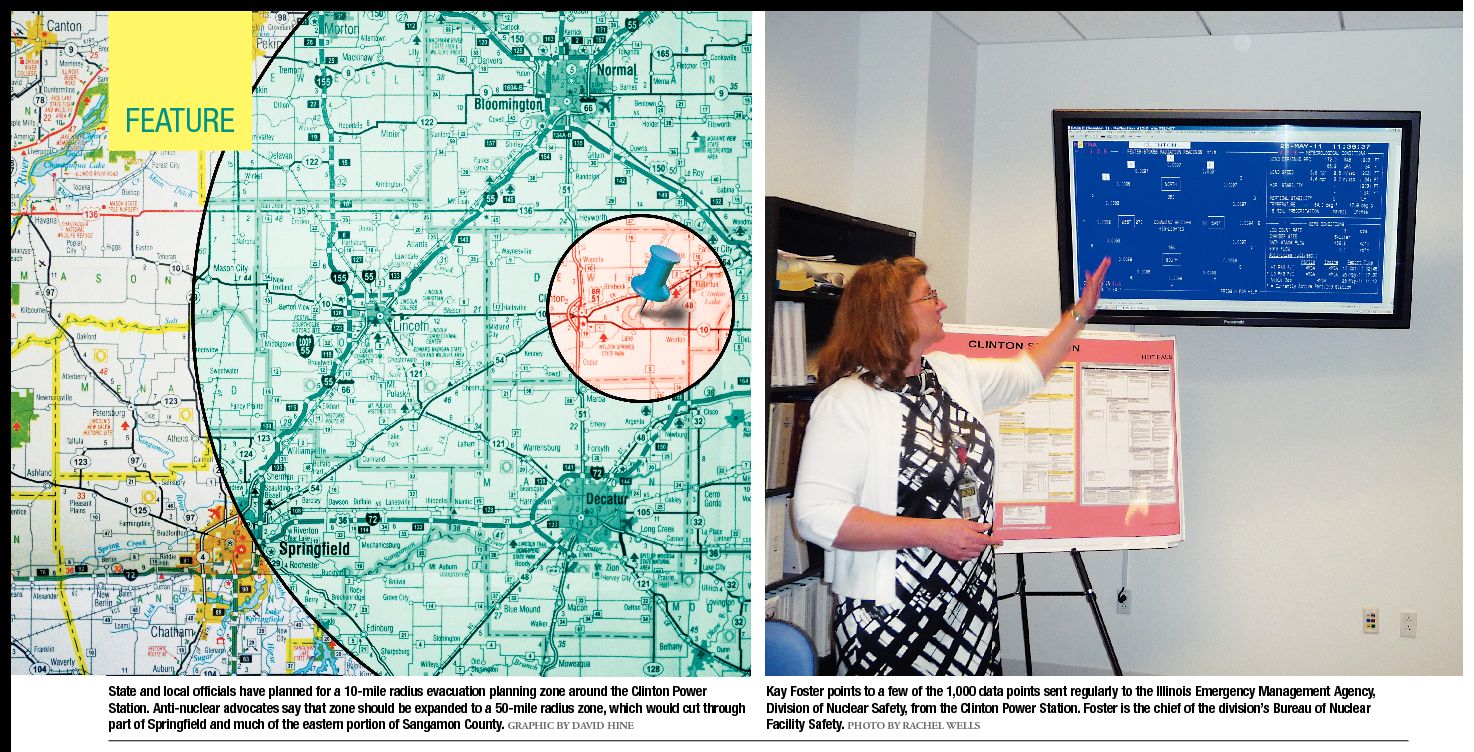
Kraft says Illinois should make sure every family within 50 miles of a nuclear plant has access to and knowledge of how and when to use KI before a nuclear accident.
“The key is you have to get it an hour or two before you’re exposed. If you take it later, it may not work,” Kraft says. “Iodine is an early devastator and it comes out of a reactor disaster quick and early. ... Every household within that planning area should have it available.”


