Finance districts and wants aldermen to host some council meetings within their wards to increase familiarity with the entire city. Jobe says outward city expansion isn’t necessary in most cases, that increased dining and hotel-motel taxes are a last resort, and that the city shouldn’t engage in any new spending.
As for cutting the budget, Jobe says, “Everything is on the table right now, but I will always fight the hardest for public safety and infrastructure.” He says the mayor needs to eliminate middle-management positions and says the city should examine reorganization of certain programs.
Counts lists Ward 6’s biggest problems as public safety, specifically speeding vehicles; crumbling infrastructure, both streets and sewers; and blight, like Chantilly Lace and the Bel- Aire Motel. He attributes crime in his ward to “people being people” and a poor economy, and he says developing more neighborhood associations could help solve the problem.
“I’m not for increasing tax. It seems like we just keep on taxing everybody,” he says, but then adds that he “would consider” an increased dining tax and an increased hotel-motel tax. He’s also in favor of higher parking fines.
Counts, who delivers car parts for Stone Wheel, Inc., and is president of the Central Illinois Film Commission, would take a back seat during his first year. “I’m going to be one voice of 11. … Seniors in city council will probably initially be a lot more proactive with a lot of things. I’ll be voting on a lot of other peoples’ ordinances as opposed to proposing ordinances of my own.”
DeLay, an unpaid lobbyist and property investor, agrees that blight is a major problem. He wants to push for more affordable housing and explore turning problem properties over to nonprofits and neighborhood associations. He thinks the city should increase fines on neglectful property owners and focus on enforcement, perhaps by giving more city workers such duties.
DeLay, who is a Democratic precinct committeeman, isn’t sure on the issue of whether to expand the city outwards, but he would like to annex the donut-hole village of Jerome. He says police and fire would be his top priorities but that reorganization is an option. For new hires, DeLay is open to looking at scaling back starting pay and benefits. “I was watching Suzie Orman … talking about the American dream we once knew is gone. People are worried about Social Security, and she said, ‘I think it will still be here but we’re going to have to work longer for less.’ It’s the same thing with our state budget and our city budget. We’re not always going to have more and more.”
He’s against increasing hotel-motel and dining taxes but says he would update parking fines, though he’s more concerned with the general organization of downtown parking. DeLay says he would advocate for the disabled.
DeLay says Jobe, the Illinois comptroller’s deputy chief of staff and a consultant for Peoples Economic Development Corporation, doesn’t have enough time to serve as alderman. “I’m familiar with state government, and it can suck the life out of you,” DeLay says.
Jobe sees things differently. “The jobs that I have today … have prepared me.” He touts his organizational skills, explains that Ward 6’s current alderman, Mark Mahoney, works for the General Assembly, and says his jobs provide him with ideas for solving problems.
– Rachel Wells
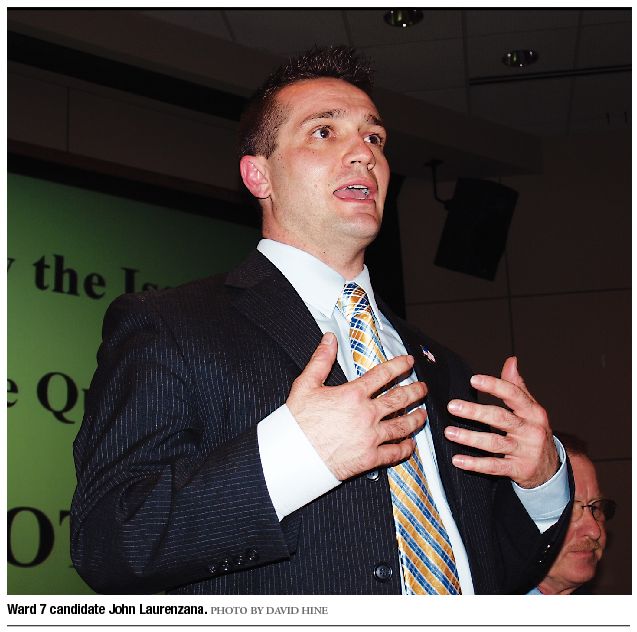
Ward 7: Three is a crowd Ward 7 spans some of the most well known parts of Springfield, including the historic Washington Park and Botanical Garden and part of MacArthur Boulevard.
continued on page 18


