Repurposed
for the future, a landmark hilltop property is now larger and
infinitely more modern, bringing new life to historic Highland
neighborhood.
"Rehabilitation” describes not only the primary function of Willis-Knighton’s newest hospital on Line Avenue near I-20, but the impact health system officials hope it will have on Shreveport-Bossier and the Highland neighborhood.
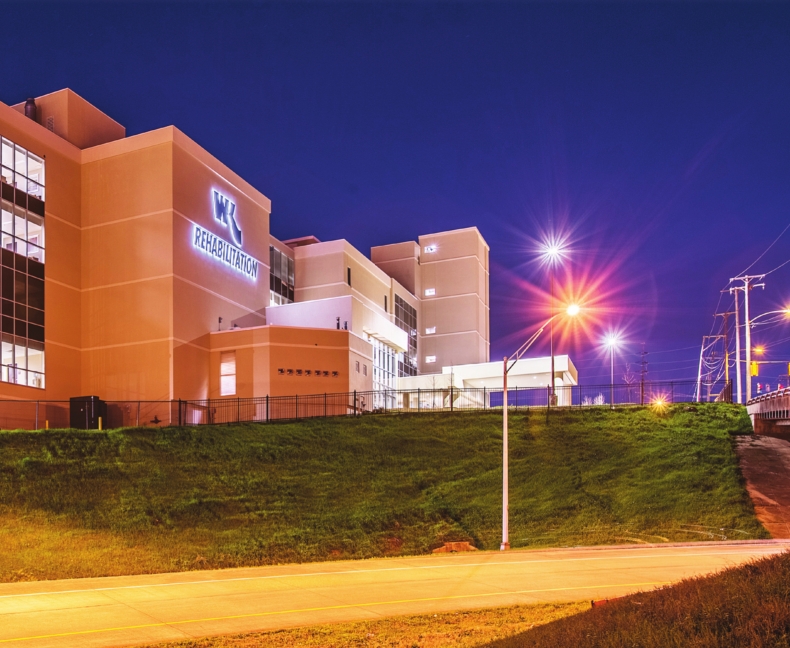
For years the building that has been transformed into the WK Rehabilitation Institute stood vacant with “For Sale” signs. It had closed in 2010 after financial problems forced the company that purchased it from Doctors’ Hospital to close it permanently. No buyers came forth for the old hospital on the hill. That changed in 2014.
Willis-Knighton
became interested in the building during the Ebola virus scare that
fall. Knowing that isolating patients was a better option than
integrating them into a population of people who are already ill or
injured,
Willis-Knighton executives thought the vacant hospital might be an
option if the virus appeared in Shreveport. Although the Ebola threat
ebbed, a call to the realtor brought interesting news. The once hefty
price had been substantially reduced. James K. Elrod, president and CEO
of Willis-Knighton, began to think of ways it could be used to benefit
the health system and the community, pulling together a team of key
executives to consider repurposing it.
 "If we’re able to wean someone off drugs or alcohol or pull them
back from suicidal tendencies, if we’re able to help someone walk again
after a traumatic injury, at the end of the day I think we’ve done
something special.”
"If we’re able to wean someone off drugs or alcohol or pull them
back from suicidal tendencies, if we’re able to help someone walk again
after a traumatic injury, at the end of the day I think we’ve done
something special.”
– Ryan Smith, administrative analyst and project manager
Chris
Mangin, director of physical medicine and rehabilitation, was one of
those executives. His department will share a large portion of the
building for both inpatient
and outpatient physical rehabilitation. He pointed out that its central
location was a selling point for his department located at
Willis-Knighton Medical Center (North) on Greenwood Road. “It’s only
three miles from where we’re located
now, but it’s a little bit closer to the people in Bossier. Plus, it’s
still on the interstate, very accessible to I-49 and I-20. That’s a big
bonus.”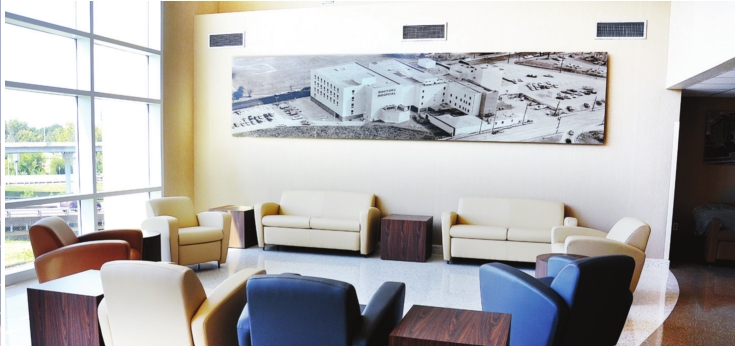
Also
in the group was Tim Wilcox, director of behavioral medicine, whose
department is moving from a smaller space at Willis-Knighton South to
the new location. “It ties back to community revitalization,” Wilcox
affirmed. “One of the things we hope will be an offshoot of this is
getting our staff to become involved members in the Highland community.
Now that we’re going to be working here, this is our community. This is
our neighborhood that we want to be involved in it to help.”
Joining
physical rehabilitation and behavioral rehabilitation in the move will
be the Willis-Knighton Outpatient Dialysis program, moving from cramped
quarters at Willis-Knighton North. The three departments will be part of
a fullyfunctioning hospital with a total of 65 beds.
As
the hospital focuses on rehabilitation, it will not offer emergency or
surgical services found at the four Willis-Knighton acute care
hospitals.
The
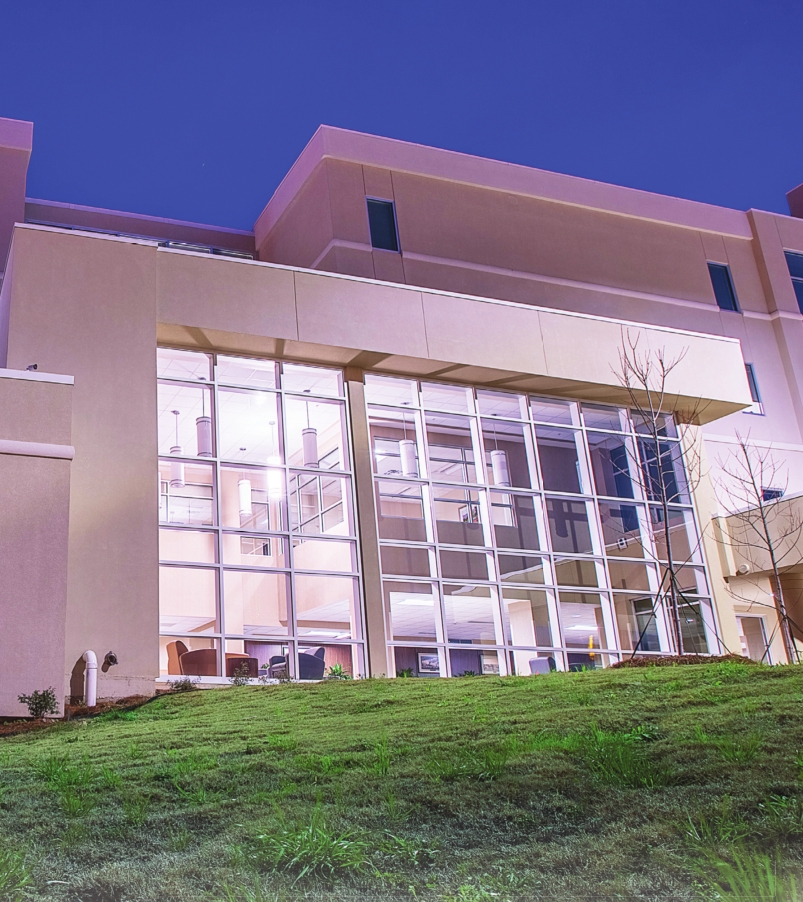
transformation in appearance is impressive. Moving the entrance from
Louisiana Avenue to Line Avenue, which is heavily traveled, brings
attention to not just the building but to the beautiful skyline of
downtown Shreveport to the north. The executives who are moving their
departments to the new location acknowledge that the structure, which
has been transformed not only to look good but to function well, will be
a boon to patients in our region.
Mangin
will have 31 inpatient rehabilitation beds, an increase in space for
his department. In addition, two outpatient rehabilitation clinics at
North will move as well: the Spine Institute and the Cancer and
Lymphedema Clinic. Physical medicine will offer therapy for patients
with orthopedic and neurological rehabilitation needs, and they will
also provide speech, hearing and occupational therapies. The inpatient
unit features
numerous common areas, a dining room, mini-theater and a coffee bar, all
to encourage patients to get out of their rooms as much as possible.
 "This means you design the therapy in such a way that the environment and the interaction with others become therapeutic.”
– Tim Wilcox, director of Behavioral Medicine
Technology is
incorporated throughout the rehabilitation, but the most impressive is a
ceiling lift. Patients who have trouble bearing weight or who have
balance problems can walk with a harness that bears some of their
weight, enabling them to walk and train in a safer environment, without
fear of falling. Another innovation, bed board technology, connects
staff electronically to patients, giving alerts and reminders about
medication or therapy. “What’s nice is that these technological pieces
are making an impact at the bedside,” Mangin
said. “The beds alert us when somebody is moving. Alarms sound when they
get out of bed. These are all things we could incorporate into this
building because it’s new.”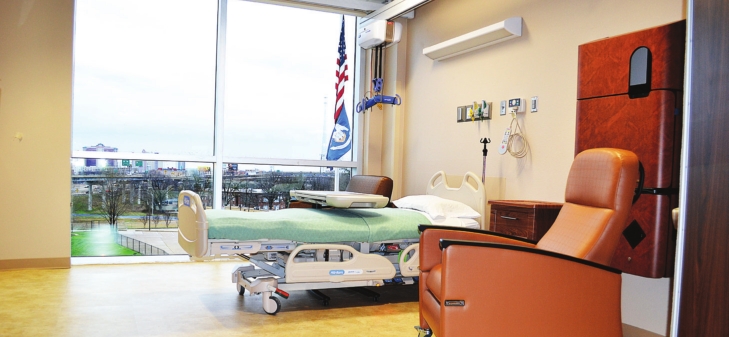
Mangin
also noted that they expect the building to be quieter than a typical
hospital with overhead announcements and audible alarms. “This is very
important for the geriatric population and for anyone who is trying to
rest and recover and heal.”
Renee
McCuller, formerly nursing director for inpatient rehabilitation, will
be chief nursing officer for the entire hospital. She is pleased that
the services will include recreational therapy and allow patients to go
on functional outings to test their skills. “For instance, if we have a
neurological patient who is
being discharged, we might take the patient out to purchase food for a
cooking project and come back to prepare a meal in our kitchen area
here,” she explained.
Services
for physical rehabilitation will mirror best practices in the field,
something the staff there know well. Willis-Knighton’s physical medicine
and rehabilitation program is accredited by the Commission on
Accreditation of Rehabilitation Facilities (CARF). Mangin indicates they
are proud to be one of only two accredited rehabilitation programs in
the state and the only one north of the I-10 corridor to hold this
special designation.
Just
as physical rehabilitation patients will have a much better
environment, so will patients requiring behavioral rehabilitation.
Wilcox will move patients into 34 custom rooms at the new hospital. His
space will feature separate units for adult patients and those in the
geriatric program.
“What
we’re most proud of is the geriatric program,” Wilcox says. “It will
offer medical beds, which means we can take care of the needs of the
geriatric population, even if they are infirm or have some sort of
medical need.”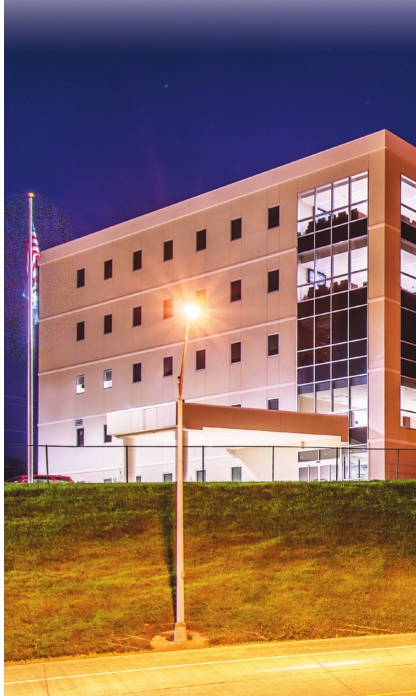
Like
Mangin, Wilcox has designed the units to encourage patients not to
remain in bed. “We’re using a philosophy of getting people out of their
rooms,” he said, “There will only be a couple of TVs in the rooms. If
they want to watch TV, they have to interact, to socialize.”
Wilcox
points to a continuous walking loop on the floor that allows dementia
and cognitive disorder patients to get exercise in a safe and beneficial
environment.
“There
is an old term in the literature called a ‘therapeutic milieu,’” Wilcox
said. “This means you design the therapy in such a way that the
environment and the interaction with others become therapeutic.”
The
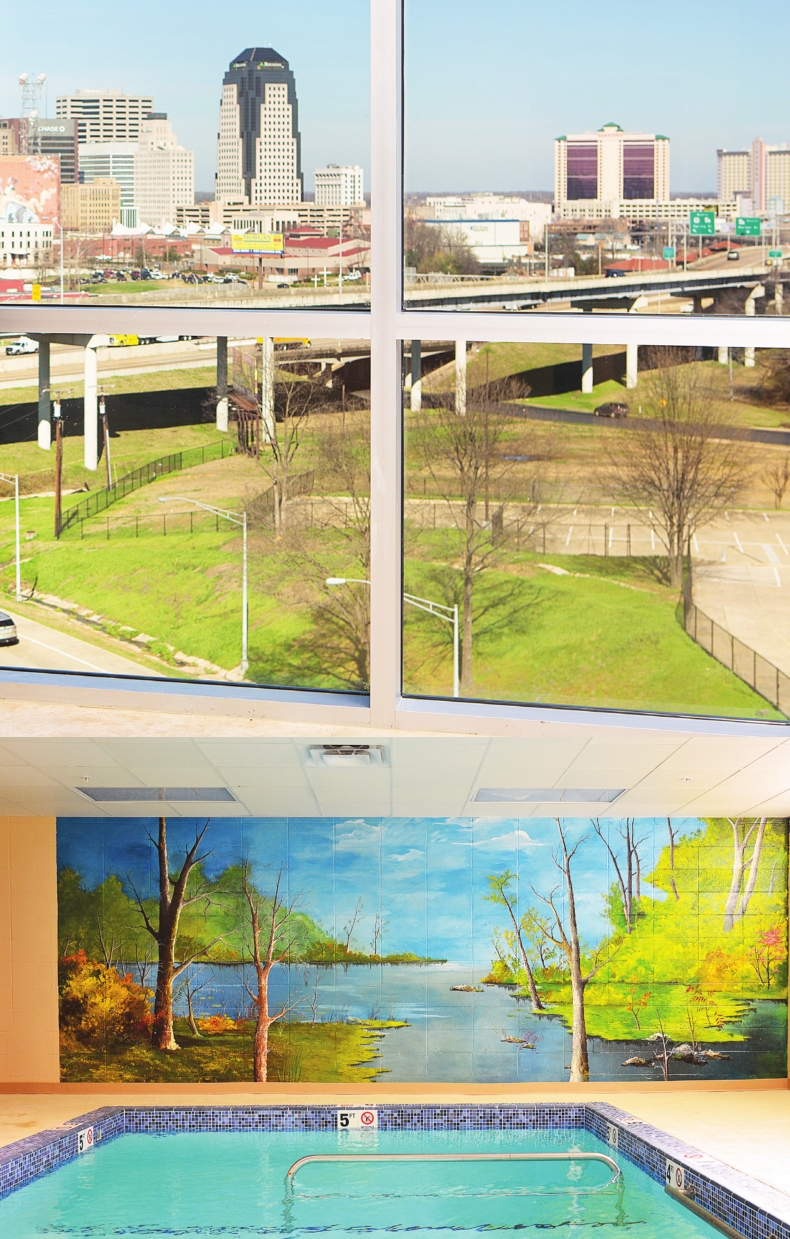
facility lends itself to that. When patients look out of the large
windows, they will see the skyline, the lights of Shreveport at night. It’s going to be a pretty awesome thing,” Wilcox affirmed.
Joining
the two rehabilitation services, the outpatient dialysis unit bears
custom features designed to create a positive experience for patients.
Debbie Olds, chief nursing officer at Willis-Knighton Medical Center,
oversees that clinical area and admits that the staff is pleased with
the comfort and innovative technology available in the new location.
This
unit, just a short walk from a firstfloor entrance on the north side
the hospital, features 13 private patient stations. Olds explained that
they are individual cubicles easily viewed by nursing staff. Each
features a television, Wi-Fi connection and comfortable
heating/massaging hemodialysis chairs. They even offer a bariatric
station, complete with ceiling lift and customized chair.
With
all these specialized services, Willis-Knighton executives anticipate
referrals not just from local physicians but from those in a wider area
as well. Expecting growth, Willis-Knighton also purchased the Hamilton
Terrace Learning Center from the Caddo Parish School Board to address
needs of the hospital, clinicians and the Highland community.
From
Willis-Knighton’s perspective, rehabilitation of old buildings is a
smart move. They are often solidly built. The infrastructure is already
there. They help preserve the history of the neighborhood in which they
are located. And renovation sends far fewer dumpsters to landfills than
does tearing down a structure.
“If
we’re able to wean someone off drugs or alcohol or pull them back from
suicidal tendencies, if we’re able to help someone walk again after a
traumatic injury, at the end of the day I think we’ve done something
special,” said Ryan Smith, administrative analyst and project manager.
“And to do it in a place with the latest technology and fantastic
clinicians is what excites us from an administrative standpoint. We are
here to keep it clean, keep the lights on and keep the grass cut. The
staff will be doing the real work.”
Rehabilitation.
The word by definition brings to mind words such as “restore” and
“re-establish.” With the opening of the WK Rehabilitation Institute,
anticipated in early March, Willis-Knighton defines what it is doing for
patients, for this building and for the larger community.