Low vision can’t be corrected by regular glasses
Q: What kind of glasses should you get for low vision?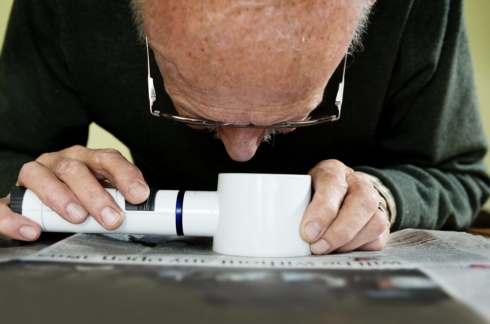
Low vision is a significant reduction in visual function that can’t be corrected by regular glasses, contact lenses, medicine or surgery. Low vision can range from moderate impairment such as tunnel vision or blind spots – to almost total blindness. One out of every 20 people has low vision. About 135 million people around the world suffer from this impairment. Irreversible vision loss is most common among people over age 65. However, losing vision is not just part of getting older. Some normal changes occur as we get older. These changes usually don't lead to low vision.
Low
vision can be caused by diseases, disorders and injuries that af- fect
the eye. Many people with low vision have age-related macular defect
generation, cataracts or glaucoma.
Almost
45 percent of all cases of low vision are caused by age-related macular
degeneration, which progressively destroys the central retina (macula)
at the back of your eye. The retina is to your eye what film is to a
camera.
If
you think you may have low vision, consult an eye care professional who
can tell the difference between normal changes in the aging eye and
those caused by disease.
 There
are many signs that indicate possible vision loss. Under normal
circumstances, do you have trouble recognizing faces of people you know?
Is it difficult for you to read, sew, match the color of your clothes?
Do lights seem dimmer than they used to?
There
are many signs that indicate possible vision loss. Under normal
circumstances, do you have trouble recognizing faces of people you know?
Is it difficult for you to read, sew, match the color of your clothes?
Do lights seem dimmer than they used to?
Vision
changes like these could be early warning signs of eye disease.
Usually, the earlier your problem is diagnosed, the better your chances
are for successful treatment and maintaining your vision.
Regular
eye exams should be part of your routine health care. However, if you
think your vision has changed, you should see your eye care professional
as soon as possible.
A
specialist in low vision is an optometrist or ophthalmologist who is
trained to evaluate vision. This professional can prescribe visual
devices and teach people how to use them.
Devices and rehabilitation programs can help you adapt to vision loss. They may help you maintain your lifestyle.
These devices include:
Adjustable
lighting; large-print publications; magnifying devices; closed-circuit
televisions; electronic reading machines; computer systems with
voice-recognition; telescopes; and telephones, clocks and watches with
large numbers.
Rehabilitation
programs offer a wide range of services such as low-vision evaluations
and special training to use adaptive devices. They also offer guidance
for making changes in your home as well as group support from others
with low vision.
Fred
Cicetti is a freelance writer who specializes in health. He has been
writing professionally since 1963. Before he began freelancing, he was a
reporter and columnist for three daily newspapers in New Jersey. If you
would like to ask a question, write to fred@ healthygeezer.com.


