
But it’s not over just yet
This is the last Forum column of the year – and what a year it has been. We saw a Democrat – John Bel Edwards – get sworn in as governor in the blood-red state of Louisiana. Then we saw the most surprising event of all with Republican Donald Trump winning the presidency of the United States after a contentious and costly election and after losing the popular vote by 2.3 million votes.
President-elect Trump has already flip-flopped on many of his campaign promises now that he is in the "real world." And he has stacked his administration with billionaires who have connections to Wall Street. Not a good way to "drain the swamp." It remains to be seen how this will play with his core supporters, especially uneducated whites who overwhelming supported him.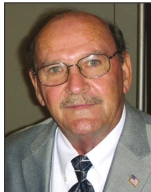
But it is not quite over yet in the Bayou State. We have a runoff for the U.S. Senate and one for the Fourth Congressional District still outstanding. These elections will take place on Saturday, Dec. 10. There doesn’t seem to be much enthusiasm for the races, and voter turnout predictions have been as low as 20 percent.
Polls show the two Republican candidates in the lead. That’s why Senate candidate Republican John Kennedy has refused to debate the Democrat Foster Campbell. Three debates had been scheduled, and two of them were to be televised statewide. Campbell was furious over Kennedy’s refusal to debate because he needed that exposure and wanted an opportunity to challenge Kennedy on the issues. Instead, Kennedy is trying to ride the coattails of Donald Trump, who won Louisiana 58-38 percent.
The two – Kennedy and Campbell – are no strangers to Louisiana politics. They have been around for decades. Kennedy began his political career as counsel to then-Gov. Buddy Roemer in 1988. Back then, both were Democrats. He has run unsuccessfully for the U.S. Senate twice in 2004 and 2008. He switched to the Republican Party in 2007. He has served as state treasurer since 1999.
Campbell, on the other hand, known as a populist, was first elected to the state Senate in 1976 and served until 2002 when he was elected public service commissioner for District 5. He, too, has run for Congress before for the U.S. House seat in the 4th District in 1980, 1998, and 1990. One of the two will make it to Congress this time.
This is the last U.S. Senate race in the country, and Campbell says he has been getting donations from Democrats in several states to bolster his campaign coffers. The U.S. Senate currently has 51 Republicans, so a Campbell victory would make it 51 Republicans, 47 Democrats, and two Independents who caucus with the Democrats. At the same time, Republicans have been pouring in the money for the Kennedy campaign, backed up by his Super PAC, ESAFund, run by Kyle Ruckert, the former campaign manager of David Vitter’s gubernatorial campaign.
Money-wise, Kennedy has total receipts of about $4.4 million through Nov. 20 and has spent about $3 million on the race. For the stretch run, he has about $1.4 million cash on hand. Campbell has pretty much kept pace. He had $4.3 million in total receipts of which $750,000 were loans to his committee. He had spent about $2.8 million and had $1.4 million cash on hand as of Nov. 20.
Campbell put out a press release taking Kennedy to task for not filing his report on time and chiding him about raising more money during the latest reporting period Oct. 20 to Nov. 20. Campbell said his campaign raised $2.5 million during that time compared to Kennedy’s $1.5 million. Campbell’s report stretched 1,264 pages and shows that more than 50,000 donors gave an average of $44.73. Kennedy, on the other hand, raised less than $13,000 from donors who gave less than $100, showing most of his contributions came from wealthier individuals, Campbell claimed.
In the Congressional race, there has been little activity. Republican Mike Johnson has been running some television ads, while little has been seen of Democrat Marshall Jones. There have not been any local forums/debates scheduled. The district is huge geographically, being comprised of all or part of 15 parishes. But half of the voters reside in Caddo and Bossier parishes. How the other parishes will vote remains to be seen.
Johnson has been out-spending Jones two-to-one, according to campaign finance reports which go through Nov. 20. He has had total receipts of $889,633, of which $50,000 was his own money, and has spent $685,030. As of Nov. 20, Johnson has $204,603 cash on hand. Meanwhile, Jones has had total receipts of $389,917, but $307,200 of that were personal loans to his campaign committee. He has spent $387,889 and had only $2,027 cash on hand as of Nov. 20.
Finally, since this is the final column of the year, I want to thank all of you who read me every other week. I know we may not always agree, but it is always healthy to discuss the issues. I appreciate the feedback, both positive and negative. Here’s wishing you a merry Christmas and a happy and prosperous new year. See you in 2017. And thank goodness 2016 is finally coming to an end.
Lou Gehrig Burnett, an award-winning journalist, has been involved with politics for 44 years and was a congressional aide in Washington, D.C., for 27 years. He also served as executive assistant to former Shreveport Mayor “Bo” Williams. Burnett is the publisher of the weekly “FaxNet Update” and can be reached at 861-0552 or [email protected].