Acupuncture recommended
for some conditions Q
. I have arthritis in my knee. I’m thinking about trying acupuncture, but my friends think I’m nuts.
What do you think?
Several recent studies show osteoarthritis symptoms can be relieved with acupuncture. One Scandinavian study reported that 25 percent of patients canceled their plans for knee surgery after acupuncture.
About 15 million Americans have tried this needle therapy. The World Health Organization recommends it for more than 40 conditions as diverse as asthma and nausea from chemotherapy. The Food and Drug Administration regulates acupuncture needles.
So, no, I don’t think you’re nuts.
By the 3rd century B.C., the Chinese had documented a medical system that is based on qi (pronounced “chee”), a concept of vital energy that is believed to flow throughout the body.
Qi
is said to regulate a person's physical, spiritual, emotional and
mental balance. Advocates of Traditional Chinese Medicine (TCM) say qi
is affected by yin (negative energy) and yang (positive energy). When
the flow of qi is disrupted and yin and yang are unbalanced, the
condition leads to pain and disease, according to TCM.
Treatments
that are integral to this ancient system are herbal and nutritional
therapy, restorative physical exercises, meditation, acupuncture and
remedial massage.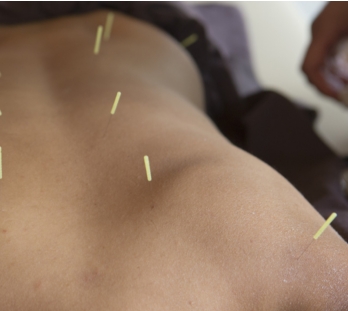
To
correct the flow of qi, acupuncture uses superfine metal needles
inserted into the skin at more than 2,000 “acupoints” along pathways
known as “meridians.” It is believed that there are 12 main meridians
and eight secondary meridians. The points can also be stimulated with
heated herbs, magnets, mild electrical current, manual pressure,
low-frequency lasers or even bee stings.
Most acupuncture patients feel little or no pain as the
needles are inserted. Some people are energized by treatment, while
others feel relaxed. Improper needle placement, movement of the patient
or a defect in the needle can cause soreness and pain during treatment.
Relatively few complications from acupuncture have been reported to the FDA.
However,
inadequate sterilization of needles and improper administration have
led to complications. When done improperly, acupuncture can cause
serious problems such as infections and punctured organs.
Western
scientists don’t know how acupuncture works. However, studies show that
stimulating acupoints causes multiple biologic responses. For example,
this stimulation can prompt the release of the body's natural
pain-killing endorphins.
If
you are interested in acupuncture, ask your doctor about it.
Health-care practitioners can be a resource for referrals to
acupuncturists. More medical doctors, including neurologists,
anesthesiologists and specialists in physical medicine, are becoming
trained in acupuncture.
About
10,000 acupuncturists practice in the United States. Most are
state-regulated. More than 4,000 doctors have completed a recognized
acupuncture training program.
Look
for an acupuncture practitioner who is licensed and credentialed. And,
check with your insurer before you start treatment to see whether
acupuncture will be covered for your condition.
Fred
Cicetti is a freelance writer who specializes in health. He has been
writing professionally since 1963. Before he began freelancing, he was a
reporter and columnist for three daily newspapers in New Jersey. If you
would like to ask a question, write to fred@ healthygeezer.com.


