Conservation and restoration of fine art
Art comes in many forms including paper, canvas, textile, sculpture and more.
Most people don’t think about maintenance for their artwork; it is just hung and then the piece is never given another thought outside of admiration.
Unfortunately, time and the natural elements can damage valuable treasures, presenting the need to conserve or restore them. But what does this entail?
The difference is that “conservation” means to stop any progressive deterioration that is occurring, where “restoration” is a cosmetic treatment that is intended to return the object to its original appearance while retaining its patina. The reason we are concerned with either are value. It could be monetary value, such as a valuable or historical piece of art, or sentimental value such as a family heirloom.
Let’s address works of art on paper first and then move on to canvas. These are the two most common artwork mediums. Some of the main culprits for degrading and devaluing your works are humidity, moisture, light, heat, pollution, insects and acidity.
It is best to keep artwork at 50-70 percent humidity. After that, mold begins to form. In Louisiana and Texas, humidity is more of a problem than in other parts of the country. What humidity does with artwork on paper is a condition called “foxing.” Foxing is a chemical reaction that stains the paper an orange brown color – the color of a fox.
Moisture contributes to mold. Different types of light, such as ultraviolet light, cause fading and yellowing while accelerating acidity. Heat or high temperatures accelerate deterioration of paper, while also increasing the damaging effects of any acidic content. Pollution causes discoloration and disintegration of paper fibers. Pollution can also penetrate the surface of the paper and embed itself below that surface, damaging the integrity of the piece as well.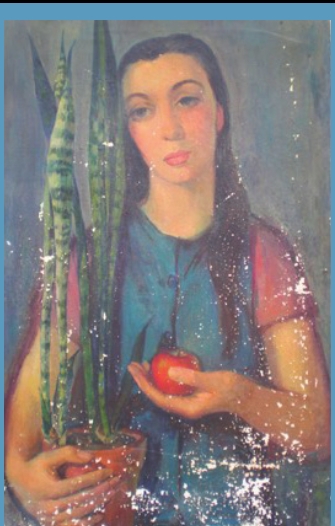
One issue most people don’t consider is insects. Insects feed on the paper and can also leave waste, staining the piece.
Acidity is a major factor in the degradation of precious artworks. Paper is made of wood or cotton pulp, or a combination of the two. Paper made from cotton is the best choice and has the most neutral pH. It is referred to as “rag” paper. Paper made from wood pulp is the most acidic and volatile. In contrast, cotton has long, stringing fiber. Just imagine how stringy cotton balls are. To further illustrate the acidity in inexpensive papers, think
about newspaper. Newspaper is the most inexpensive paper and is
constructed of mostly wood pulp. If you leave newspaper out for a day or
two, you notice how orange/brown the side facing becomes in contrast to
the side not facing the sun. When exposed to light and heat, the
acceleration of deterioration is very obvious.
Now addressing the issues with canvas.
Most
of the same culprits are detrimental to painting on canvas as well, but
their effects might surface slightly differently. When it comes to
canvas, you may notice the following culprits’ effects might be slightly
different. For instance, the moisture could cause your painting to
“bloom,” which is clouding or spotting on the painting varnished
surface. It can also cause the “ground” to fail, which causes the paint
to flake off. The ground of a painting is the first layer applied
directly to the cotton or linen canvas. Most of the other detriments
discussed above are very similar when dealing with canvas or paper.
So
now that you know the perils, how do you combat them? If you have a
piece of artwork in good condition, the most important thing you can do
is to preserve it with proper framing. Always try to find a framer that
is Professional Picture Framers Association-certified.
So
you didn’t know better, or you acquired an object that already has
damage. How do you repair that damage? Many times when pieces look
hopeless, we can reverse much of the damage. With paper you can: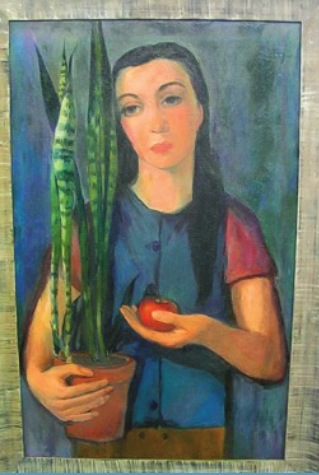
Surface clean – Just as it sounds, you can clean the surface of the paper and remove much of the pollution and atmosphere grime.
Flatten – Flattening the wrinkling of the paper by carefully moistening and then removing the moisture under weighted pressure.
Bleach
– Through a very careful chemical bleaching process, which does not
compromise the paper, much of the foxing and staining can be removed.
Thymolize
– By applying thyme oil, which is a natural anti-fungal used
holistically, it acts as an anti-fungal and mold retardant.
Weave and fill paper – Just like it sounds, paper is made and used to fill any voids in the print.
Restore pigment – Pigment is applied in areas that are badly void of color.
Hydrated – The paper is fed with restorative solutions combating some of the brittleness from being so dry.
Paper
support – In cases where the paper is SO brittle that it will just fall
apart, the print may be mounted to a board with a nonacidic, neutral pH
adhesive.
Archival
mist – It is a spray that neutralizes acid in the paper. While it won’t
reverse the aging, it will stop the process. It is an antacid for your
paper.
With
canvas you can: Remove the varnish. Remove and kill mold. Line, or
reline, the canvas – This involves making a solution of beeswax and
rosin and mounting the compromised canvas to a new linen substrate.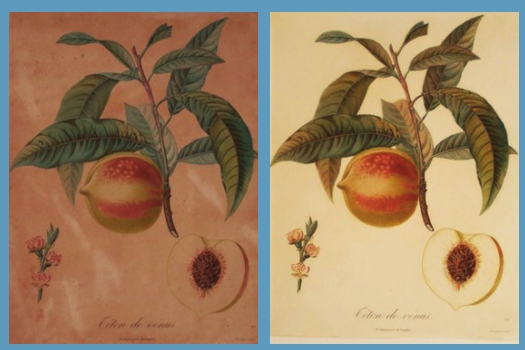
Fill
the void, texture – Once lined, we make a mixture of paris chalk,
boiled linseed oil and make a picture “putty” that is tinted. That is
then used to carefully fill any missing areas where the canvas has been
torn. Before that dries, we take a piece of canvas and mimic the
texture, then after dried it is painted, carefully not blending or over
painting any good areas.
Feed
the oil – Using a combination of oils to feed the painting to restore
the color and vibrancy. It is similar to using hand lotion to make you
skin look healthier.
Inpaint – This means painting the missing areas.
Varnish
– Finally, use a coat of varnish to seal. Varnish is a protective
coating that is meant to protect the art itself. It is intended to be
removed when it ages and then reapplied.
You clean your carpet, drapes and your clothes. So don’t neglect your art. Preserve it for future generations to enjoy.
– Edward Nader


