
Fairfield’s ugly duplex threatens to depreciate property values
Referred to by many of the most impressive residential area in Shreveport, Fairfield Avenue between Kings Highway and Olive Street has long been the “go-to” drive to see a wide variety of architectural styles in residences that are large, wellmaintained, and, yes, expensive.
The wide-ranging concentration of a wide-range architectural styles that includes Eclectic Revival, Queen Anne, Victorian and American Four Square homes has been recognized by the
Commission on Fairfield in the short block between Eustus and Dalzell has adversely affected property values. Until recently, the 39 residences between St. Mark's Episcopal Church and Olive Street had a consistency that set the bar for other Shreveport neighborhoods of older, wellmaintained beautiful residences.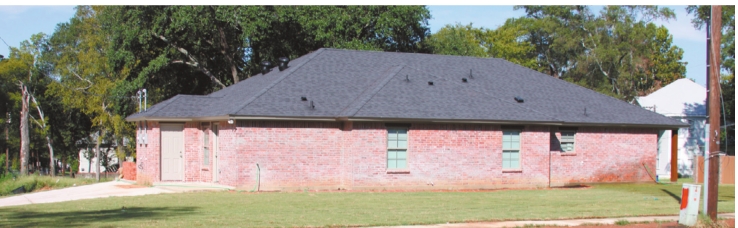
The only notice given to surrounding neighbors – or, for that matter, the Fairfield Historic District Association – of the proposed construction was a sign posted on the property that proclaimed registration of the Fairfield Historic District in the National Registry of Historical Places.
The permitting of a duplex by the Shreveport/Caddo Metropolitan Planning that “the upcoming construction projected is funded by Community Bank.” MPC Director Mark Sweeney advised the MPC Board that nothing could be done to stop the duplex. How accurate this conclusion was is open to question; close reading of the complex MPC zoning ordinance, specifically Chapter 36, “Historic Preservation,” may have provided a basis for denial of the permit.
The zoning ordinance recognizes provides additional safeguards for the identification, evaluation, protection and use of historical properties; it establishes a five-person Historic Preservation Commission appointed by the mayor and approved by the city council. One of the duties of the HPC is to approve or deny a “certificate of appropriateness” for construction in a historic area such as the Fairfield district.
The ordinance sets forth certain baseline criteria for the determining the “appropriateness” of an application; these include the effect of the proposed work on the property in the historic district as to the historical and architectural significance, architectural style, design, texture and materials of the proposed construction. The zoning ordinance requires the Historic Preservation Commission to conduct a public hearing on each application within 45 days after the application is received. The commission then has 45 days to render a decision; thus, there is a minimum 90- day delay in the permitting process.
This duplex permit was never presented to the Historic Commission; thus, the permit should not have been presented by the staff to the MPC Board. Had the required steps been required by the MPC staff, it is very likely that the permit would not have been approved. At a minimum, the residents of the Fairfield District would have had an opportunity to deal with this very unwelcomed construction. Now, the property values of the Fairfield Avenue residences could be effected by this black eye that could be the subject of litigation. And critics of Sweeney have another basis to question his job performance.
John E. Settle Jr. is an attorney who has practiced in Shreveport- Bossier since 1977. His columns have appeared in local publications for more than 15 years. He can be reached at 742-5513 or John@ settlelawfirm.com.


