Proton therapy takes WK’s cancer treatment to another level
The year since proton therapy was introduced at Willis-Knighton Health System has been what Greg Sonnenfeld calls “a fantastic ride, so far.”
“We’ve treated a little over 100 patients with proton therapy,” the Cancer Center administrator said. “Most people aren’t able to pull that off because it’s really complex.”
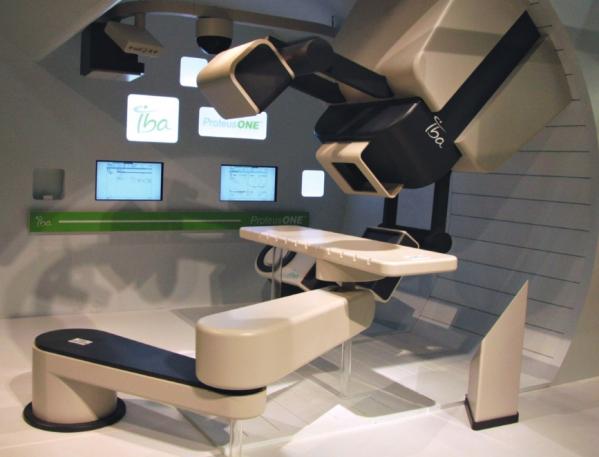
The technology at WK Proton Therapy Center is ProteusONE™, the most precise form of radiation therapy available, directing the energy of protons (very tiny parts of the atom) into the tumor with pencil beam precision. The protons conform to the exact shape of a tumor, sparing the healthy organs and tissue surrounding it.
Sonnenfeld said the beam is only about 5 millimeters in diameter, making it extremely precise.
“Treatment usually starts with fairly easy to treat body sites and then gets into more complex disease areas,” Sonnenfeld said. “It’s hard to do and, frankly, it was hard for us to do, but we’ve been able to expand the number of diseases we’ve treated very quickly.”
Unlike more traditional forms of radiation therapy, even image guided radiation therapy like TomoTherapy, proton therapy stops inside the tumor, targeting only the cancer itself. Studies at leading institutions like MD Anderson Cancer Center, the University of Pennsylvania and Harvard have affirmed a decrease in side effects.
WK does not use proton therapy to treat pain or other symptoms because of the adverse effects to the healthy tissue around it.
Disease sites that will be treated at the WK Proton Therapy Center include tumors of the prostate, brain, central nervous system, cancers in the pelvic and abdominal area like rectal and pancreatic cancer, head and neck, and breast cancer.
“It is used in diseased sites where the tumor is immediately adjacent to structures that are sensitive to radiation, such as the brain and spinal cord,” Sonnenfeld said. It also works well in patients with prostate cancer.
“We’ve
just started treating pancreatic cancer,” he continued. “It doesn’t
usually have a great prognosis. There are a lot of critical structures
around the pancreas, and you can only give so much radiation because you
will damage them. So, you want to give higher dosages of radiation to
the pancreas, and we can do that with proton therapy.”
Those
higher dosages allow a surgeon have better access to the tumor, which
Sonnenfeld said could provide a better survival rate.
Proton therapy is also better for women whose cancer is in the left breast.
“If
they have a mastectomy, a lot of times you still have to give radiation
to the wall of the breast because of microscopic disease in the
surrounding tissue,” he said. “With proton therapy, you eliminate
radiation therapy to the heart and lungs. Down the road, patients will
have a lower risk of having heart complications as a result of radiation
when they were younger.”
It has proven to be a reliable form of treatment for children with cancer, he added.
“Patients
who have been diagnosed with cancer should call us, and our nurses will
speak with them or their physician and will help get them through the
process of what we need in order to do that,” Sonnenfeld said.
Patients
treated at the WK Proton Therapy Center will be followed as a part of
active clinical trials, paving the way for future uses of this
technology in disease sites that have not traditionally been suited for
radiation therapy.
ProteusONE™
was developed by Ion Beam Applications SA of Louvain la Neuve, Belgium,
a cancer diagnostics and treatment equipment company and a leading proton therapy developer.
“One
of the nice things is this machine has proven to be the most reliable
piece of equipment of its type,” Sonnenfeld said. “The machine works so
well that we haven’t had any problems that other centers have
experienced. That’s a great thing.”
The
cancer center is headed down the path for which they planned, “to be
able to treat as many patients as possible that need this cutting edge
technology.”
In
addition to the Proteus One technology, the WK Proton Therapy Center
includes the Philips Ambient Experience, technology that includes light,
sound and images in a treatment environment to enhance patient comfort.
Patients select the environment that they prefer, further personalizing
their treatment experience.
–Bonnie Culverhouse


