
Members of community share stories to support alternate plan for interstate 49
Read the full stories referenced online at theforumnews.com.
After years of debate on the future of Interstate 49, the Allendale communIty is ready to speak up and let theIr voIce be heard.
This community is known to be directly impacted pending the result of I-49.
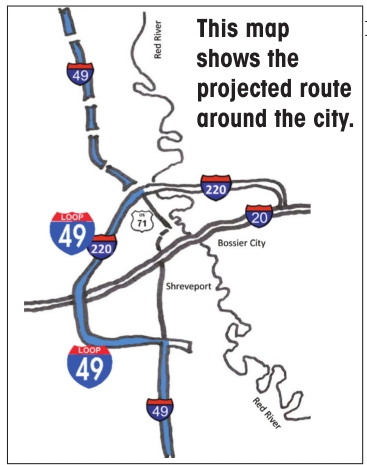
A large majority of Allendale residents support one side urging that the best alternative is to route traffic from Arkansas into north Shreveport and merge it onto the existing Interstate 220 loop. That roadway would carry the traffic around the downtown area and remerge it with southbound interstate traffic in south Shreveport at Highway 3132 and I-49.
The other side believes the economic benefits to downtown would be bypassed if the loop route were chosen. They suggest a more direct path through some of the city’s oldest and, some assert, most historic areas.
Past Forum articles have mentioned State Rep. Roy Burrell’s stance first being against the connection through the city. Burrell later changed his opinion to favor the connector through the city after a study showed a strong economic impact.
Burrell said the study indicates the innercity connector, the route through downtown, would generate in excess of $860 million a year in revenue. Opposition to the direct route, favoring the loop around the city, has asserted that its preferred route would require no new construction, thus saving money. Burrell disagreed. (Article published in the April 16 issue of Forum).
Dr. Gary Joiner was an advocate for using an existing railroad right-of-way, which as Joiner put it would avoid concerns of going through existing neighborhoods. (Article published in the March 25, 2009 issue of Forum).
Political agendas were a majority of the focus of this plan in 2007 (as reported that year in the Jan. 17 issue of Forum).
After Hurricane Katrina, some evacuees found refuge in the Allendale community building new houses from a partnership with The Fuller Center for Housing, Shreveport- Bossier Community Renewal and Habitat for Humanity of Northwest Louisiana. (Article published in June 28, 2006 issue of Forum).
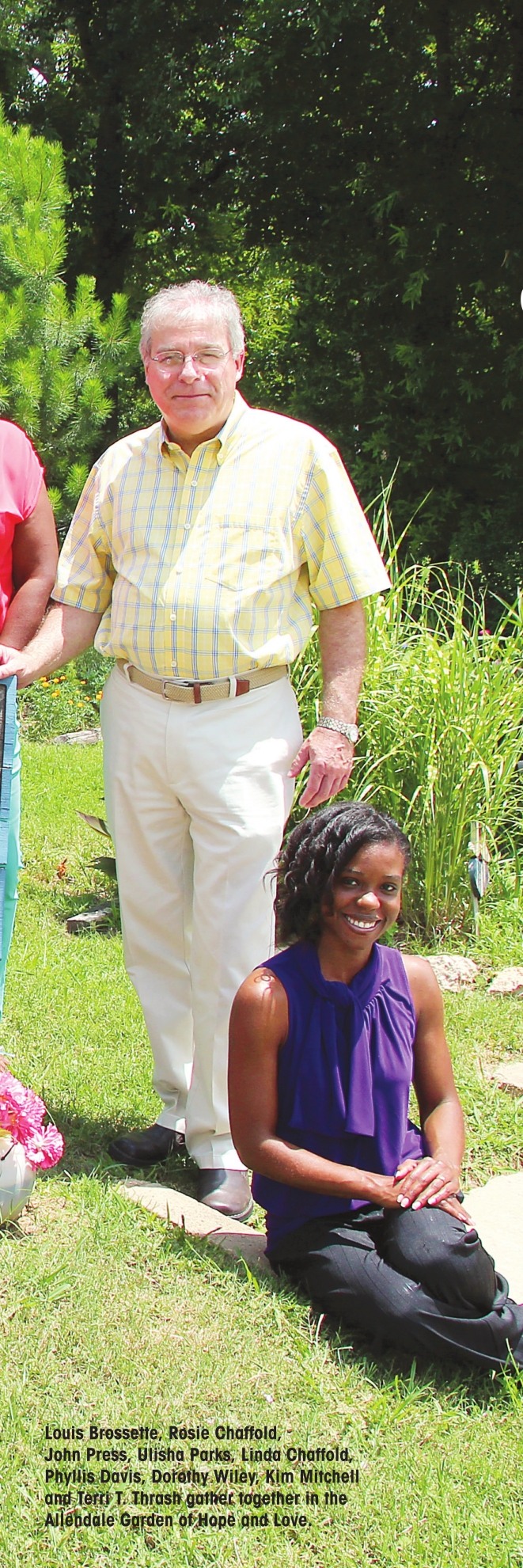
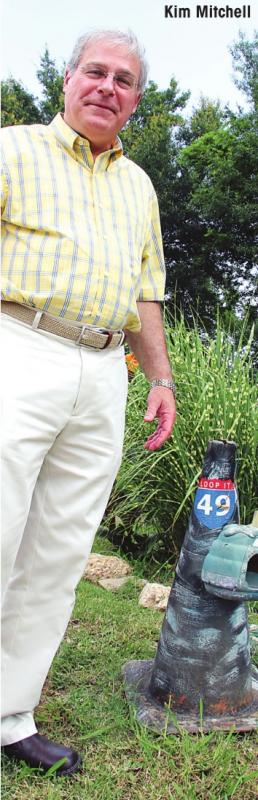
As part of Forum’s continuing coverage of the I-49 debate, we take a look at the Allendale community to hear the voice of those dealing with pending plans for the corridor. Kim Mitchell, a local architect and planner, is working with the residents of Allendale to spark public interest and support of their plan to use the existing I-220 loop and not direct traffic through downtown. Mitchell and eight Allendale residents share their story.
It was a cool evening in late February 2012. I was walking up the steps to the porch of a Community Renewal International Friendship House in Allendale. Ten minutes earlier, I left my 12th floor office in downtown and drove through a nowhereland.
In 1980 almost 25,000 people lived here and shopped in adjacent downtown. During the 1980s, this place was designated a National Residential Historic District, a distinction justified by one of the country’s largest collections of “shotgun houses.” All but a handful of these treasures are gone, fallen from neglect, inadequate planning and political brinksmanship. I passed what was a neighborhood park several years ago. The park was replaced with an industrial building for movie production. The hope placed in this city give-away now seems ill-conceived. Even a small restaurant built anticipating hungry moviemakers has closed three times after local restaurateurs failed to attract enough business.
What if the politically systematic clearing of shotgun houses over 25 years was actually a strategy to remove an obstacle to the innercity connector? Are those few who reap rewards from these community-killing-roads that deceptive?
Three years ago during an Allendale neighborhood planning meeting, a resident revealed a truth that stuck with me, “Why don’t downtown leaders get it? Downtown thrived when Allendale thrived.” March 7, 2013, the state representative promoting the inner-city expressway to Blessed Sacrament Church leadership provoked a church member to comment; “We, people of color, are being pushed farther away from downtown. Look at all the property laid bare around the [Municipal] Auditorium. Nothing is there. We are not informed about what is going on. It seems we are being systematically wiped out!” Blessed Sacrament Church is in the path of the NLCOG proposed inner-city expressway.
Faith, caring, determination and sweat transformed three blocks around two CRI Friendship Houses into an Allendale Oasis of Hope. During the last eight years, abandonment gave way to 45 new homes now occupied by Hurricane Katrina evacuees and locals. CRI, The Fuller Center for Housing and Habitat for Humanity collaborated to create a special community. In addition to volunteer time, private investment of over $5 million aligned with CRI’s relational model to lift this community. Crime is down over 50 percent, educational outcomes significantly improved, Shreveport’s first community garden is thriving and a corner store will soon open. Good work deserves celebration and encouragement, not a demoralizing destructive roadway wiping it out.
The door opened. I was greeted by my friend Mike and Sherry, the Community Coordinator living in this CRI Friendship House with her family. While Mike was introducing me, Kim Mitchell, an architect and planner, a voice inside said, “Listen first.” I stood and looked around the table at 15 men and women. Their depths of feelings were apparent. Some seemed cautious toward me as though I might be one of those confusing highway planners.
Ms. Rosie spoke first: “Our lives will never be as good as they are now. We live in a neighborhood with the lowest property values in the city. They can buy us out, but it will never be enough to replace the life we have made here in Allendale.”
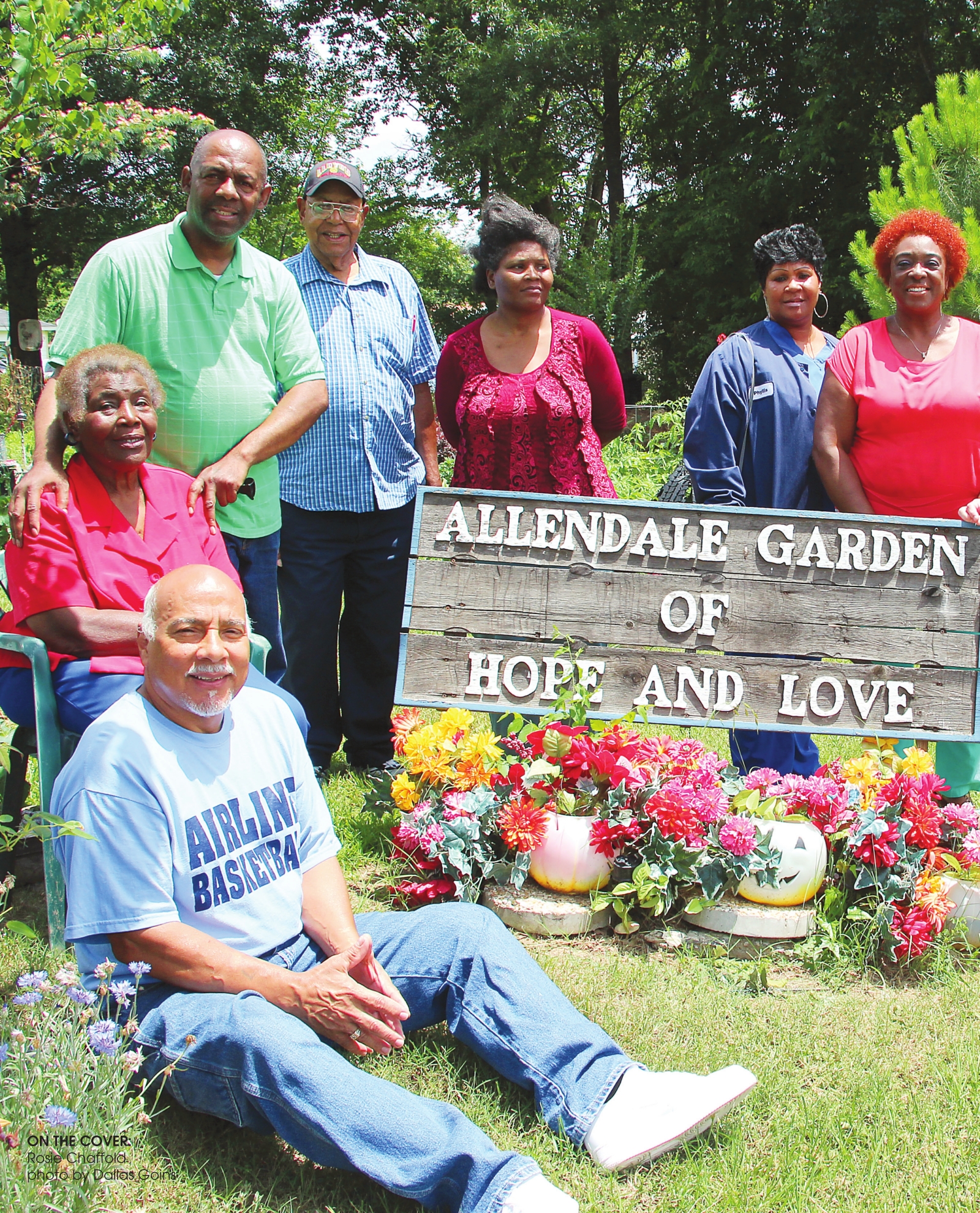
Rosie started the city’s first community garden at Allendale’s low point in 1999. It was her way of fighting drug dealers who took over the neighborhood and hung out at the vacant lot she targeted. Today the drug dealers are gone and the Allendale Garden of Hope and Love thrives as a symbol of Allendale’s turning point.
John, a neighbor who worked at the Fuller Center, said, “No one in the city seems to care about Allendale. If they would come and see what we have accomplished maybe they would understand Allendale should not be wasted. We believe that no neighborhood should be run over by an expressway.
“We are about to be run over by this highway and there is nothing we can do.” Louis commented while sharing his 2006 celebration picture standing in front of his new home surrounded by Sen. Mary Landrieu, Millard Fuller and 20 volunteers from across the country who invested their love and time in the “build.” Louis still corresponds with several of the volunteers.
Conversation moved around the table.
Everyone spoke. The room filled with a sense of hopelessness and betrayal. I could see minds around the table capturing images of a concrete serpent swallowing the caring investments, renewed lives and re-emerging community.
The last person around the table to speak was Dorothy, a Katrina evacuee who endured the post-Katrina horror of the Superdome with three grandchildren, one in a wheelchair. “We lived on Claiborne Avenue in New Orleans before the storm. I watched an elevated expressway, Interstate 10, constructed over a thriving community. Live oak trees were cut to make way for the elevated highway. The neighborhood died. It’s no longer a place you would choose to live. I found renewed hope in Allendale. Please Lord! Not again! My family has been through enough!” Emotions yielded to questions that revealed mistrust of the powerful highway machine. “Why isn’t there open conversation about the connector proposal? Who is behind the revival of the inner-city connector? Why? Who will benefit from the wasteful public spending?” I added questions. “Why are you being told the connector will bring economic development to Allendale? The hard facts are contrary to that misinformation. Why hasn’t NLCOG informed you that in the entire history of the U.S. interstate system, every limited access freeway constructed through an inner-city neighborhood destroyed that community?” “We are not alone,” I continued. “Citizens are taking action in cities around the world threatened by destructive road projects like the one NLCOG proposes. Their success is revealing that these roads are not inevitable. There is a better way. A new trend is emerging. I called and emailed people around the country involved in successful expressway opposition. If their stories motivate you, we can meet regularly and together grow our knowledge and organize to influence better outcomes for Shreveport and Allendale.”
I shared a few stories of cities that have changed for the better by tearing down or blocking destructive inner-city limited access expressways. Cities such as Milwaukee, Syracuse, Portland, Chattanooga, New Orleans and Seattle have joined a seemingly ever growing list. Around the world, communities are improving their prosperity with new strategies to tear down high speed elevated roads through their cities and replace them with boulevards that support thriving local business. (Read a short description about one of these communities at the end of this story.)
A new spirit began to grow in the Friendship House that February night. Men and women around the table could see they don’t have to settle for being wiped out. I saw a sparkle of change in their eyes revealing readiness to open the gate to a new adventure. We agreed to keep meeting. At this writing, we have met monthly for over a year. I have come to know and love the people I met that night. We continue to grow together in ability to be part of making a better community. Our networks of support and caring for Allendale are growing across the community, state and country. Please join us.
– Kim Mitchell
In New Orleans a move is currently underway to tear down Interstate 10 over Claiborne Avenue and replace it with a business boulevard to bring back what was once a vibrant neighborhood. New Orleans received a $2 million Challenge Grant from a DOT HUD partnership to plan outcomes that will result from this tear-down.
This follows the tradition in NOLA that fought 15 years to block a 3.5 mile Vieux Carre’ Riverfront Freeway planned between Jackson Square and the Mississippi River. The successful fight is chronicled in a book, “The Second Battle of New Orleans.” One of the authors, Bill Borah, a land-use attorney and leader for the wining opposition, made the following statement in an email following our phone conversation in early March 2012: “High-speed, limited-access highways are not appropriate for the inner city, and it was a serious mistake by this nation to subsidize their construction. Taking these highways down and creating multi-lane boulevards is an effort long overdue.”
See more examples at Agile Infrastructure for 21st Century Communities http://apinfrastructure21.wordpress.com/tag/i49connector/.
 My
name is Louis Brossette. I live in the Allendale community, and I am a
member of our Lady of the Blessed Sacrament Catholic Church. I have
lived in Allendale most of my life. I’ve seen this neighborhood change
many times, and out of all these changes, we, citizens of Shreveport,
have taken what the city decided to dish out – which wasn’t much.
My
name is Louis Brossette. I live in the Allendale community, and I am a
member of our Lady of the Blessed Sacrament Catholic Church. I have
lived in Allendale most of my life. I’ve seen this neighborhood change
many times, and out of all these changes, we, citizens of Shreveport,
have taken what the city decided to dish out – which wasn’t much.
I lived in the shotgun houses of Allendale from a little boy until my teenage life.
We knew of larger, beautiful homes, but we thought our houses were just as big and beautiful. In the 1970s, after all the landlords had passed away, the city came in with the Beaird Foundation and other companies to “revitalize” these houses. What we thought would be better living for us, turned out to be a paint job of crazy colors on houses we thought were going to be improved.
There was no improvement, but no one tore the houses down. That paint only hid the pain our parents had to endure. When I was a child, my mother worked for two families cleaning and taking care of their homes and their children. She had to take the city trolley and several buses to get to and home from work. She would be so tired she would come in the house, and the first thing she would say is, “Honey I can’t breathe, come loose this strap.” My mother had asthma and emphysema and was too weak to unhook her own bra strap. No matter how she felt, she always provided for us six children.
Near our house, we had a garden with eggplant, mustard greens, collard greens and purple hull peas – all grown from seeds. Allendale now has its own community garden growing. My mom was a true provider. She was mother and father to us. She would be so tired I had to massage her back and feet so she could get up and cook for us six children. Sometimes I would cook for us. My mom taught us all how to cook and clean.
We lost her to lung cancer Dec. 10, 2001 (one day short of her Dec. 11 birthday). I still miss my mother so much and find comfort in continuing the tradition of our neighborhood. I find myself doing some of the same things she did. I know how hard I have to work to keep my family together and provide for them, and I remember her and how hard she worked.
I love my community and the rich values and traditions we carry forward in this place. The current NLCOG proposed inner-city connector route of I-49 through
Allendale will tear down our beautiful new homes. Limited access expressways like proposed by NLCOG should not destroy anyone’s neighborhood.
I-49 through-traffic can follow Highway 3132 and I-220, an already constructed limited access interstate. We could build an inner-city business connector as a ground level boulevard that connects to an upgraded North Market instead of bulldozing Allendale homes and community. We are outraged over NLCOG’s plans and ask you to help with this most precious decision.
– Louis Brossette
In Milwaukee:
Former 17-year Milwaukee Mayor John Norquist led a successful community initiative to tear down elevated Park East expressway that blighted the landscape. He then blocked two expressways planned for the downtown Milwaukee area. Prosperity returned to this part of Milwaukee. Norquist is now the CEO for the Congress for New Urbanism that publishes annually the Top 10 “Freeways without Futures” and their “Highways to Boulevards Initiative.” Norquist tells a story about the inner-city expressways of Detroit. “Environmentalist are wrong, cities can build their way out of congestion. Look at Detroit. Freeway after freeway was built through the city. Today congestion is the least of Detroit’s problems. Half of Detroit’s population left.” Norquist wrote an editorial (3.18.2012) for the Shreveport Times in support of Allendale neighborhood.
See more examples at Agile Infrastructure for 21st Century Communities http://apinfrastructure21.wordpress.com/tag/i49connector/ .
 I
walked onto the foundation on which my house would be built, and I
looked up toward the sky and couldn’t help but know that God was smiling
down on me. I was standing on a solid foundation, and even though my
house was not yet built, I already felt like I belonged here. Right
here, in this spot, in Allendale. I saw the vision of a beautiful home
in a foreign land, a land that I would become very familiar with, a land
that I already called home.
I
walked onto the foundation on which my house would be built, and I
looked up toward the sky and couldn’t help but know that God was smiling
down on me. I was standing on a solid foundation, and even though my
house was not yet built, I already felt like I belonged here. Right
here, in this spot, in Allendale. I saw the vision of a beautiful home
in a foreign land, a land that I would become very familiar with, a land
that I already called home.
It was seven in the morning when I clocked out at work and came to start a new journey. Once again, I walked onto my foundation, and I was overwhelmed with the people from all around the country, whom I had never met, came to me, hugging me, introducing themselves and saying, “I’m going to help you build this house.’’ Every morning from that day forward, I clocked out at work at 7 a.m. to come and build something that I would one day call my own – my home, the house that love built.
I
was 24-years-old when I had an experience of a lifetime. I was able to
be a part of something that would change the life and direction of my
family. I look forward to sitting my grandchildren on my lap and saying,
“You see this right here? This is where Millard Fuller stood beside me
and nailed this board up. You see up there, on that roof? That’s where I
stood and helped with putting this roof over our heads.’’
The
day people like Mr. and Mrs. Fuller, Mr. Jack, Jason Beaver, Gail
Grimes, Dana Pope, Ernest and Kitty Baird, just to name a few, changed
my mind about people. There really are strangers who really do care
about the welfare of others. I have been living in Allendale for six
years now, and I’ve met a new family, and I’ve built real friendships.
Yes, I’ve heard the story about Allendale many years ago, the stories
about the guns, drugs and violence. But living here, right now, I see
hope, love and a sense of real community. Where did those rumors go about this area being the
worse area in Shreveport? Well, let me tell you. The course of
Allendale’s direction has changed for the better. Lives have been
touched and dreams have been birthed. Yes, this neighborhood that was
once put to death has been revived and it’s not over yet.
After
one week, my house was built – all four walls up by the hands of many
strangers who became like my family. My daughter Mahaffey stood with me
as they handed me the key to our brand new home, and we were in tears.
It was the beautiful start of a new beginning. The process of seeing my
home being built and being a part of it was overwhelmingly unbelievable,
and now every time I sit in the quiet of my home, I look around at
these four walls and say, “Look at what faith and love did!” I put blood,
sweat and tears into building my home and to have someone say they are
looking to destroy the area that I call home, baffles me. To think that
houses built out of love and a neighborhood that has been redeemed could
even be on the list of destruction just so someone could have a
expedited travel is behooving. Something Mahaffey amazing Farms built
selflessly offers a out wide of love, selection destroyed of for
products selfish and ambitions prides is themselves of no existence on
because we, educating the people their of customers. Allendale, will
fight until the end. Yes, we stand together and say, “NO BUILD ON THIS
SOLID FOUNDATION BUILT OUT OF LOVE!” – Terri T. Thrash
In Seattle:
Bill Holloway with the “State Smart Transportation Initiative” shared his opinion about NLCOG type proposals during a webinar in December 2012, “Innovative [Departments of Transportation].”
“A big highway in our most valuable locations [inner-cities] is shooting ourselves in the foot with the blight they create.” He went on to say, “DOT’s are on an unsustainable path to build and maintain infrastructure.”
In Seattle, a rising young political star, Cary Moon, and the People’s Waterfront Coalition are standing against powerful interests determined to waste taxpayer dollars on an old-style, mega-billions-of-dollars Seattle version of Boston’s Big Dig.
See more examples at Agile Infrastructure for 21st Century Communities http://apinfrastructure21.wordpress.com/tag/i- 49connector/.
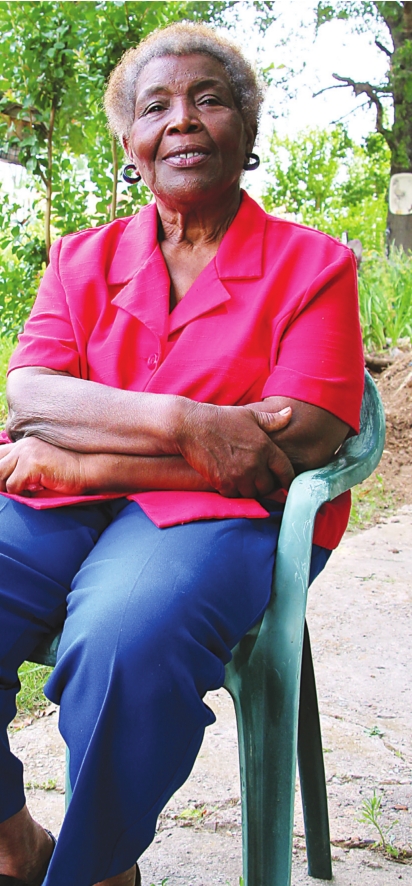
When I came to Shreveport with my family, we came looking for a great place to live, one that was decent and affordable. My desire was to live close to great schools and churches, and I, Rosie Chaffold, found that place right in the heart of Allendale. My family and I loved the community and the neighbors were friendly. The adults were working people, the children attended school, and the families attended church together. Everyone loved and took pride in their community. I loved, enjoyed and became closely connected to Allendale, and my family and I built a wonderful life here for about 15 years.
Things began to change. The neighborhood began to decline, and many people moved out, and many new faces moved in. The new people of the neighborhood seemed to lack pride and showed little respect toward the community and themselves. People seemed to care less about the community. As the community began to descend, so did the family structure. Many adults lacked employment, the children stopped going to school, and the churches were vacant of family. The yards, lots and streets were soiled with trash and filth. Drugs, crimes and other illegal activities became a way of life.
This once beautiful neighborhood had become one of the most dangerous and unhealthy places to live. My garage was burned, and my windows were shot out, and I had become afraid for me and my family’s lives. I asked the residents of Allendale to come together to save our community from the devastating state that it was in, but no one was willing to help. I felt sad and disappointed with the residents for the lack of care they had for their community. However, I did not give up. I felt that somehow or some way that God would bring Allendale back to its beauty and glory.
I kept praying and asking God what I could do to help Allendale return to the way it used to be. Each morning I went in my front yard and worked in my flower garden, but then one morning I began feeling sorry for my family, the condition of my community, and myself, and I started to cry. I said, “Lord, send me a miracle,” and as I started to wipe my tears, I saw some people walking on the streets. They stopped and said, “Good morning. We are from Shreveport-Bossier Community Renewal, and we came to help you.” One member of the group began telling me their plans for the community, and the more he talked, the more I cried.
At first, I doubted his words being that many others had come through saying they wanted to help Allendale, but nothing changed. But then I told him that if he was willing to work with me, I was ready and willing to work with him, and we began working together. Little by little, things began to change, began to come together with Community Renewal after building trust. Community Renewal treated us with love and respect, which gave us the desire to help ourselves. We began to feel so much better about ourselves and our community.
After Community Renewal came to Allendale, I decided to start a flower and vegetable garden. The flowers would bring beauty and the vegetables would encourage the community to eat healthier. The garden was a great success to the Allendale community because it brought a sense of pride, fellowship and friendship too. Now many other communities throughout Shreveport-Bossier City have started a community garden. The Allendale Garden of Hope and Love, along with Community Renewal, has made a huge difference in the improvement of Allendale and it helped to encourage other people, businesses, and organizations to get involved and help make things even better.
The Fuller Center for Housing and Habitat for Humanity are working in the community and have built over 50 new homes for families to live in and one day own. Once again, Allendale is becoming a community of beauty, prosperity, pride and hope. I love my community, and this is where I want to stay. I thank God for sending the many people here who believe in us and were willing to help us restore our community as a whole.
– Rosie Chaffold
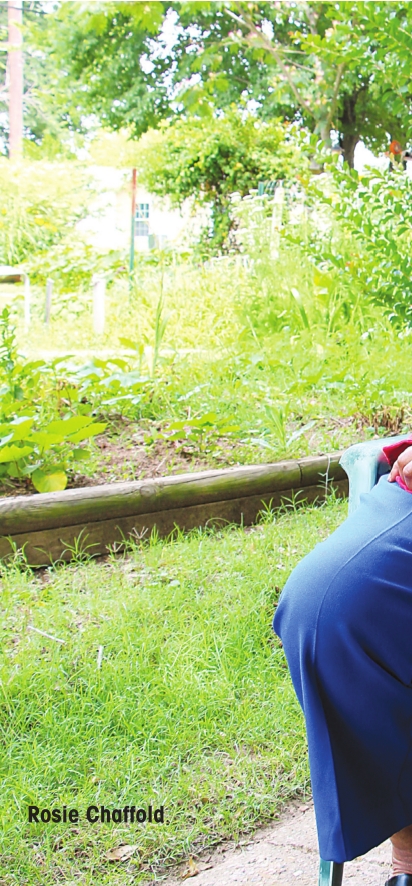
I am Phyllis Davis, and I’m a proud home Phyllis Davis owner and resident of the Allendale neighborhood. I grew up in the “bottom” of Allendale and lived with my single mother and my nine siblings. We lived in a small, one bedroom apartment. While my mother slept in the bedroom with three of my youngest siblings, the rest of us slept in the living room on blankets and the kitchen floor. I remember praying at the young age of 13, asking God to bless my family with a big house. There were even times when I wrote letters to God, asking Him to bless me with my own home when I came of age. I even went as far as dropping those letters of hope into the mailbox, believing that they would one day reach God.
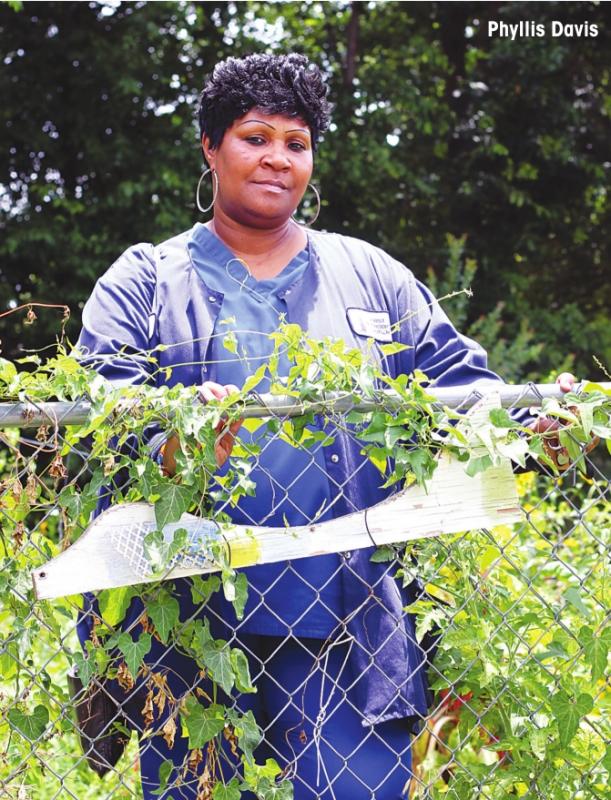
I used to hear my mother’s landlord threatening to put us out every time my mother was short on her rent. I remember hearing her say, “Just give me a little more time, I will have it.” I used to feel so bad for her and I didn’t want her to know I could hear him with his threats. It was during those hard times, I knew that I wanted to own my own home one day, and I never wanted to hear another landlord again, threatening to put my family out.
I went on to have four children of my own, following in my mother’s footsteps as a single mother. I lived under the Section Eight program, housing for lower income families, for a while. I even lived in the “projects” for a while, yet wherever my family was blessed with a roof over our heads, I tried my best to make it a home even though I couldn’t call it a home of my own. As years went by, my dream finally came true. I was blessed with a home through Fuller Center for Housing and Community Renewal International. I am grateful to know that God heard and answered my prayers.
All of this came during the time my second son had taken ill and we were living in a bad neighborhood. We needed to get out and have a new start. To know that my son was able to live long enough to see my dream come true was a true blessing. Besides, that’s what he wanted for us. I can still hear him saying, “Momma, one day I’m going to buy you a big home.” I’m overjoyed he was able to move into his new bedroom instead of going back to the living conditions we were in before he went to the hospital. And even though God called him home, I’m left with the memories of him being there with me.
My son was able to see a community come together to bless families with new beginnings. He was blessed to witness beautiful people who joined together, who left their own families to lend a helping hand, to build homes for strangers. North Wheelchair Ramp, First United Methodist Church, Temple of Vision Ministries and everyone who sponsored our home, I am ever so grateful that they stepped in, giving a helping hand, and to the Fuller Center for choosing to help my family.
Dreams do come true. You have to see that our homes were built with loving hands. Now I am asking God to keep our dreams alive so that our children and grandchildren can see that dreams do come true.
– Phyllis Davis
Vancouver British Columbia has completed a transportation plan for the future, Transportation 2040. Without a single limited access freeway this city metro of over 2.3 million and growing sets an example for the rest of the world in sustainability. Rather than look to new roads to accommodate population growth, alternative modes of transportation move to the front. Here is an excerpt from the web site that describes goals for the plan.
The plan supports goals that address the many challenges we face, and seeks to meet Vancouver’s economic, environmental, and social needs:
Economy – We envision a smart and efficient transportation system that supports a thriving economy while increasing affordability People – We envision healthy citizens in a safe, accessible, and vibrant city Environment – We envision a city that enhances its natural environment, ensuring a healthy future for its people and the planet See more examples at Agile Infrastructure for 21st Century Communities http://apinfrastructure21.wordpress.com/tag/i-49connector/.
Read more online at theforumnews.com:
My name is John Press. I evacuated during Hurricane Katrina to Shreveport and decided to stay. I like the people I met and decided to move to Allendale.
I don’t want to be “evacuated” again. Katrina evacuees are still trying to recover. ...
–John Press
Sitting in the filled Superdome, looking out into the crowd, I see people throwing themselves from 30 feet above and plunging to the ground. People were committing suicide all around. All because of fear, death had taken place. I am Dorothy Wiley, a Katrina survivor. ...
– Dorothy Wiley
I am Eric S. Thomas, and I grew up in Allendale on Garden Street. There are so many great memories that I have, and I’ve experienced so many wonderful things while living there. ...
– Eric S. Thomas