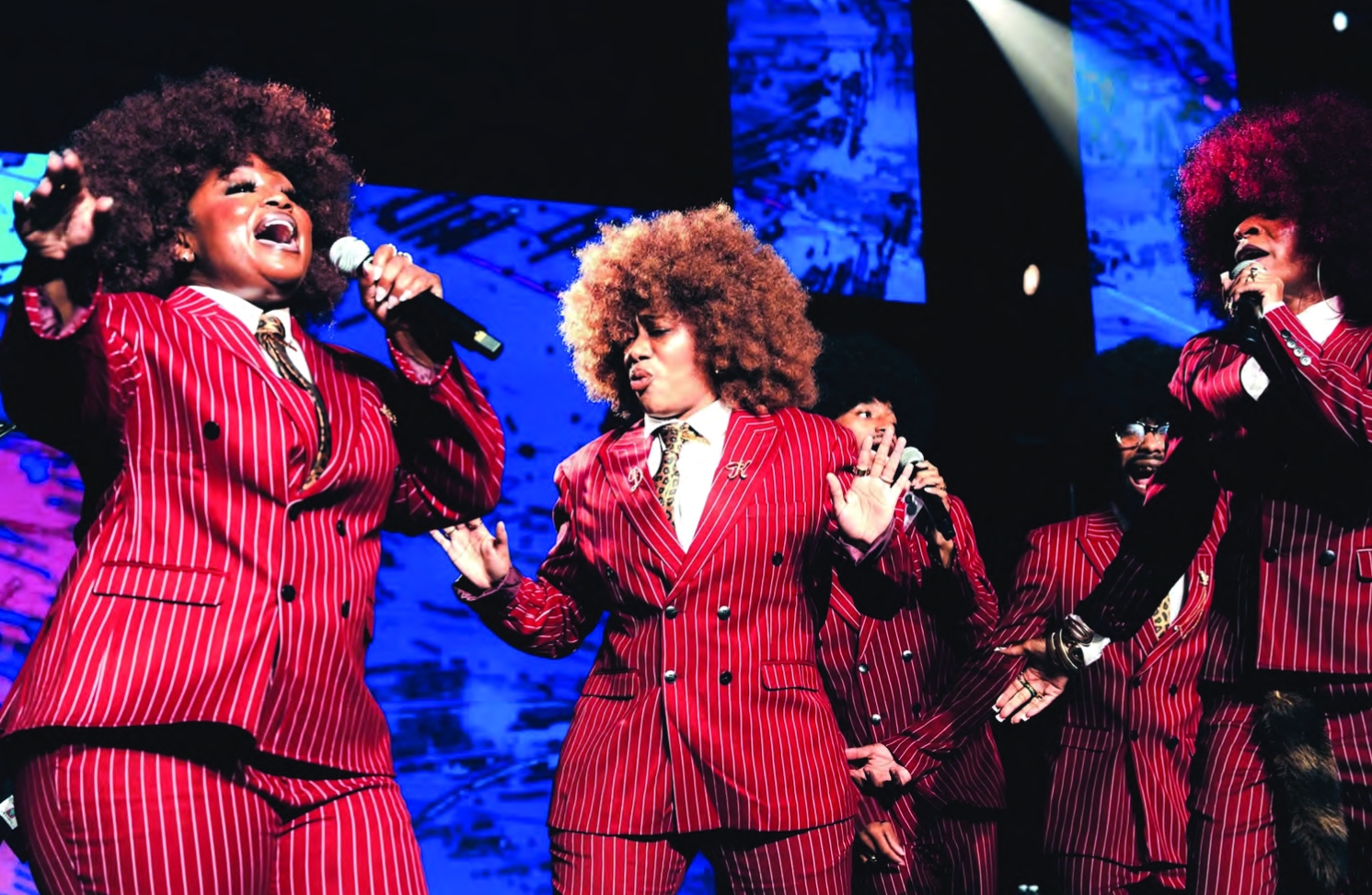
Members of the Sainted Trap Choir perform during the Violet Vibes celebration.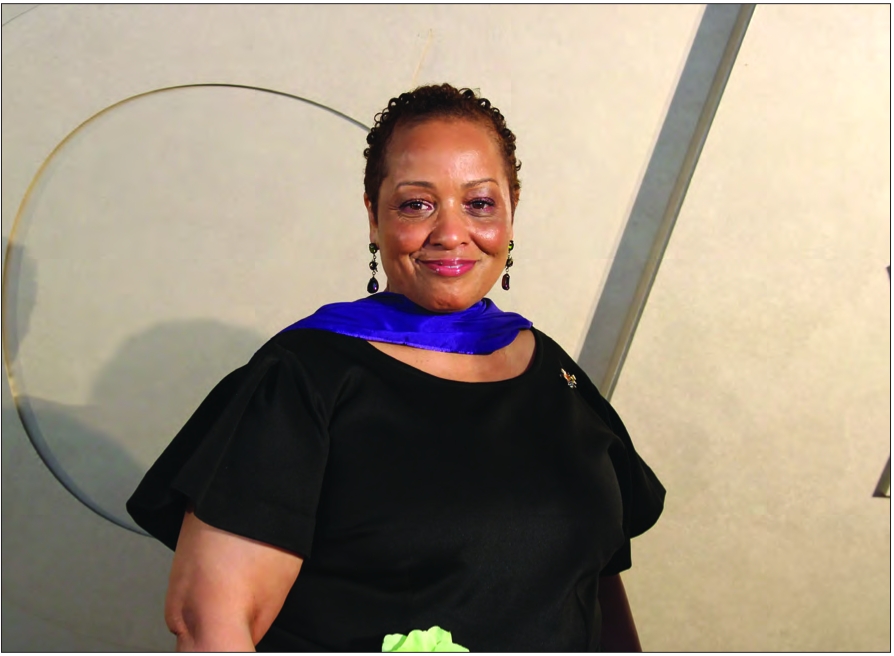
Mary
Elliot serves as curator for the National Museum of African American
History and Culture. Shown here, Elliot on the red carpet of the
museum’s Sept. 24 anniversary gala.
Gray skies, intermittent showers, and fall-like temperatures failed to dampen the spirits of thousands of supporters of the Smithsonian’s National Museum of African American History and Culture (NMAAHC) who turned out in force in Washington, D.C., to celebrate the museum’s 10th anniversary, Sept. 24-27.
Hailed as “The Reunion,” the commemoration featured a series of multi-day celebrations and signature events for visitors of all ages guided by the theme “Welcome Home: Our Legacy Continues.”
On Sept. 24, the actual day of the anniversary, AFRO News was on site to speak with museum leadership and visitors. Later that evening, the publication had coverage of the museum’s anniversary gala.
On Sept. 25, Smithsonian Secretary Lonnie Bunch III spoke to the institution’s first decade, with a fireside chat titled “Understanding America.” On Sept. 26, the celebration moved to The Wharf, where “The Purple Ball: Echoes of The Pearl, took place. And Sept. 27 featured a free community offering, “Violet Vibes: A Community Celebration.”
“A dream deferred is not a dream denied. This museum was initially thought of in 1915 by former U.S. Union Army troop members, [who were] African American. This was initially designed to be a monument, but here we are. Over 100 years later, we’ve welcomed our 14 millionth visitor,” said NMAAHC Curator Mary Elliot. “The museum has changed over time. We’ve been consistent in terms of the quality of experience; the level of storytelling; the nuances in our history — making sure that we bring those forward so people can really reflect on who we were, who we are and who we want to be.”
Elliot joined the museum’s team of experts in 2011, years before it had a physical building.
She said one major change has been in the sheer number of artifacts housed within the museum.
“We’ve had more opportunities to bring in more objects.
We started with no objects, now we have 48,000 objects,” she said.
“We’ve really extended our reach by going out into the field, working
with community members, but also online. We have our digital feature,
the Searchable Museum, which is really dynamic and award winning.”
Dr. Michelle Commander, NMAAHC deputy director, gave the AFRO insight on where the museum will be in another 10 years.
“We
are committed to staying true to our mission and to our responsibility
to the American people to tell the full story of African-American
history and culture. One area I am particularly excited about is our
work in community cultivation, which will extend many of the Museum’s
programs and relationships beyond Washington,” she said in a statement
sent to the AFRO. “We want to build on the extraordinary external-facing
work we have already undertaken and deepen our partnerships with
communities across the nation. We understand that not
everyone will be able to come to Washington, D.C.; for many families,
the cost and time required to travel can be prohibitive.”
Commander
said that “the next decade will be about meeting people where they
are—listening, learning, building meaningful partnerships, and creating
new ways for communities to connect with the Museum and the histories
with which we have been entrusted.”
Like
any family reunion, visitors, supporters, community partners and
friends of the museum reflected on the arduous but fulfilling journey
that has shaped the museum over the past 10 years. Some shared stories
about how the museum has preserved and elevated African-American
history, while others expressed their hopes that its mission will remain
undeterred for the benefit of generations to come.
“It’s
important for African Americans to preserve and acknowledge our history
and the museum has served as a tremendous way to provide interactive
learning for my son who is homeschooled,” said Brigette Squire, whose
13-year-old son, Matthew Stewart, is in the eighth grade.
“He’s especially interested
in learning about the achievements we’ve accomplished in entertainment,
businesses, sports, the military, and in the Civil Rights Movement.”
Squire
said that she has been “careful to explain how there are those who want
to rewrite and diminish our story, suggesting that we came to America
voluntarily and were not treated like property.”
“The
truth has been unsettling to him but the museum’s existence, exhibits
and programs have been instrumental in him learning the truth about
African American history,” she told the AFRO. “My fear is that without
the NMAAHC we may be unable to access and pass on the truth to future
generations.”
Since
opening Sept. 24, 2016, the museum has welcomed more than 14 million
visitors from 200 countries and hosted more than 26,000 school groups.
Social media channels have generated nearly 897 million impressions and
garnered more than 1.1 million followers. Recognized globally for
innovation in exhibitions, education and digital engagement, NMAAHC has
received more than 100 awards.
Candace
Jenkins, a Howard University Law School alumna, said as a mother and
grandmother, she hopes the museum will find more ways to attract youth
through its doors.
“I
can only imagine what my parents and grandparents experienced during
their lives because of discrimination, segregation and racism, and I
find efforts by those who seek to erase that history as heinous — even
evil,” said Jenkins. “Many of those stories were passed on orally. Now,
we have a place where exhibits and programs transmit that history. But
more has to be done to attract youth to the museum. Youth experience the
world and learn differently than I did as a child of the 60s. But they
remain eager to learn – to learn the truth about their ancestors.”
This story was originally published in Afro News. Alexis Taylor is AFRO Managing Editor.