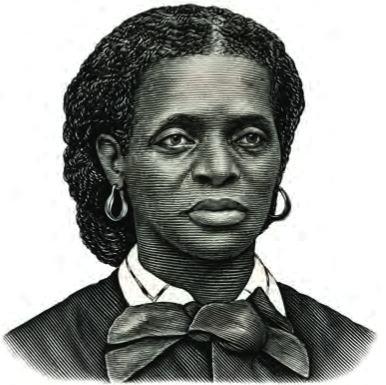
AI-generated
illustration of Jane Johnson based on an engraving published in William
Still’s Underground Railroad Records portrait.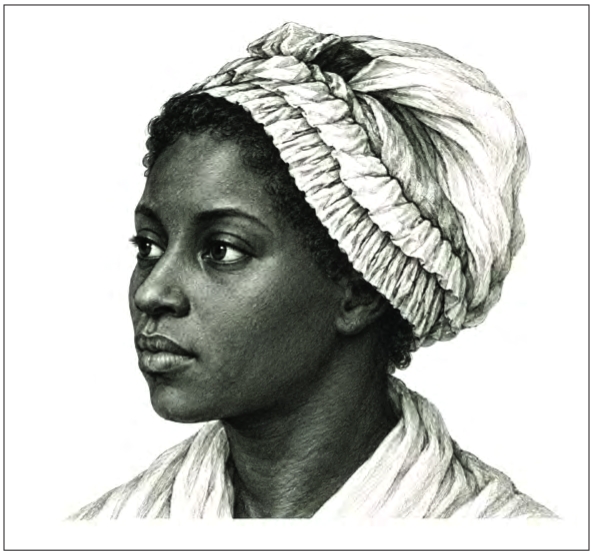
(Above)
AI-generated illustration of Phillis Wheatley Peters based on the
portrait in her book “Poems on Various Subjects.” frontispiece. (Below)
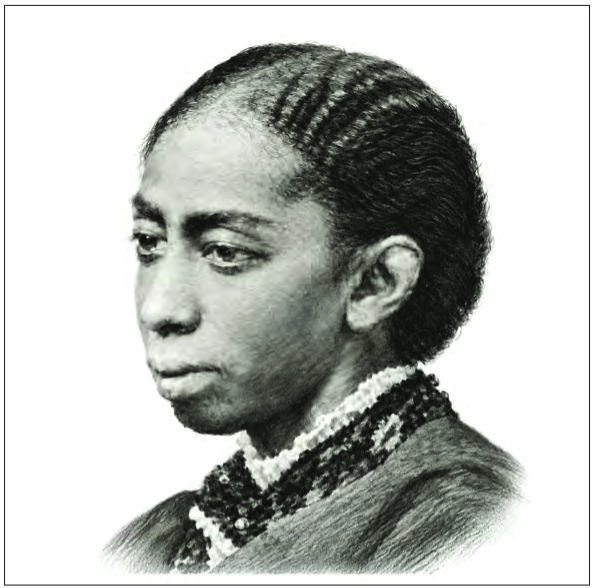
AI-generated illustration of community and religious leader Eliza Ann
Gardner.
Learning about William Lloyd Garrison, Wendell Phillips, John Brown and Charles Sumner helps us understand the alliances that challenged slavery. But when we tell this history primarily through the lens of white abolitionists, we can leave Black people appearing as recipients of freedom rather than its architects.
We need to understand what we did for ourselves: how Black women and men resisted enslavement, protected one another, organized movements and forced institutions to change. Boston’s Black women belong at the center of that history.
On Aug. 1, 1836, an unnamed Black woman restrained a deputy sheriff in a Boston courtroom. At the same time, others helped Eliza Small and Polly Ann Bates escape downstairs into a waiting carriage. A slaveholder’s agent had claimed the two women as fugitives after their arrival from Baltimore. Chief Justice Lemuel Shaw ordered their release, but the agent sought to arrest them again. The crowd refused to let that happen.
Small
and Bates eventually reached Halifax. Their unnamed protector performed
an act of courage that Boston rarely places alongside its celebrated
struggles for liberty.
Americans
recognize Nat Turner, Denmark Vesey and Frederick Douglass. Harriet
Tubman and Sojourner Truth are rightly celebrated. Yet many women who
challenged slavery in Boston remain unfamiliar, although their
resistance began generations before independence.
Criminal proceedings preserve some of that history.
In 1681, Maria, enslaved by Joshua Lamb of Roxbury, was convicted of setting fire
to his house and another dwelling. Colonial authorities burned her to
death. Her case exposes the violence of a society that treated people as
property and punished her arson with an especially brutal execution.
In
1755, in Charlestown, Phillis and Phebe (also spelled Phoebe), were
implicated with an enslaved man named Mark in the fatal poisoning of
their enslaver, John Codman. Phillis was convicted and burned to death.
The surviving testimony describes a desire to escape Codman’s control
through a change of enslaver.
These
records reveal confrontations with bondage but leave motives uncertain.
Maria’s fires cannot confidently be described as an escape plan, nor
does the Codman poisoning establish an abolitionist program. But
excluding such cases would leave the false impression that enslaved
women accepted their circumstances until reformers offered help.
Other
women challenged ownership in court. In Massachusetts, Jenny Slew of
Ipswich won damages in 1766 after challenging her unlawful enslavement.
Elizabeth Freeman, with a fellow plaintiff named Brom, won freedom in
western Massachusetts in 1781. Both forced courts to examine captivity.
Boston’s
revolutionary language encountered a Black woman’s intellectual
authority. Phillis Wheatley Peters, kidnapped from Africa and enslaved
in Boston, published her poetry collection in 1773. Her writing exposed
the contradiction between colonists’ demands for liberty and African
captivity. She understood the desire for freedom through the experience
of having her own taken away.
Belinda
Sutton pressed a different claim. Enslaved by the Royall family in
Medford, she petitioned the Massachusetts Legislature in 1783 for a
pension from Isaac Royall’s estate.
Legislators
approved it, but payments repeatedly failed. She renewed her demands
over the following decade; a 1788 petition identified her as a Boston
widow.
Sutton’s
experience exposed the economic incompleteness of emancipation. Wealth
produced through enslaved labor remained in other hands. Recognition
required someone willing to insist that officials deliver what they
promised.
In 1832,
Maria W. Stewart brought that unfinished freedom into Franklin Hall. She
challenged the confinement of Black women to domestic service and
demanded education and opportunity. Drawing on Christianity, she claimed
women’s authority to interpret injustice and speak publicly about
political responsibility. Freedom in Massachusetts could coexist with
restrictions that sharply narrowed Black women’s futures.
Susan
Paul and Julia Williams Garnet made organizing part of the answer. Both
teachers, they represented the Boston Female Anti-Slavery Society at
the national women’s antislavery convention in 1837. Paul’s children’s
choir supported abolitionist activity, connecting the education of Black
children to a campaign against human ownership. Women raised resources
and shaped movement strategy.
The
struggle also reached Boston’s segregated classrooms. Sarah Roberts was
a child when her exclusion from a school became a legal challenge.
Although the courts rejected her father’s case, organizing continued
until Massachusetts prohibited school segregation in 1855.
Georgiana
Smith and her daughter Elizabeth joined the celebration honoring
abolitionist William Cooper Nell that December. Their presence showed
that freedom’s meaning was already expanding: Black families demanded
public institutions that recognized their children’s equal claim to
opportunity in their own city.
Their work depended on households prepared to shelter people whom federal law threatened.
Harriet
Hayden had escaped slavery with her family before helping make the
Hayden home on Beacon Hill an Underground Railroad refuge. Ellen Craft,
who escaped Georgia disguised as a white male enslaver while her
husband, William, posed as her servant, found protection in Boston’s
abolitionist community.
The
Fugitive Slave Act of 1850 increased the danger. The Crafts ultimately
fled to Britain, demonstrating how little security residence in
Massachusetts could provide. A city’s antislavery reputation offered no
guarantee against a national government committed to enforcing
slaveholders’ claims.
Eliza
Ann Gardner grew up in a Boston household remembered as an Underground
Railroad station. She later carried abolitionist commitments into
campaigns for women’s religious leadership and civil rights. Jane
Johnson, who escaped slavery with her children in Philadelphia in 1855
and subsequently settled in Boston, also risked her safety by testifying
in defense of those who had helped her.
These
women’s strategies differed, and their lives cannot be folded into a
single organization or political program. Some demanded liberty through
courts; others made escape possible or confronted the people who
threatened it. Families, neighbors, churches and allies sustained them,
often leaving only fragments in the record.
The
unnamed woman in the 1836 courtroom belongs in that history. Her action
made a judicial order effective when another arrest threatened to undo
it.
The gap between a
declared right and its practical protection would outlast slavery,
becoming the central problem later generations of Boston’s Black women
confronted. Their predecessors had already shown that freedom required
people prepared to defend it.