Cash price tops $4,000 a year
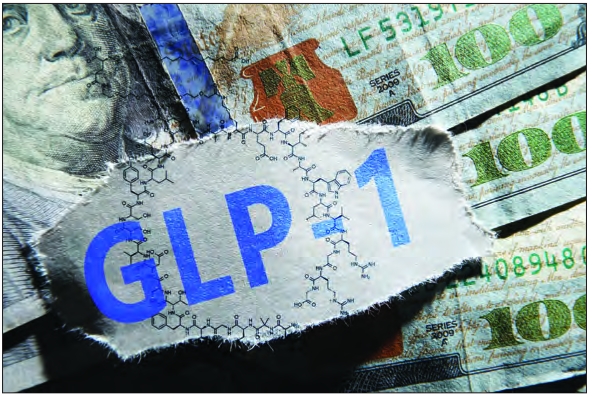
Massachusetts residents who took GLP-1 drugs such as Wegovy and Zepbound for weight loss have lost insurance coverage in large numbers this year, and a Boston endocrinologist says lower-income patients may have more difficulty continuing treatment.
An estimated 112,000 fewer commercially insured residents used a GLP-1 drug for weight loss in the first quarter of 2026 than in 2025, a 52% decline, according to the Massachusetts Health Policy Commission, an independent state agency that monitors health care spending.
The commission said Blue Cross Blue Shield of Massachusetts, Point32Health and Mass General Brigham Health Plan were among the insurers that ended coverage for many members.
Women made up 72% of commercially insured people who used a GLP-1 drug for weight loss in 2025 and adults ages 50 to 64 were the largest age group at 43%, according to the commission’s Sept. 17 presentation to its board. In all, nearly 300,000 commercially insured residents used a GLP-1 drug for any reason that year and net spending reached nearly $1 billion, the commission said. The commission’s analysis covers commercially insured residents ages 12 to 64, according to its presentation.
MassHealth, the state’s Medicaid program, and the Group Insurance Commission, which covers state employees and retirees, also ended coverage for weight loss beginning in July. About 22,000 MassHealth members were affected. A March MassHealth bulletin to prescribers said the program would still cover weight-loss GLP-1 drugs for members with prior authorization who have established cardiovascular disease, a liver condition called MASH, or moderate to severe sleep apnea. Coverage for diabetes drugs continues.
The bulletin said requests for members younger than 21 are reviewed for medical necessity. The bulletin also states prior authorizations approved for obesity without documented conditions were set to expire in early July.
For patients without one of those conditions, the change has meant looking for other options, said Dr. Richard Siegel, an endocrinologist and co-director of the Diabetes and Lipid Center at Tufts Medical Center.
“Obesity by itself without evidence of one of these medical issues is no longer eligible for coverage,” he said.
Most people who stop the drugs regain weight, Siegel said, and treatment plans then rely on monitoring, nutrition and physical activity, sometimes with other medications chosen with considerations for budget and medical history.
“I have had similar discussions with patients of all levels of income,” Siegel said. “For Black, Latino and others who have lower income, personal budget may make it more difficult to continue with medications that they were taking previously due to higher out-of-pocket cost,” he said.
A preliminary commission analysis found that use of the drugs for weight loss fell at generally similar rates in 2026 across ZIP Codes, with no material difference between higher- and lower-income areas or between areas with different racial and ethnic makeup, Mickey O’Neill, the commission’s communications director, pointed out in an email to the Banner.
The commission’s claims database does not have enough race, ethnicity, or individual-level income data to break out its findings by those groups,” he said. He also pointed out that the commission did not use MassHealth data in its research.
Black and Hispanic or Latino adults in Massachusetts have higher rates of the conditions the drugs treat, according to state survey data cited in the commission’s Sept. 17 presentation. Diabetes affects 12.5% of Black adults and 11.5% of Hispanic or Latino adults, compared with 9% of white adults. Obesity affects 36.1% of Black adults and 33% of Hispanic or Latino adults, compared with 26.8% of white adults. The figures show how common the conditions are, not who took the drugs.
Patients who pay cash face manufacturer prices of $349 a month for Wegovy and $449 a month for Zepbound as of Aug. 17, or about $4,200 to $5,400 a year for maintenance doses, according to the commission’s presentation. O’Neill said the commission expects some residents are now paying out of pocket, such as through direct-to-consumer channels. He said he is concerned that people with less disposable income will be less able to afford those prices.
Siegel explained that lower-cost options are available for patients who cannot afford those prices.
He also mentioned that he expects prices to fall as newer drugs reach the market, which may take a year or more. When that happens, he said, “insurance plans should start to cover some of the medications again.” For now, though, “I don’t believe that anything will be done to bring back coverage in the short term.”
Bringing coverage back would require more revenue, such as taxes or surcharges, to keep Mass-Health and other insurers solvent in the short run. Health and Human Services Secretary Kiame Mahaniah predicted coverage to return within two to three years, State House News Service reported.
The commission’s Office of Pharmaceutical Policy and Analysis plans to include a chapter on GLP-1 trends in its first annual report, due this winter, according to a Sept. 17 commission news release.