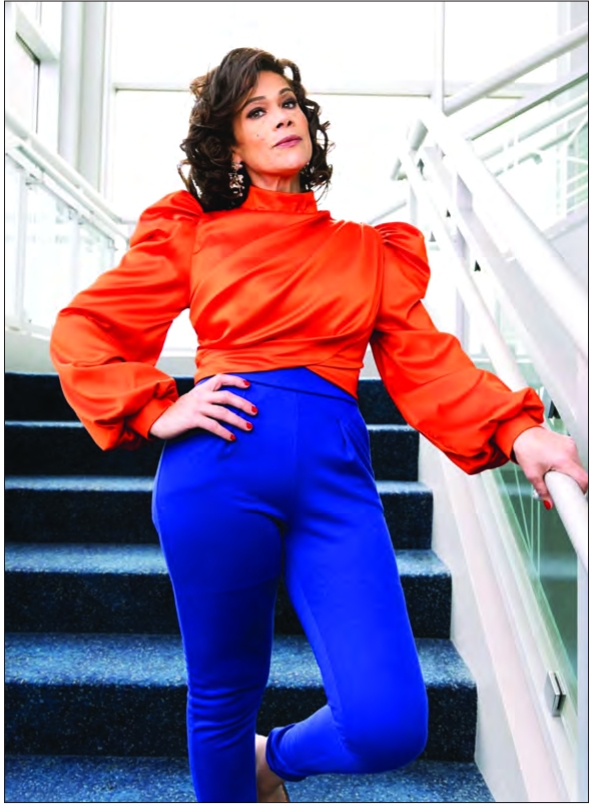
Julia Mejia is a Boston City Councilor At-Large. When I think about Hispanic Heritage Month, I think about the people who came before us. The chairs they pulled up to tables of power so we could have a seat, and the tables they built themselves when necessary. I think about our shared history, the beauty of our cultures, and generations of sacrifice. Most importantly, I think about our responsibility to ensure the next generation inherits more opportunities than we did.
At five years old, my mother and I arrived from the Dominican Republic with a suitcase full of dreams. We settled in Boston during the 1970s, when the city’s school desegregation and busing crisis fueled racial tensions. While we found love and support in our communities, we also encountered hostility from a city struggling to accept people who looked and sounded different. I remember being told to go back where I came from, words that made a little girl question whether she belonged.
As the youngest girl in my neighborhood with the strongest English skills, I became the unofficial translator. Whether accompanying my mother to the welfare office or helping neighbors navigate paperwork, I became a microphone for a community too often made to feel voiceless. Those experiences taught me something I carry today: everyone has a voice, but not everyone has the opportunity to be heard.
Years later, at Dorchester High School, I met legendary journalist Liz Walker. Seeing a powerful woman of color break barriers changed everything. For the first time, I believed my circumstances did not have to define my future. I became the first in my family to graduate from high school and college, eventually pursuing journalism and working with MTV on national campaigns, pushing the network to tell stories too often overlooked or misrepresented.
Eventually, instead of telling stories about my community, I decided to work toward changing the headlines from the source. So I came home.
What I found was heartbreaking. Decades later, Boston families still faced the same inequities and institutional barriers I remembered growing up. The education system remained fundamentally broken. Recognizing that solutions required an intergenerational approach, I began organizing parents and established the Collaborative Parent Leadership Action Networ (CPLAN), empowering families historically excluded from decisions affecting their children’s education.
Little did I know this would position me to do something I never imagined: run for office — and win.
In 2019, after campaigning in bodegas, barbershops, hair salons and overlooked neighborhoods, I won my election to the Boston City Council by a single vote, becoming the first Afro-Latina to serve on the council. One vote changed my life’s trajectory. But representation meant nothing if I wasn’t willing to challenge the systems that once made my community feel powerless.
My first act as councilor was organizing a hearing to strengthen protections for undocumented immigrants. Days later, I received a voicemail from a man named Mike. My staff tried to stop me from listening, but I pressed play. He called me a bigot, a fascist, a criminal. He called my mother a criminal and said I was “pushing for a fight.” Suddenly, I wasn’t Julia Mejia, city councilor at-large. I was that little girl being told to go back where she came from.
But I decided to keep speaking up, even when my voice quivered.
Then came 2022. With nearly 15 pieces of legislation under my belt, I hoped I could focus on the work rather than proving I belonged. But Boston’s redistricting process reignited familiar racial tensions. At a meeting in South Boston, an attendee told me it wasn’t okay that English was my second language.
This time, I wasn’t that little girl navigating Boston in the 1970s. I had earned my seat. I had every right to be there. And I made it clear: I wasn’t going anywhere.
Looking back, I see how the same struggles followed me through different chapters of my life, struggles familiar to Hispanic Americans who dare to be unapologetically themselves. From childhood to public office, the message has too often been that people like me don’t belong. Yet every chapter has strengthened my commitment to ensuring others never question their place in this city.
And trust that I am just getting started.
Today, as immigrant families confront renewed fear and uncertainty, I think about my mother, who was undocumented for much of my childhood. I think about my daughter, who at six asked whether we would have to leave because of Trump. I think about our Haitian and Venezuelan brothers and sisters living in fear as their TPS protections are revoked.
Hispanic Heritage Month cannot simply celebrate our food, music, flags and traditions. It must honor the struggles that brought us here and protect the opportunities generations fought to create.
Our communities helped build Boston, strengthen its neighborhoods, and shape its future. We deserve more than recognition. We’ve earned a meaningful voice in decisions affecting our lives.
I started as a little girl holding the microphone for my neighbors. Today, I have the privilege of holding one in City Hall. And no matter how many times someone tells me to go back where I came from, I will keep using that microphone to remind our communities that we belong, our voices matter and nothing about us without us is for us.