Boston has set a goal to close the life expectancy gap citywide by 2035, according to the Boston Public Health Commission’s Live Long and Well campaign. The gap is much older than the goal. A 2012 analysis found a 33-year difference in life expectancy between a census tract in Back Bay and one in Roxbury. The commission’s latest analysis puts it at 23 years, with Back Bay at 91.6 years and Roxbury at 68.8. The tracts are about two miles apart.
At the same time, another gap is growing. Black Bostonians lived an average of 76 years in 2023, six years fewer than white residents, up from a four-year gap in 2019.
The metrics have alarmed local health leaders, who allude to the criteria as telling proof of larger disinvestments for Black, brown and low-income neighborhoods — from healthy food to access to transit and health care, or some of the social determinants of health.
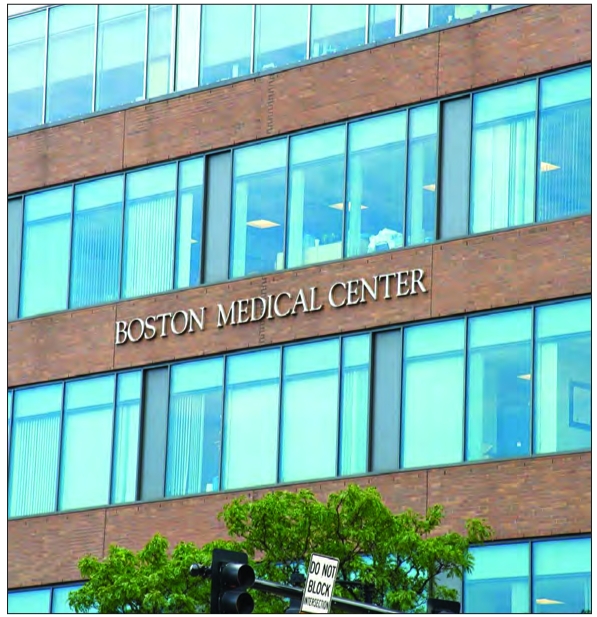
Dr. Bisola Ojikutu, Boston’s public health commissioner, discussed the city’s response on “GBH Amplifies: Our Communities’ Health in Danger” along with the Bay State Banner, the Banner’s State of Black America forum series, which aired Sept. 10. She appeared with Michael Curry, president and CEO of the Massachusetts League of Community Health Centers, and Dr. Thea James, vice president of mission and associate of Boston Medical Center.
Live Long and Well, launched in 2024, is the city’s plan to cut premature death and racial health gaps. Its priorities include heart disease and diabetes; cancers of the breast, cervix, colon, prostate and lung; overdoses; maternal and infant health; older adult health; and mental health.
The project has delivered over $35 million to community health centers, behavioral health programs and organizations supporting residents in neighborhoods with poor metabolic and heart health. Funds were secured from a mix of municipal allocations, federal pandemic relief efforts, private foundations and health care institutions like Atrius Health Equity and Mass General Brigham.
“Community health centers are the front door to care,” Ojikutu said in the city’s announcement. At the forum, she said the city is “putting our money where our mouth is” and set money aside “because we knew this was coming,” anticipating cuts to health centers.
The question remains whether the investment has early signs of progress.
Ojikutu said part of the narrowing from 33 years to 23 was “just gentrification and out-migration,” not necessarily intervention. She credited community health centers, which she said, “did public outreach” and “brought people into care” once the original gap became public.
Roughly 80% of what shapes life expectancy is social and structural, not what happens “within the four walls of a health care institution,” Ojikutu said. That means investing in “economic opportunity, our housing, our education, in playgrounds, in built environments,” she said.
She also noted that a 1985 federal report by then-Health and Human Services Secretary Margaret Heckler found the same disparities, “even worse in some areas.”
Michael Curry, president and CEO of the Massachusetts League of Community Health Centers, advocated for a framing shift that could support stronger investments earlier in people’s lives.
“We talk about life expectancy in a way that sometimes disturbs me: when you die,” Curry said. “When in fact, the real story is how long you live sick.”
He pointed out that “there is no reason why people are sicker in Roxbury than they are in Back Bay. That is a product of history.”
Community health centers are where much of the work happens, he said, asking patients: “You got diabetes. How do we get you all of the interventions that we need to get you so you can manage your A1C? Get the care that you need, you can live longer and manage that.”
Curry said the new funding enables the centers to plan for next year’s Medicaid work requirements. “How do we engage patients to stay insured?” he asked.
James, of Boston Medical Center, similarly described the root cause as “a lack of access.” Patients with limited money are asked to pay for prescriptions and copays and to “get on three buses” to reach healthier food that costs more, she said.
Boston Medical Center spent $6.5 million on housing and services for patients who were driving high costs, James said. Mental health readmissions fell about 78%, and the cost of care dropped about 46%, she said.
The state of maternal health care shows the stakes. Nationally, Black women are more than three times as likely to die in childbirth than white women, according to UMass Boston’s birth equity fact sheet report.
At Boston Medical Center, doctors were taking longer to decide to deliver babies for Latina and Black women with the pregnancy disorder preeclampsia, James said. After the hospital standardized its decision-making protocol within a specified, critical time frame, “the gap closed right up and quickly.”
The BMC example is one of several on-the-ground approaches employed by practitioners to address gaps.
Citywide, the gap has improved, albeit slowly. It was 33 years in 2012, and most recently available data puts it now at 23 years. The city’s goal is to close it by 2035.