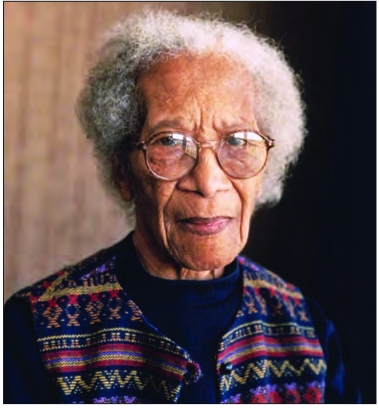
Ellen Swepson Jackson co-founder, Operation Exodus, a precursor to Metco. 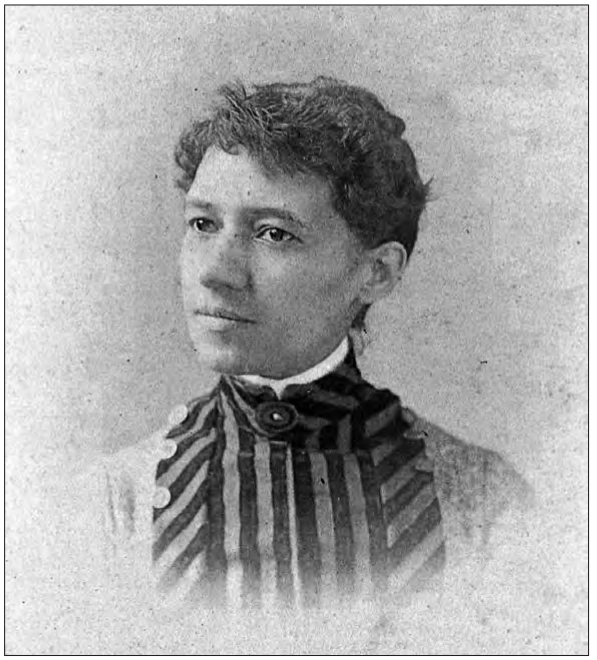
Maria Louise Baldwin was the pioneering Black principal of Cambridge’s Agassiz School.
In December 1855, nine-year-old Elizabeth Smith stood in Boston’s Twelfth Baptist Church holding flowers for William Cooper Nell.
The Black abolitionist had helped secure a Massachusetts law prohibiting segregated public schools, and the city’s Black families were celebrating. Elizabeth and other children presented a bouquet; her mother, Georgiana Smith, gave Nell a gold watch on behalf of parents who had worked for the victory. The more remarkable part of the story came later.
Elizabeth went on to graduate from Boston’s Girls’ High and Normal School in 1867 and, in the early 1870s, became a teacher at the integrated Phillips School, apparently the first Black teacher in an integrated Boston public school. A child who had celebrated the right to enter the classroom had grown up to lead one.
This is one of the discoveries emerging from my research for Black Women Lead, a project recovering the histories of hundreds of women who helped shape Boston. Together, their lives suggest a different way of telling the city’s educational history.
Boston prides itself on its schools and universities, but equal access to learning was never simply bestowed by enlightened institutions. Black women created schools when they were excluded, demanded entrance when segregation was defended, established authority where their competence was doubted and built alternatives when public systems failed.
The story begins long before the struggles of the 1960s. In 1787, Prince Hall and other Black Bostonians petitioned Massachusetts authorities for better schooling. Their appeals failed, so families made arrangements themselves. In the 1790s, classes were held in the home of Prince Hall’s son, Primus, and by 1808 the African School occupied space in the African Meeting House. Churches, households, abolitionist groups and classrooms were parts of a common civic network. Catherine Waterhouse Paul served as a school headmistress and later taught in her family’s home.
Although men often held the most visible offices, Black women supplied much of the daily labor that kept education possible.
One of the earliest women to hold a formal position was Charlotte Williams Foster Myers, appointed headmistress of Boston Primary School No. 5 in 1822. Her father, Isaac Williams, had been enslaved and served in the American Revolution; her mother, Elizabeth Will, was Ponkapoag.
In the nation’s 250th anniversary year, the contradiction is difficult to overlook: the daughter of a Revolutionary War participant was teaching children in a segregated school in the republic his service had helped establish. A school inspection found that 42 of 50 pupils were still learning the alphabet. Officials disparaged the children’s preparation but deemed Foster’s teaching satisfactory. She was being assessed for overcoming educational deprivation that public policy had helped produce.
Catherine Paul’s daughter, Susan, made that kind of teaching a form of social and political education. In 1832 she organized a children’s choir whose performances supported abolitionist activities. Black children were not merely hearing adults argue about slavery; they were helping raise money to fight it.
Three years later, she published “Memoir of James Jackson,” a biography of a pupil who had died before his seventh birthday. Two religious publishing organizations declined to print or promote the manuscript, but it appeared in 1835 and was advertised by white abolitionist and journalist William Lloyd Garrison in his newspaper, the Liberator. Recognized as a pioneering work of African American biography, the book insisted that the short life of a Black child deserved the same serious moral and literary attention accorded to more celebrated lives.
Susan Paul was part of a larger network. Julia Williams Garnet had studied at Prudence Crandall’s school for Black girls in Connecticut, which white hostility forced to close. She then attended Noyes Academy in New Hampshire, where a mob hauled the school building off its foundation after the institution admitted Black students. She persisted, studied at Oneida Institute in New York, and taught at a school for Black girls in Boston associated with activist, educator and philanthropist Martha Ball and her sister Lucy.
In 1837, Williams Garnet and Paul represented the Boston Female Anti-Slavery Society at a national women’s antislavery convention. Their overlapping lives reveal that education, abolition, and women’s organizing were connected enterprises, not separate chapters in the city’s history.
Those efforts unfolded while Boston maintained segregated public schools. The irony was sharp: this was a city where some of the nation’s most influential abolitionists lived and worked, yet municipal officials defended separate schooling for Black children. The issue exposed a divide between opposing slavery and accepting Black people as equal participants in civic life. Parents were arguing not merely for access to a building but for an education on terms the city already offered to white families.
In 1847, five-year-old Sarah Roberts was denied admission to a school near her home and required to walk past five schools for white children to reach the Abiel Smith School. Her father, Benjamin Roberts, challenged the policy with help from attorneys Robert Morris and Charles Sumner. Massachusetts’ highest court ruled against the family in 1850.
The loss did not end the campaign: Black parents, including women who accompanied children to schools and confronted officials, continued pressing for equal access until the Legislature prohibited segregation in 1855.
Even then, law and practice were different things. When Black pupils entered the Phillips School that September, white onlookers watched from windows, anticipating trouble. Some boys mocked the arriving children until the principal intervened. Admission had become legally possible, but belonging had to be negotiated at the classroom door. That is why the December celebration honoring Nell mattered. Elizabeth Smith’s bouquet marked not an end to the struggle but a transition from demanding admission to claiming a place within the institutions once closed to her. Her later teaching career made that transition visible across a single lifetime.
Maria Louise Baldwin pushed the boundary further. Educated in Cambridge, she initially faced discrimination when seeking a teaching post, worked in Maryland, then returned to join Cambridge’s Agassiz School. In 1889 she became its principal, leading a predominantly white school and supervising white teachers.
One of her pupils was the future poet E. E. Cummings, who later credited her with teaching him that “the truest power is gentleness.” Baldwin also lectured, organized and welcomed Black intellectuals into her home. She demonstrated that a Black educator could shape the education of white children from influential families, rather than being confined to institutions established for Black students.
Her legacy produced a remarkable reversal. The Agassiz School honored Louis Agassiz, a Harvard scientist who promoted racial hierarchy. In 2002, after a campaign initiated by student Nathaniel Vogel, Cambridge renamed the school for Baldwin. Another student activist, Maya Counter, subsequently helped lead a campaign to change the surrounding neighborhood’s name. In 2021, it too became Baldwin.
In both cases, young people used what they learned about history to change whom their community honored. A school once bearing the name of a proponent of scientific racism now bears that of the Black woman who led it with distinction.
More women challenged the assumption that education ended at the schoolhouse door. In 1950, Elma Lewis founded her School of Fine Arts in Roxbury, teaching young people music, dance, theater and the value of Black cultural accomplishment. In 1966, Lewis and students cleared an overgrown section of Franklin Park where a shelter had burned and built a stage among the ruins. Playhouse in the Park reportedly drew more than 100,000 people in its first season, presenting performer Students did not simply learn art; they helped create a public cultural institution. Lewis linked education to cultural authority, the life of a neighborhood and the restoration of neglected public space.
Meanwhile, Boston’s public schools remained deeply unequal. Ruth Batson, a Roxbury parent and NAACP leader, documented overcrowding and disparities in educational resources. When officials failed to respond adequately, other mothers organized an immediate alternative.
In 1965, Ellen Swepson Jackson and Betty Johnson helped create Operation Exodus to transport Black children from overcrowded neighborhood schools to Boston schools with open seats. Parents secured buses, recruited chaperones, arranged transfers, raised money and kept daily transportation running.
They were not waiting for a court to order busing; they were organizing buses themselves because they believed their children deserved better opportunities.
Contemporary reporting captures the initiative’s scale and difficulty. Approximately 400 children boarded buses at the outset.
An October 1965 account in The Harvard Crimson reported 327 children riding to 13 schools and about $1,260 being collected weekly from parents to sustain transportation.
At some schools, administrators initially held arriving children outside classrooms because transfer paperwork was missing. The numbers differ because they measure different moments, not necessarily because the accounts conflict.
More important, the obstacles revealed how an officially available opportunity could be blocked by everyday administrative practices. Parents were performing logistical and financial work that the school system had not undertaken for their children.
At a 1966 federal civil-rights hearing, researchers reported that participating mothers overwhelmingly identified better educational opportunities as their reason for using Exodus. The evidence matters because it challenges the familiar image of busing as a policy imposed on unwilling parents. This transportation was organized and financed by parents who had concluded that delay would cost their children educational time they could never recover. Their efforts did not excuse the school system from its obligations; they made its failures more visible.
Operation Exodus helped lay the groundwork for a larger response. Betty Johnson, Ruth Batson and Brookline School Committee member Leon Trilling were among those involved in developing METCO, which began in 1966 with 220 Boston students attending schools in seven suburban districts. Batson interviewed early applicants in her Roxbury living room.
More than a century earlier, Catherine Waterhouse Paul had helped educate Black children in her home; now Batson’s home was helping to launch a program that crossed municipal boundaries. Neither domestic setting was a romantic substitute for equitable public schools. Each showed what families had to build when established institutions refused to meet their needs.
Founding METCO and keeping it alive were different tasks.
Jean McGuire became executive director in 1973 and led the program for 43 years, managing relationships among families, suburban districts, state officials and transportation providers. METCO opened doors to educational resources and experiences, but long commutes, isolation and racism could complicate students’ lives.
During her early leadership, Batson helped organize teacher training and develop a Black history curriculum for participating districts. The effort recognized that moving children into different classrooms could not by itself make those classrooms welcoming or equitable. The program’s endurance was an achievement; its continuing necessity also raised a difficult question. Why should a Boston child have to travel to another community to receive opportunities that should be available closer to home?
These women did not share a single strategy. Some built independent Black institutions, others fought for integration and others crossed district boundaries or expanded education through the arts. Nor did they work alone. Their achievements relied on families, churches, teachers, lawyers, volunteers and allies.
What connects them is their ability to change what institutions — and therefore children — could do. Boston’s educational progress was not a sequence of benevolent decisions handed down from above. It was repeatedly pushed forward by women who converted demands for justice into classrooms, professional careers, organizations and durable public practices.
In 1855, Georgiana Smith and her daughter brought a watch and flowers to celebrate the law opening Boston’s schools. In 1966, Ruth Batson interviewed children in a Roxbury living room to help them reach classrooms beyond Boston. One moment celebrated a right; the other helped make new opportunities workable.
Between them lies much of the city’s education history, including the persistence of inequalities that neither generation fully overcame. Both moments remind us that the future of a child often depends on adults willing not only to demand change but to build the institutions through which change can take hold.