
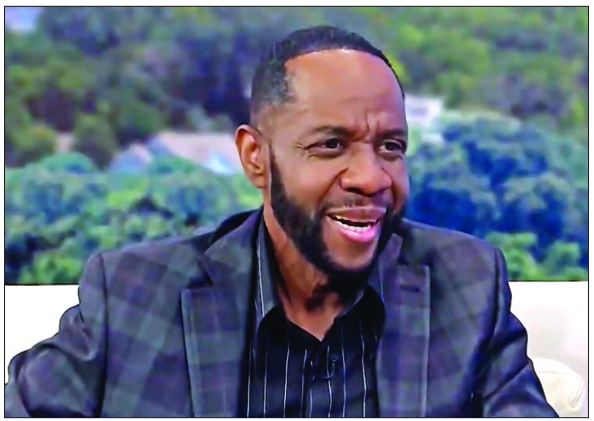
Freddie Jackson during a 2018 live segment with Sister Circle TV.
There are some artists whose voices become part of the soundtrack of our lives. Freddie Jackson was one such artist. The R&B singer, whose timeless hits included “You Are My Lady” and “Rock Me Tonight (For Old Times’ Sake),” died Monday night, October 5, just three days after celebrating his 69th birthday.
His family announced his passing on his official Instagram account, saying that he had “gone home to rest.” They did not disclose an official cause of death.
Freddie Jackson was known as an artist who understood the power of music to touch people. In the later years of his life, he used his voice to educate and encourage others — opening up about his battle with kidney disease and risks facing the Black community.
That was Freddie: even while dealing with his own challenges, he considered how his experience might help someone else.
Kidney disease disproportionately affects Black Americans. An estimated 20% to 22% of Black adults in the United States live with chronic kidney disease and Black Americans are several times more likely to develop kidney failure than white Americans.
He used his platform to educate with the same grace that characterized his music.
I first met Freddie Jackson in New York. In those days, my WBZ-TV program, “Coming Together,” often traveled to Los Angeles and New York to interview celebrities, and we were fortunate to meet many of the biggest names in entertainment. We interviewed Freddie at the New York offices of Capitol Records, at a particularly exciting moment in his career.
He had just scored his first major hit, “Rock Me Tonight (For Old Times’ Sake),” the title track from his debut album. That song was more than a hit. It was the ultimate slow jam, a beautiful piece of nostalgic yearning about wanting to reconnect with someone you loved. Written by Freddie’s longtime friend and collaborator Paul Laurence, it became the first of Freddie’s 10 number one songs on Billboard’s R&B chart.
Released in 1985, the track spent six weeks at number one and helped establish Freddie as one of the premier balladeers of the Quiet Storm era. I remember Freddie as warm, gracious and genuinely happy to talk about his music. There was no sense that he was simply passing through the industry on his way to the next record.
He understood the emotional connection between a singer and an audience. And that connection had deep roots.
Freddie was raised in the gospel tradition and sang at White Rock Baptist Church in Harlem. In the late 1970s, he moved to California and became a member of the funk band Mystic Merlin. After leaving the group, he began developing the soulful, deeply expressive style that would eventually make him a star.
Among his musical influences were great soul troubadours such as Donny Hathaway. And, as Freddie recalled in an interview with Donnie Simpson on BET’s “Video Soul,” his break as a solo artist came through another extraordinary singer, Melba Moore.
Freddie was performing in a nightclub, singing the bruising blues-jazz standard “Good Morning Heartache,” when he noticed Moore in the audience. She was shouting her approval. Freddie later joked about wondering why she was screaming in the middle of such a serious ballad.
That encounter changed the trajectory of his career. Moore eventually signed him to a production deal, and Freddie went on to begin his solo career with Capitol Records. His debut earned Grammy nominations for Best New Artist and Best Male R&B Vocal Performance in 1986. He would go on to sell millions of records and establish himself as one of the defining voices of sophisticated contemporary R&B.
But there was another chapter to Freddie’s story that I think is important to remember. In 2018, Freddie revealed that he had lost more than 100 pounds through diet and exercise. His dramatic transformation prompted admiration, but it also generated speculation about his health.
Later, when he publicly discussed his kidney disease, he chose not to hide behind the rumors. Instead, he told people what he was going through.
“This journey has had its challenges,” he said at the time. “But I’ve decided to face it with openness and resilience.”
That openness mattered for a man who spent his career singing about love, longing, heartbreak and hope. In the end, he was still communicating. Still reaching his audience. Still trying to make a positive difference.
For those of us who were fortunate enough to interview him, work with him, hear him perform, or simply fall in love with one of his songs, his passing is personal. I think back to that young artist I met in New York, standing at the beginning of what would become an extraordinary career. I think about that voice — smooth, romantic, unmistakable and the many memories his music created for millions of people.
There are songs that remind us of a particular person. There are songs that remind us of a particular time. And then there are voices that become part of us. Freddie Jackson’s was one of those voices.
Rest well, Freddie. And thank you for the music.