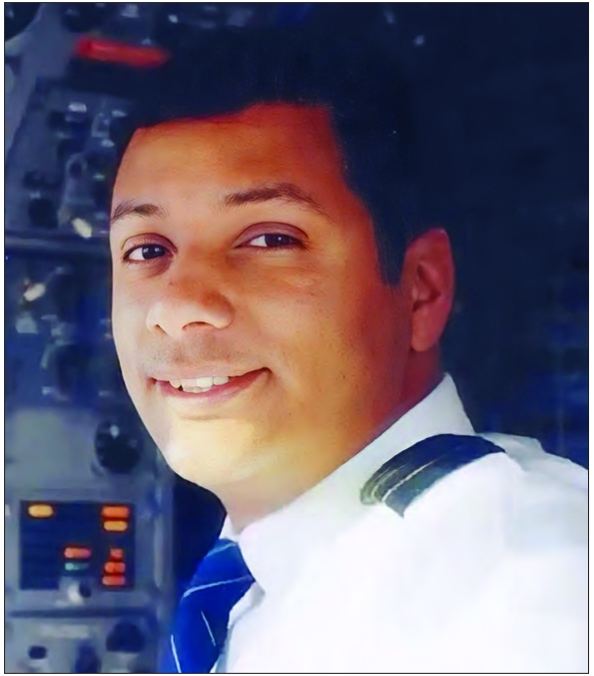
LeRoy Wilton Homer Jr. was the first officer on United Flight 93. 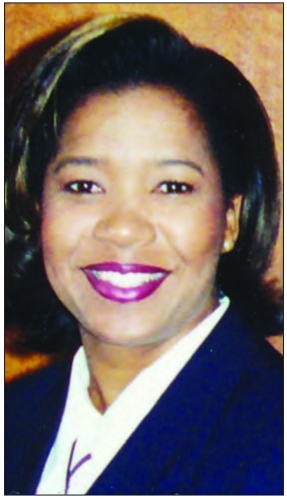
CeeCee Lyle was an American flight attendant on Flight 93.
After learning terrorists had flown jetliners full of people into the World Trade Center — and that their own hijacked plane was headed to Washington, D.C., for a similar purpose — a group of passengers on United Airlines Flight 93 refused to surrender. Their doomed charge toward the cockpit, and Todd Beamer’s rallying cry, “Let’s roll,” became a defining act of American courage.
In the cockpit on that day, however, LeRoy W. Homer Jr. — the first officer of Flight 93, a military veteran, experienced pilot, and a Black man — already was resisting the hijackers.
Homer was sitting beside Capt. Jason Dahl when terrorists stormed the cockpit on that terrible day. Air traffic controllers heard a desperate transmission, most likely Homer, as the attack began: “Mayday! Hey, get out of here! Get out of here! Get out of here!”
No one knows precisely what happened next. Audio recovered from the flight indicates there was a struggle, and Homer’s family believes he and Dahl were the first people aboard Flight 93 to fight the hijackers. It was just minutes before passengers in the cabin organized the revolt that would become one of the most celebrated stories of what many consider America’s darkest day.
Overlooked but on the record
Yet as the nation marks a quarter-century since the worst attack on U.S. soil, it’s hard to find remembrances honoring Homer’s role, even though the rebellion on Flight 93 was the subject of two feature films. Indeed, it’s hard to find high-profile stories of Black first responders who saved lives or heroically sacrificed their own on 9/11.
It’s almost as if the infamous day has been whitewashed — metaphorically if not literally.
To
be sure, the historical record includes Black people in photographs, on
casualty lists, and in official histories of Sept. 11. They worked in
the World Trade Center and the Pentagon. They were aboard all four of
the airplanes. They ran toward the smoke and the burning jet fuel. In
New York City alone, 12 Black firefighters and 12 Black police officers
never made it home.
Still,
when someone says “9/11,” our collective national memory and popular
culture conjure up a familiar set of images and storylines, most of them
featuring white people. Bankers, lawyers and other white-collar workers
fleeing Lower Manhattan beneath clouds of ash. New York City Mayor Rudy
Giuliani striding through the rubble. Beamer fearlessly organizing the
rebels aboard Flight 93. Mostly white firefighters raising the American
flag at Ground Zero.
At
least 24 Black firefighters and law enforcement officers were killed on
9/11. Black people died who were working in the towers, serving at the
Pentagon, and aboard the hijacked airplanes.
Those stories and the courage they illustrate are real, but they aren’t the only stories.
An American story
According
to official records, the Black firefighters and law enforcement
officers who died in New York included members of the city’s Department
of Corrections staff. Black service members, many in uniform, helped
rescue people at the Pentagon. Cee Cee Lyles, a former police detective
turned flight attendant, joined Beamer’s crew on Flight 77. helping them
force down the plane near Shanksville, Pennsylvania.
Their stories, however, remain largely outside the narrative America constructed around that day.
Paul
Washington, a former president of the FDNY’s Vulcan Society, the Black
firefighters’ union, has written that the 12 Black firefighters who
perished when the towers collapsed “didn’t seem to get the same
recognition as the white firefighters” and weren’t represented
proportionately in mainstream coverage.
Two
and a half decades later, a staggering, unimaginable national tragedy
has been compressed into a national narrative stocked with heroes,
symbols and familiar faces. Some stories, like Beamer’s and those of his
fellow passengers, became legend. Others became footnotes. Homer’s is
one of them.
One of nine children, with
seven older sisters, Homer grew up on Long Island, New York, obsessed
with airplanes. He began flying lessons at 15, soloed at 16, and entered
the U.S. Air Force Academy already holding a private pilot’s license.
He
went on to fly military transport aircraft, supporting operations
during Desert Shield and Desert Storm, as well as humanitarian missions
in Somalia. He joined United Airlines while continuing to serve in the
Air Force Reserve.
It is a distinctly American story.
It is also a distinctly Black American one.
Shining a spotlight
A
generation after the Tuskegee Airmen battled racism simply for the
right to fly military aircraft, Homer became an Air Force officer and
commercial airline pilot.
After his death, the Airmen posthumously honored him.
He
left behind a wife, Melodie, and a 10-month-old daughter, Laurel, who
grew up knowing her father largely through other people’s memories.
Today, mother and daughter help keep that memory alive through the LeRoy
W. Homer Jr. Foundation, which provides scholarships to young people
pursuing private pilot licenses.
In
recent years, the National September 11 Memorial & Museum in New
York City has worked to bring greater attention to lesser-known Black
victims, survivors, and first responders — an implicit acknowledgment
that the story America remembers isn’t necessarily the complete one.
That
doesn’t diminish the stories of firefighters we honor or the passengers
who charged the cockpit of Flight 93; it enlarges it.
Because
before “Let’s roll,” there was a Mayday call, a struggle in a cockpit,
and a fight for control. And one of the first Americans to fight back on
Sept. 11 was a Black man.
This story first appeared in Word in Black