
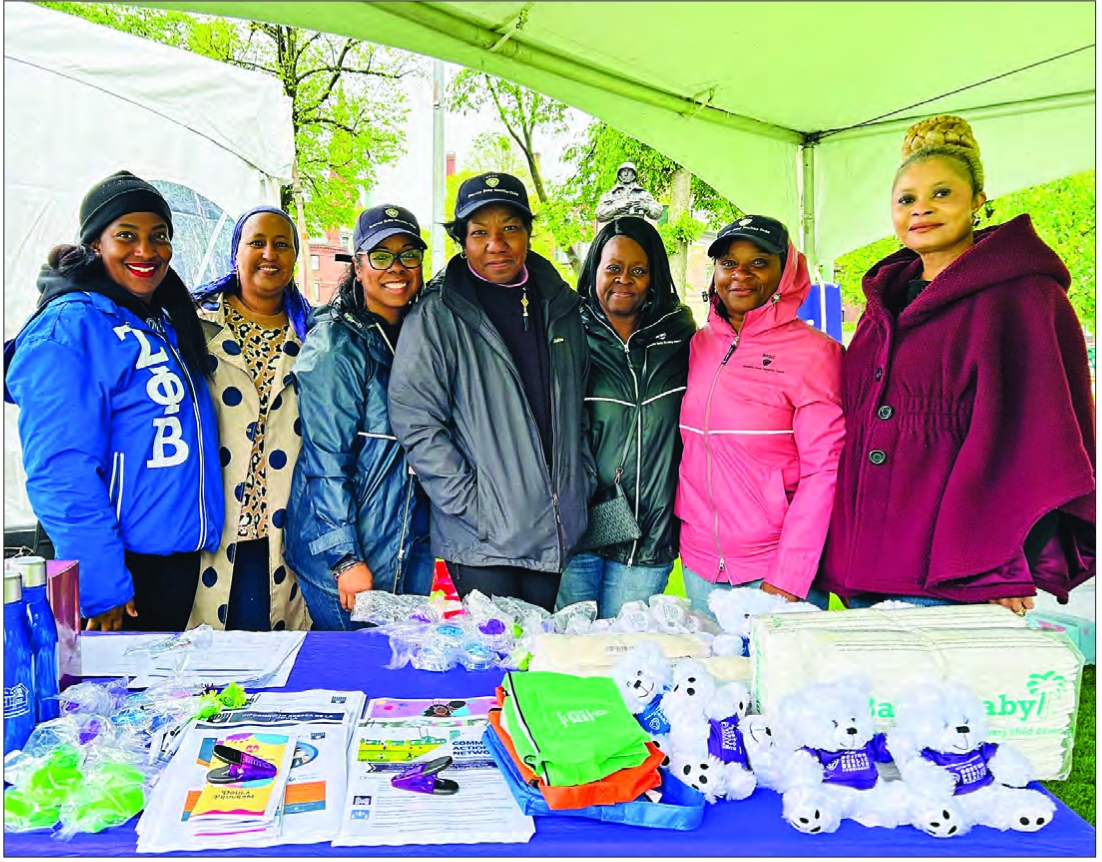

National Black Breastfeeding Week, held every August, was created to address the significant racial disparities in breastfeeding rates.
Black mothers more likely to face lack of breastfeeding support
After Bianca Vonleh developed a case of mastitis three months postbirth to her second child in 2024, she said she would do everything in her power to ensure other new mothers wouldn’t experience such horrible pain.
The mother of three, educator, certified breastfeeding specialist and professional postpartum doula coped with flu-like symptoms paired with an engorged and red breast through multiple visits and calls to the doctor. Prescribed antibiotics, she was told to reach out for help if things got worse.
They soon did. “It took me being on the floor and having my husband rush me to the emergency room before my pain was taken seriously as a Black woman,” Vonleh, founder of Vilaj Lactation, told the Banner.
While nursing initiation among Black mothers has increased considerably over the past decade, rates continue to trail those of many other racial and ethnic groups. The 2022 Centers for Disease Control and Prevention Breastfeeding Report Card, the most recent report available, shows that 75.4% of Black infants are introduced to breastfeeding, compared to 92.7% of Asian infants, 86.2% of non-Hispanic white infants and 83.4% of Hispanic infants.
Aug. 31 marked the end of the 14th annual National Black Breastfeeding Week, what Vonleh called “a cultural reclamation and celebration of Black women and their babies both surviving delivery.”
The seven-day observance addresses disparities in breastfeeding within the Black community, with its roots tracing back through centuries of historical trauma, including during slavery when Black women were forced to wet nurse the children of their enslavers while their own infants were denied the same nourishment.
Founded by Kimberly Seals Allers, Kiddada Green and Anayah Sangodele-Ayoka, the national advocacy week directly confronts systemic barriers — from high Black infant mortality rates to the lack of diversity in the lactation field — while shining a light on local initiatives that support Black families after childbirth.
“Slave owners understood the significance and power of breastfeeding,” Vonleh said. “It’s such a sacred thing to take our power back, and a beautiful bonding experience between a mother and baby that reduces many things like sudden infant death syndrome and prevents cancer in women later. Our bodies are protecting not only our babies but us, too.”
Vonleh’s business’ namesake, “vilaj,” is the Haitian Creole translation of the word “village.” It refers to Vonleh’s Haitian and Liberian heritage, where the value of having a village was emphasized in family systems.
“As much as it takes a village to raise a child, it also takes a village to support a postpartum mother, and that does not end between six and 12 weeks, like our society likes to present,” she added. “I wanted to create that village of resources for moms in ensuring women can express when something is wrong and to not let up or be afraid. Their health depends on it, and their baby’s health depends on it.”
In Boston, culturally affirming and community-led support like Vilaj Lactation combats these stark disparities by providing inhome or in-hospital education, meeting Black families in every phase of their nursing experience.
From teaching new mothers how to nourish themselves and their babies to helping them navigate sore nipples, avoid mastitis and the mechanics of proper latch techniques, lactation professionals are providing what Vonleh calls “life-changing skills.” The guidance and reassurance can be difficult to find once families leave the hospital.
This year’s theme of National Black Breastfeeding Week, “We All We Got,” underscores the importance of support through the often overlooked realities of new parents — factors like isolation, relationship strains with a partner or as a single parent as well as mental and emotional challenges that are wrapped up in the celebration of having a new family member.
Stephanie Johnson has also seen the missing pieces firsthand while serving families across Roxbury, Dorchester and Mattapan. A doula, certified lactation consultant, childbirth educator and now direct-entry midwife, she founded Roots Midwifery after transitioning from a nursing school track.
Johnson credits learning a group prenatal care model at Mattapan Health Center called CenteringPregnancy early in her career as a doula, where she pinpointed exactly what she felt was missing from modern maternal health: postpartum care.
“The reason why a lot of women don’t have the longevity with breastfeeding is because they don’t have people to help them through the challenges,” Johnson said. “We spend a lot of time making sure mothers eat well, exercise and have a baby shower. But when friends and family eventually come to see the baby, and not the mother, it often all just falls off from there.”
Among mothers of preterm infants, 34.3% of Black mothers continued breastfeeding at 12 weeks postpartum, compared with 47.7% of white mothers, the CDC found.
Johnson works to dismantle the idea that Black women simply do not want to breastfeed. She sees a number of mothers who choose to nurse — even if it’s to try — are successful beyond six months up to a year, despite what recent data shows.
Rather than receiving hands-on lactation support at the hospital during the critical first 48 hours when milk supply is established, new parents are often handed common formula options and generic instructions from medical staff. The overwhelming process uses a one-size-fits-all approach, which discourages some from nursing before they return home.
This practice especially harms the Black community, since as of 2020-2021, approximately 74.5% of Black mothers began breastfeeding during their birth hospitalization, compared with 84% nationally, according to the CDC.
Nursing was a natural choice for Johnson, who grew up watching her mother breastfeed her younger brothers. But she said many Black women face skepticism from family and friends, alongside mainstream health insights. She works from the priority of giving women the support and information to decide what works best for them, rather than approaching formula feeding as an all-or-nothing choice.
“When I first started my journey as a lactation consultant, the teaching was that ‘breast is best,’” Johnson said. “But my stance has changed because sometimes women have challenges for a variety of reasons and the goal should not be to pressure women to breastfeed at all costs. I make sure those who want to try have the support to do so.”
According to Morgan Taylor-McFadden, director at Boston Healthy Start Initiative at Boston Public Health Commission and a trained home birth and postpartum doula, when Love for Latch launched as the city’s targeted breastfeeding campaign in 2023, 93% of its families initiated breastfeeding, but less than 65% continued past six months. Today, with expanded community outreach, that six-month retention rate has surged to nearly 80%.
“It’s not the sole responsibility of one program, but the collective action and coordination of all sectors to continue to show up,” Taylor-McFadden said. “Being really close to the ground allows us to be creative and innovative about how we go out and support our families.”
Local resources
Boston builds on the momentum of National Black Breastfeeding Week on a year-round basis, extending into walk-in breastfeeding clinics and mother-baby cafes in spaces like Codman Square Health Center, Upham’s Health Center and Boston Medical Center. Love for Latch resources are also translated into Cape Verdean Creole, Haitian Creole and Spanish.
“There’s a saying that…Boston is rich in resources but poor in access,” Taylor-McFadden said. “Love for Latch acts as a convener that influences the whole ecosystem more than the direct behavioral influences around breastfeeding so healthy systems are accessible.”
While Johnson believes local public health infrastructure supporting mothers in their postpartum journey has “evolved positively,” she says it can boost advocacy for middle-class and highly educated women.
“A lot of the focus is on women who are low income and may need the additional resources,” she said. “But women who don’t qualify income-wise for those public health parameters tend to get overlooked, even though they’re dealing with the same maternal mortality, have a lot of questions and are not prepared for postpartum. That’s who I’m trying to target.”
The CDC reported in 2024 that Black women are three times more likely to die from a pregnancy-related cause than white women.
Vonleh added that 50 percent of her work is placing information about accessible lactation support in community spaces she knows families frequent like supermarkets, hospitals, libraries and bus stops. She also seeks to reach health care professionals who may not come from Black or brown communities, helping to bridge gaps in cultural context and understanding that can shape how patients of the diaspora experience care.
Intergenerational wisdom is what seems to transform Boston’s lactation landscape. Johnson credits her mentor, Shafia Monroe, a renowned midwife, author and cultural historian, for encouraging her to pursue a career in midwifery.
In 1984, Monroe and Majeeda Workneh founded the Traditional Childbearing Group in Boston, the nation’s first Black home-birth nonprofit organization. Monroe and Workneh worked to support mothers and babies across the city, grounding their work in cultural traditions that included specific foods and herbs to support postpartum health and nutrition.
“If we lose these ideas, we lose them forever and we really need to pass [traditions] along to others,” Johnson said.
For Dominique Bellagarde, establishing that sanctuary of care for Black families is deeply personal. The mother of four nursed for up to 27 months and serves as the community action network consortium coordinator at the Boston Public Health Commission. She views this infrastructure with pride, almost a permanent legacy for Boston.
“For me, [it’s about] knowing their pain is not in vain as they persevere,” said Bellagarde, who is also a professional lactation specialist. “They have an available community who already has resources and systems set up. When someone says, ‘I need help,’ and people know where to direct them, that is the footprint.”
Beyond the clinical data, the work being done is centered on a profound promise: ensuring Black mothers are nurtured just as deeply as their babies.
“You can always tell when a flamingo has given birth because they’re not as bright pink as the other flamingos,” said Vonleh, citing a common metaphor in the field. “I always want to provide resources here in Boston that encourage moms to get their pink back.”