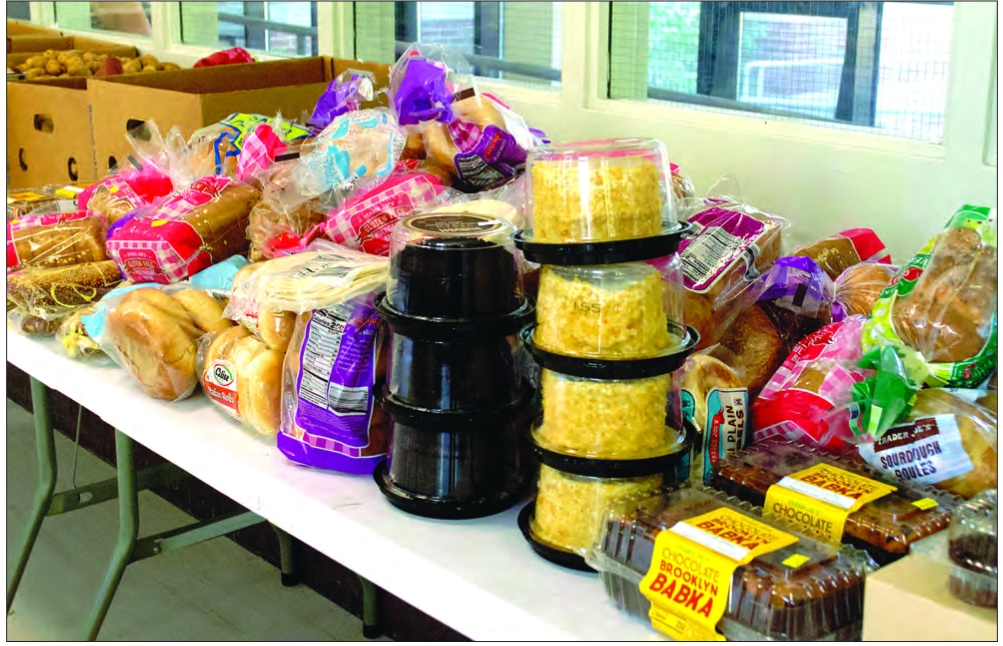
On August 14, the pop-up market opened its doors at Commonwealth-Elderly building in Brighton. 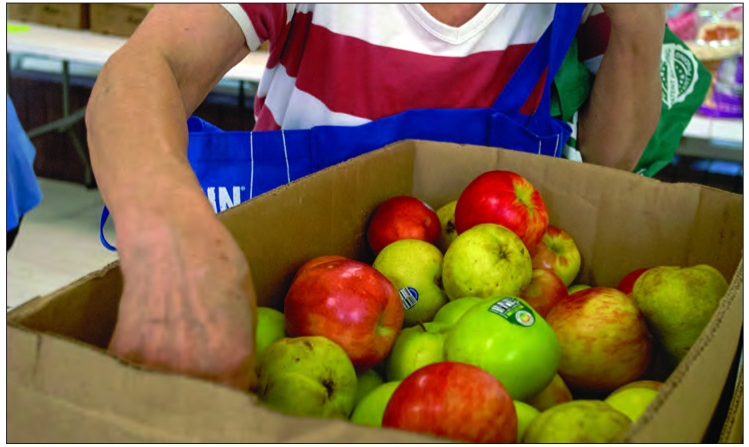
Twice a week, trucks overflowing with produce, high-quality proteins, dairy products, dietary staples, prepared foods and even donuts or fresh flowers set up shop at the Commonwealth Elderly building of the Boston Housing Authority (BHA) complex on Fidelis Way in Brighton.
The pop-up markets started on June 9 and are typically hosted on Tuesdays and Fridays. Dates and times vary, depending on when the deliveries arrive; since there is no strict schedule, volunteers knock on doors to alert tenants that goods are stacked on folding tables in a common room. Residents are encouraged to take as much as they want, with a suggested donation $3.
“It’s a dream come true,” said 77-year-old tenant Patricia Lester. “It’s better than going in a store. ... It’s like a miracle.”
The program is made possible by the work of BHA tenant Tamika Law, who founded Rock Bottom Survivors LLC on July 14. Law runs these food pop-ups on a volunteer basis to ensure that residents with mobility or financial challenges continue to have access to fresh, affordable food.
A food pantry already delivers bags of food for the tenants. However, Law described one bag that contained only potatoes, pancake mix and a can of carrots. Concluding that such items were “nutritionally inadequate,” she founded the pop-up markets to bridge the gap and focus on quality food. Deliveries may include produce such as snow peas, celery and spinach or a range of proteins, like salmon, steak and lamb.
Law operates the program through a combination of partnerships, personal contributions and donations. Her primary source is the Brookline Food Rescue Co-op, which provides high-quality items that are overstocked or approaching their expiration dates.
“We rescue food seven days a week,” said co-op cofounder Vickie Schnoes, while dropping off a delivery to the Commonwealth pop-up on Aug. 14. Schnoes was accompanied by volunteer delivery driver and retired physician Bob Taylor, who said the pair had been procuring food donations since 9 a.m. The work is a significant logistical effort; drivers travel as far as Marblehead and Foxborough to gather the shipments.
When food is left over from the markets, it is offered at a Thursday coffee hour, run through the same volunteer program.
More than a source of food, the coffee hour serves as a community gathering space to combat isolation among the senior residents. Tenants venture out of their apartments to get to know one another, celebrate holidays, play games, dance or participate in light exercise.
The Rock Bottom Survivors program collaborates with Voice Divisions for conflict mediation and recovery coaching and with Cycle Solutions for wellness and motivational training.
Law also acts as a recovery coach, having started a men’s support group to help those dealing with depression, substance abuse or domestic violence.
“I grew up with my great-grandmother. She was my best friend,” Law said, describing how she witnessed her family members becoming increasingly overlooked with age. “The elderly and the disabled and the homeless are invisible.”
Law’s experience with immobility after an injury motivated the volunteer organizer to help disabled and elderly residents feel that “they still have a purpose here.”
Accommodations are key to the ethos of the Rock Bottom Survivors program. Volunteers cater to the individual needs of the shoppers; for example, residents who are immunosuppressed or have high anxiety may shop before the main crowd arrives. The space is set up such that shoppers with walkers and scooters can maneuver safely. Residents are assisted with tasks such as cleaning out their refrigerators or searching for new apartments.
Despite its impact, the program has faced challenges, such as misconceptions about where donation funds went. Other Commonwealth tenants became concerned that the housing authority would shut down the program. Lester recalled one instance when the pop-up volunteers were called slurs. Once, the tires on a delivery vehicle were popped, said Law. Her team responded to the vandalism by pushing the food along in shopping carts.
Ultimately, Law addressed public concerns with transparency, explaining that the funds are solely directed to cover gas. To protect the program from further misinformation and create a professional structure for managing donations, she formalized her work by establishing Rock Bottom Survivors LLC.
Though continued success depends on delivery funds and food donations, organizers hope to gain more refrigeration space and expand into a daily market or larger, independent space.