
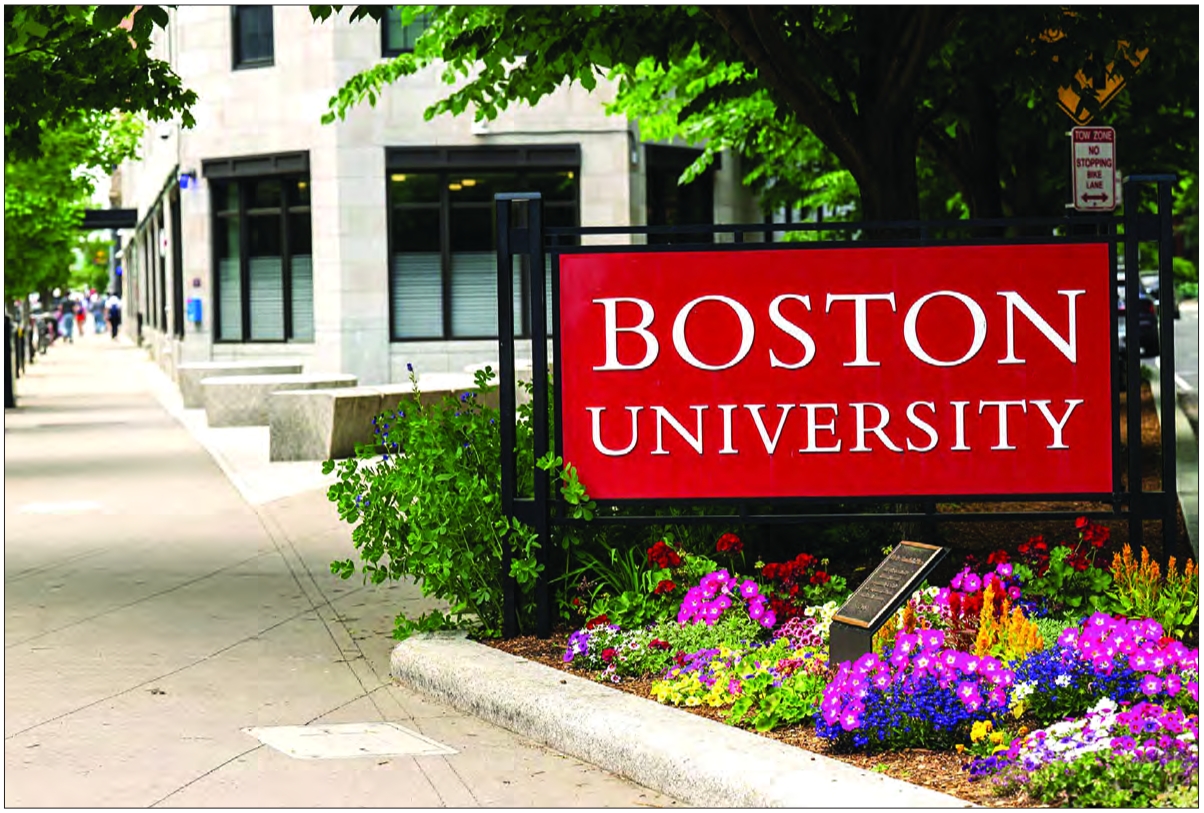
Boston University will expand financial aid offerings through The BU Promise, which allows students whose families earn below $75,000 to attend free.
On Aug. 6, Boston University (BU) announced that beginning with the 2026-27 application year, it will expand financial aid offerings significantly for low- and middle-income families.
The new initiative, The BU Promise, will ensure that students whose families earn below $75,000 will attend free. Students whose families’ annual incomes are below $200,000 will pay at most $20,000 in tuition per year.
Out-of-pocket costs for the large, private research university currently sit at $73,024. The newly expanded financial aid offerings are comparable to those at institutions across the country, such as the University of Massachusetts system, Bridgewater State University, Harvard University, the Massachusetts Institute of Technology, Tufts University, Rice University and the University of California system.
“Boston University is committed to meeting the demonstrated need of all admitted financial aid applicants, and BU Promise brings financial aid clarity to students and their families as they make decisions about higher education,” said BU Vice President of Public Relations Rachel Cavallario.
To be awarded aid, applicants must submit two forms that together provide the university with a picture of financial circumstances and federal aid eligibility.
In years prior, financial aid at BU looked quite different. Financial aid packages consisted of a mix of student loans and grants, and free tuition was not offered. BU history faculty member Sarah T. Phillips notes that student loans were a veritable source of anxiety.
“Students on financial aid have confessed to me their worries about paying off their debt, and this will help enormously with alleviating that source of stress,” she said. “I suspect it will really increase applications from students who aspire to a school like BU but didn’t think of it among their choices.”
Last year, the BU awarded $473 million total in financial aid to undergraduate students. About 45% of students at BU receive some form of financial aid, though The BU Promise aims to increase that percentage, as the university now encourages students with annual household incomes above $200,000 to apply for aid.
Christopher Parris, the chief program and innovation officer at Steppingstone, a Boston-based college access nonprofit, predicts this change will benefit the entire university community, not only those who receive financial aid.
“I hope this expansion encourages more first-generation, low-income and middle-income families to apply and be accepted to BU,” he said. “The variety of perspectives and experiences that will emerge from a more diverse student body will lead to a more inclusive school community.”
Steppingstone Director of College Success Hannah Ho noted that for many of the teens they serve, financial challenges are “one of the largest barriers to college selection.”
The average cost of tuition and fees at a private four-year institution in the United States amounts to $38,421, according to the Education Data Initiative and National Center for Education Statistics.
At a time when many families cannot afford child care, health care and emergency health costs, increasingly more colleges have begun to expand aid offerings.
Such expansions, including at smaller liberal arts schools including Swarthmore College, have made higher education more accessible for middle-class students, which will prevent colleges from “becoming accessible only to a small, wealthy group,” Parris added.
“All students should have the opportunity to access [a bachelor’s degree], and we are encouraged to see more colleges and universities taking steps in this direction.”