
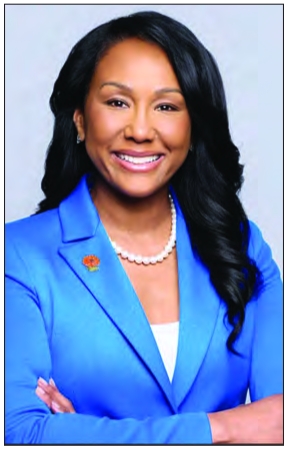
Linda Champion
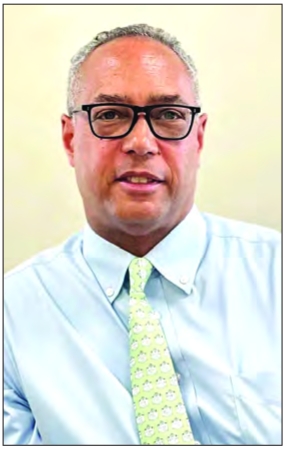
Kevin Hayden
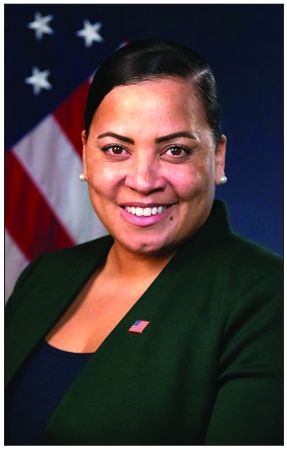
Rachael Rollins
In a district attorney race that has been mired by ethical concerns, residents and juvenile justice advocates in Greater Boston search for answers to how candidates’ policies will impact their lives and the lives of loved ones — particularly those impacted by gun violence.
Fewer than two weeks remain before Massachusetts’ largest county chooses between incumbent Kevin Hayden, former assistant district attorney Linda Champion and former Suffolk district attorney Rachael Rollins.
The next chief law enforcement officer will set criminal justice priorities, influence sentencing and directly impact what cases, juvenile proceedings or recidivism policies are pursued.
“District attorneys are amongst the most powerful figures in the criminal legal system. Their decisions have a direct outcome on everything, from case outcomes to recidivism to addressing mass incarceration,” said Leon Smith, attorney and director of Citizens for Juvenile Justice.
“If elected, they have the opportunity to be a force for change in the legal system. They can simply uphold the status quo, or in some cases they can shift their approach in such a way that some would consider regressive,” Smith said.
Hayden, endorsed by Boston Mayor Michelle Wu, contends that his office’s work is not done. Though citywide murder and shooting averages did reach historic lows and plateaus during his tenure, several neighborhoods are still experiencing disproportionately high rates, including Roxbury, Dorchester and Mattapan.
His policies have homed in on community partnerships to reduce violence, boost mental health and addiction care services and support adults reentering the work force after incarceration.
“In most cases of people who are coming from the legal system, they need some sort of help to make sure that they don’t reoffend,” Hayden said between jabs at Rollins during a tense candidate forum at Roxbury’s Hibernian Hall on Aug. 6. “Everything that we do has to be about reducing recidivism.”
Hayden is the first DA in three decades to charge a Boston police officer for an on-duty killing. The decision to pursue the manslaughter charge cost him the support of the Boston Police Patrolmen, who endorsed Champion shortly after she announced her second run for DA.
To the upset of the public and advocates, Hayden has maintained that his office will not release the bodycam footage of Boston police officer Nicholas O’Malley shooting Dorchester resident and carjacking suspect Stephenson King in March 2026. Early this month, Lawyers for Civil Rights sued the DA’s office and police department to try to force release of the footage.
In contrast, Rollins and Champion have advocated for the release of the video in the interest of transparency.
Rollins, who served for three years before being appointed by President Joe Biden to serve as U.S. Attorney for Massachusetts, has also been adamant about not prosecuting young people for lesser crimes such as shoplifting and for ensuring quicker processing for victims of gun violence. “I feel personally responsible when my phone still rings, and people say, ‘We can’t get a return call from the DA’s office.’ People say, ‘My child’s homicide, or my loved one’s homicide has gone unanswered in this administration,’” Rollins said in criticism of Hayden at the forum.
She acknowledges that the public does not trust the police and categorized the role as chief law enforcement officer, not “top cop,” as it is commonly called, including by Champion.
The first woman of color to serve as U.S. Attorney for Massachusetts resigned from her role in 2023 after two ethics investigations explored her appearance at a Democratic National Committee fundraiser, and whether she tried to influence the outcome of the DA race in favor of Hayden’s then-opponent.
Rollins cites death threats as the reason for her high-profile resignation and maintains the investigations were never conclusive.
They have raised concerns for the public, however, and are common fodder for her opponents, given that one of the DA’s chief duties is holding police and their office accountable to ethical violations.
Rollins has recently been the focus of another ethical quandary, after three Chelsea city councilors told the Globe that their signatures appeared on her nomination papers without their consent. On X, she apologized for the confusion and said her team is looking into what happened.
The DA is directly responsible for institutional integrity, as they decide what evidence can be rejected based on misconduct, illegal searches and seizures or false or coerced confessions.
Champion has criticized Hayden’s failure to investigate, for instance, how his office released sealed information regarding alleged juvenile sexual assault investigations involving Ricardo Arroyo, his opponent in the 2022 DA race.
Hayden was fined $5,000 by the State Ethics Commission over the leak, for violating conflict of interest law. The failure to stop the office from releasing information about his opponent, they found, could have given Hayden an advantage in the election.
“I don’t care who has held the seat. There has been no change,” Champion said on Aug. 6, alluding to the need for stronger policies to make streets safer for all, especially young people.
Champion is the only candidate who responded to this year’s Youth Justice Primary Election Voter Guide, put together by Citizens for Juvenile Justice, the Massachusetts Coalition to Prevent Gun Violence and the Children’s League of Massachusetts, among other organizations. In it, she shared hopes to hire more licensed clinical social workers to serve in her office.
“[Social workers] are better equipped to work with the prosecutors to help create a realistic pathway out of the criminal justice system and to develop tools that will help a justice-involved student move out of the criminal justice system successfully,” she said.
Early voting will continue through August, with the primary scheduled for Sept. 1. With no Republican on the ballot, the primary will probably determine Suffolk’s next DA.
For Smith, the position is one that holds extreme power. This individual decides whether a young person enters the court system — which could impact their schooling, housing or future employment opportunities — or is diverted into social services in a moment of crisis.
“The Suffolk County District Attorney’s Office, across multiple DAs, has shown a belief in and a commitment to diversion,” Smith said. “I’m hopeful that whoever wins the race will maintain that commitment, because it is proven to both hold young people accountable while also addressing issues that prevent them from coming back into the system.”