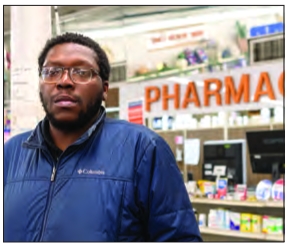
Uche Egesionu, manager at Kornfield Pharmacy, the last independent pharmacy left in Roxbury.
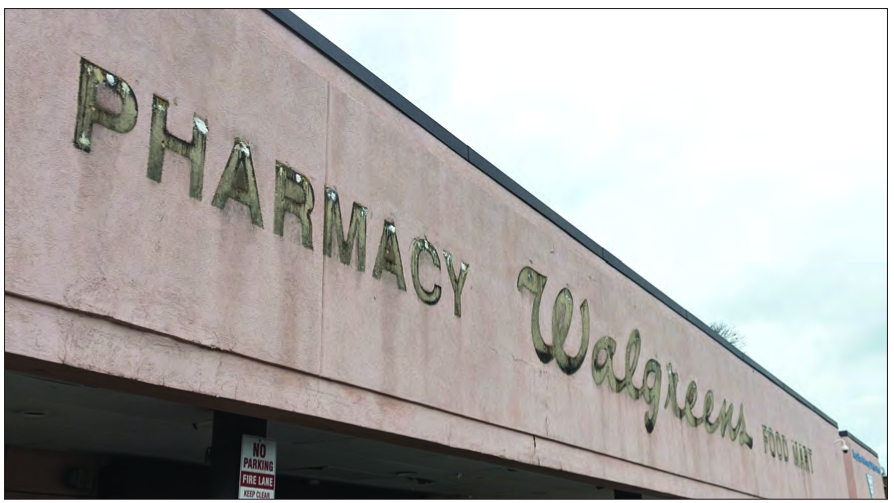
Walgreens closed a number of stores across the state in 2025.Roxbury’s last independent pharmacy worries it’s not enough
Since 2020, at least a dozen pharmacies have shuttered across Dorchester, Roxbury, Roslindale, Mattapan, Hyde Park and Jamaica Plain neighborhoods, according to state licensing data.
Roxbury has lost five: a Walgreens on Washington Street in 2022, Community Care Pharmacy on Bluehill Avenue in 2023, a Walgreens on Warren Street and a CVS on Dimock Street in 2024 and PharmaLuxe Pharmacy in John Eliot Square last year.
Independent pharmacies have disappeared alongside the chains — Prime Pharmacy, Hamilton Pharmacy, Tai Tung Pharmacy, Kimmy Pharmacy — leaving fewer neighborhood options for residents who rely on them most.
As the last family-owned pharmacy left in Roxbury, Kornfield Pharmacy has filled prescriptions on the same block for over three decades. Uchechukwu “Uche” Egesionu has helped his mother, Esther, run the business in honor of his late father, Paul.
“It’s a consensus that the pharmacies can’t make any money unless they’re doing vaccines,” Uche said. “And that seems completely unfair. And you can’t make a dollar. So, the standard business model does not work. ... It’s not set up for independents to survive,” he said.
State Rep. Christopher Worrell is trying to change that calculus. Last month, Worrell secured House passage of an amendment to S.3141, An Act Relative to Primary Care for You, creating the state’s first legal framework for identifying and responding to “pharmacy deserts.”
The measure requires the Office of Health Resource Planning to conduct regular statewide assessments of pharmacy access, and it mandates that pharmacy operators give 60 days’ notice before closing a location. If a closure would create a desert, the Board of Registration in Pharmacy must hold a public hearing before it can proceed.
“Health care access does not stop at the doctor’s office — it continues when a patient walks into a pharmacy to receive the medications they need to live healthy lives,” Worrell said in a statement announcing the amendment’s passage. “This legislation gives our communities a seat at the table before another pharmacy closes its doors.”
Worrell has framed the bill as a matter of health equity, arguing that “communities like the 5th Suffolk District should never have to wonder whether they will have access to the medications their children, parents or grandparents depend on.”
Worrell’s amendment requires the state to study the forces driving closures, including reimbursement models, market dynamics and economic pressure.
Egesionu said reimbursement is the root of the crisis, not a side factor.
“You have to make it so that people are able to make money off of dispensing pills,” he said. “You can’t have a business model where only one piece of the business is economically [viable]. ... And if only the chains can survive, only big money can survive.”
Until that changes, he argued, transparency requirements alone won’t save independent, family-owned pharmacies, which face a lack of capital. He pointed to the financial cushion chains have that independents don’t, often closing one location to open another nearby.
What keeps Kornfield’s doors open isn’t scale. It’s trust, built over generations in a community that often keeps its distance from hospitals and insurance systems.
“Having someone that can talk with them through their minor ailments gives them a level of confidence with what they’re going through,” Egesionu said, adding that his clients often avoid hospitals due to high copays.
Those relationships are precisely what’s at risk when independent pharmacies close, one of the few remaining points of low-barrier, trusted health guidance in Black and brown neighborhoods.
The state’s first pharmacy desert assessment is due by September 2027, with the notification and hearing requirements taking effect that October. For Egesionu, that timeline offers little urgency.
Kornfield is still standing — for now — on relationships the data can’t fully capture, and on a business model he says the state has yet to fix.